
There is no "universal" turner; the core of the selection process lies in ensuring the equipment aligns with your specific site, materials, and production capacity.
The site dictates the general category. For facilities with established standard fermentation bays, a trough-style compost turning machine is ideal; it travels along rails, can reach depths of 1.8–2.5 meters, offers a high degree of automation, and is well-suited for projects with an annual output exceeding 20,000 tons. For open-air or greenhouse windrow composting, a self-propelled compost turning machine is the better choice: tracked models exert lower ground pressure, making them suitable for muddy or uneven terrain, while wheeled models are more cost-effective and best for paved surfaces. If the site has not yet been determined, define your process first, then select the equipment.
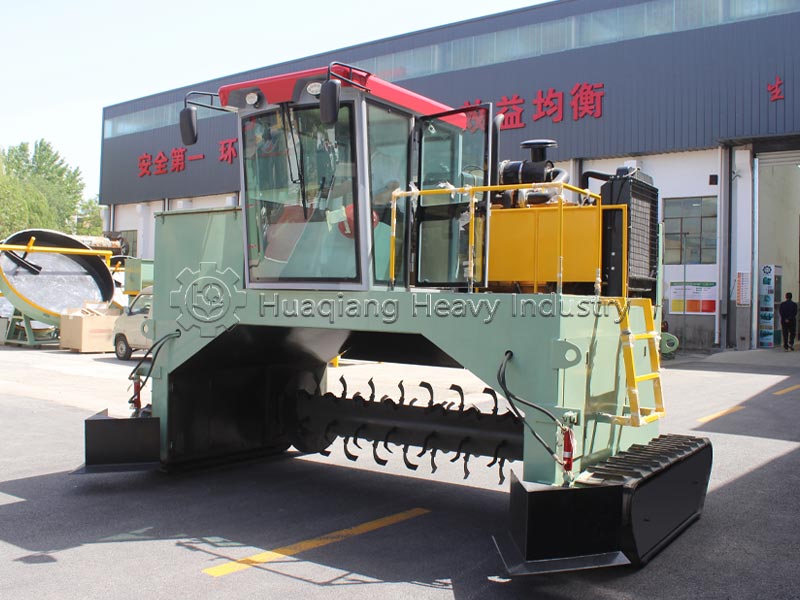
Production capacity determines the specifications. For an annual output of 10,000–30,000 tons, a standard bay-type turner offers the best value. For outputs over 50,000 tons, consider a disc-type (wheel-type) turner; its wider operating span and ability to handle higher piles allow for fewer fermentation bays. For continuous operations processing over 200 tons per day, a chain-plate compost turning machine provides superior deep-turning capability, with hourly capacities reaching 100–300 tons.
Material characteristics influence the details. For high-moisture, sticky materials like chicken manure or sludge, use a chain-plate or disc-type turner, as they offer robust turning and effective shredding/loosening. For mixtures containing high-fiber straw, opt for an anti-tangling screw-type or a heavy-duty chain-plate turner.
Do not overlook operation, maintenance, and environmental compliance. If you lack dedicated maintenance staff, prioritize models with simpler designs. Additionally, incorporate odor control and anti-seepage measures to meet environmental regulations.
Ultimately, equipment selection is about adapting the machinery to your production conditions—not forcing your production process to accommodate the equipment. Once you have clearly defined your site, capacity, and materials, the right model will become self-evident.