
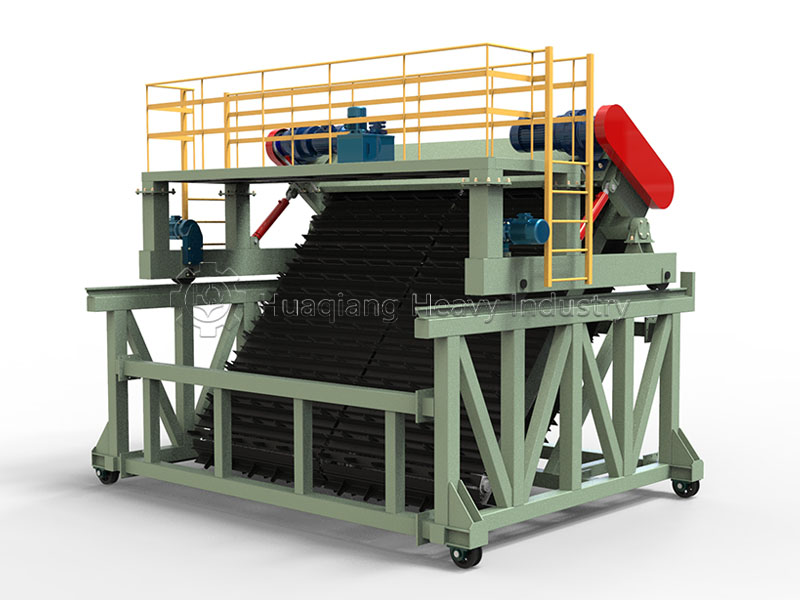
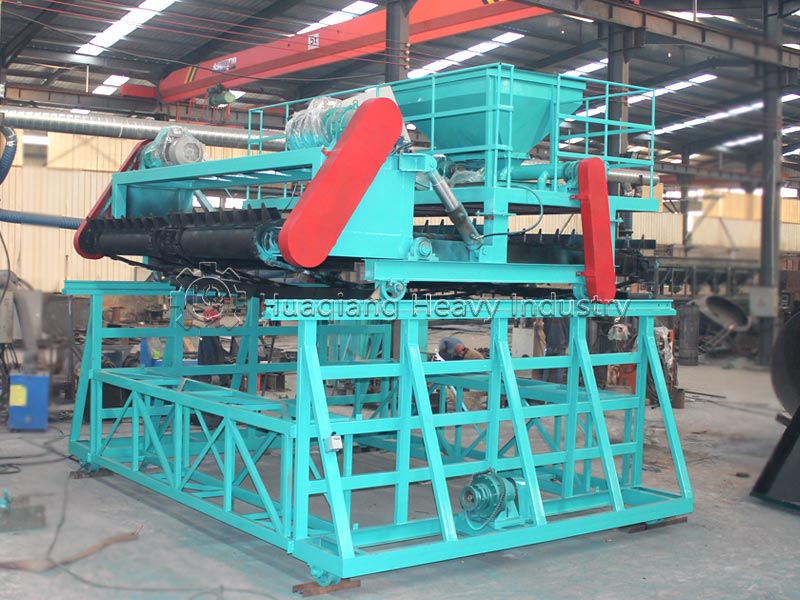
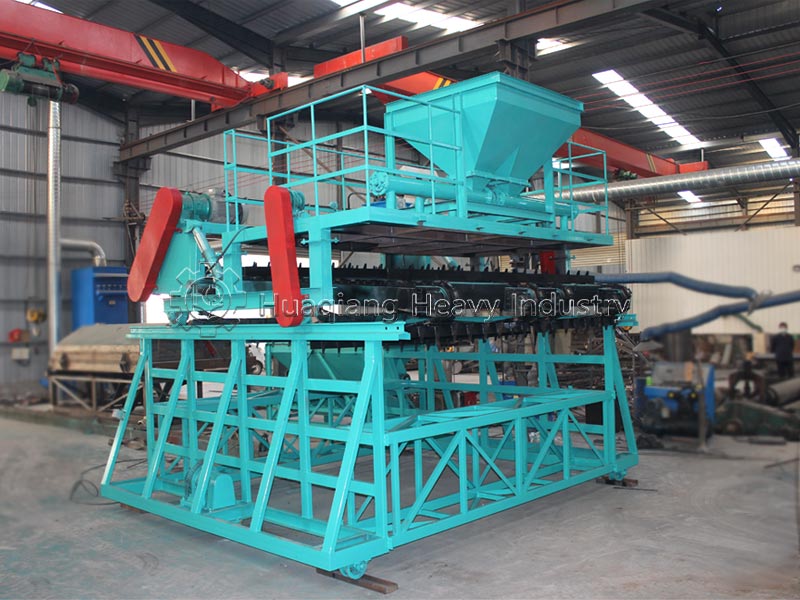
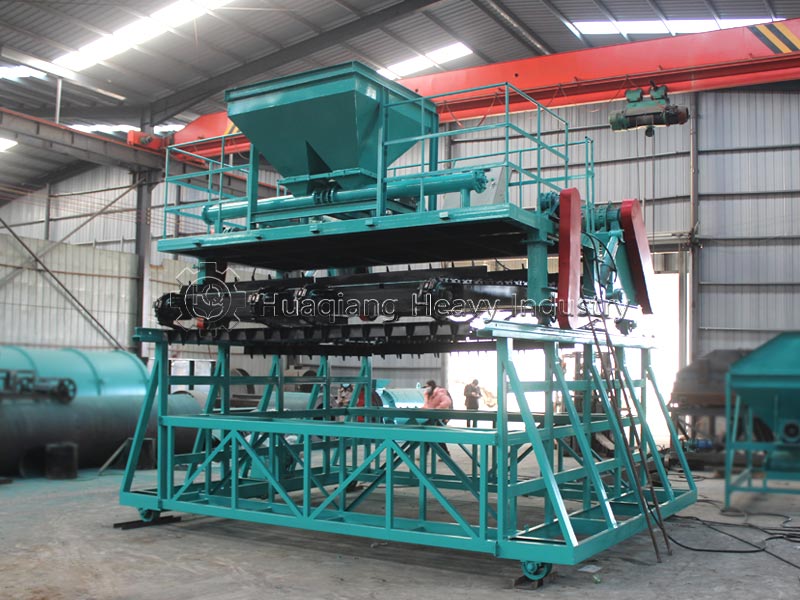
The chain compost turner is a device used in trough fermentation processes that uses a chain to drive scrapers to turn the material. Its turning method is relatively gentle; instead of high-speed rotation toss the material up, the scrapers slowly scoop up the entire layer of material along the bottom of the trough and turn it backward, resulting in stable material movement and maintaining the layers. This working method is particularly beneficial for long-fiber materials such as straw, preventing tangling and ensuring smooth operation. The equipment structure is not complex, mainly consisting of a chain, scrapers, tracks, and a motor. Routine maintenance involves simply tightening the chain and replacing the scrapers, which can be handled by the operator. For small and medium-sized organic fertilizer processing plants that don't want to worry too much about fermentation equipment, prefer robustness, durability, and low maintenance costs, the chain compost turner is a practical choice for trough composting.
Working Principle of the Chain Compost Turner
The working principle of the chain compost turner is similar to a large chain scraper conveyor, except that it does not convey material horizontally. Instead, it turns the material in the layer and pushes it backward. The equipment spans across the fermentation trough, and the traveling mechanism drives the frame to move slowly forward along the trough tracks. The core of the turning mechanism consists of two circular chains with multiple sets of transverse scrapers fixed at equal intervals. A motor drives a drive sprocket via a reducer, causing the chains to circulate along the guide rail. When the scrapers reach the lower layer, they cut into the material from the bottom of the trough, scooping up the entire layer and pushing it along the chain's direction. After being carried to a certain height by the scrapers, the material flips backward under the pressure of gravity and subsequent material, falling a distance further towards the discharge end than its original position. After pushing the material, the scrapers continue along the chain to the upper layer and return, starting the next cycle.
What are the operating requirements for a chain-type compost turning machine?
Turning frequency: The first two days after the material enters the trough are the heating period. The first turning should begin when the temperature reaches above 50℃. During the high-temperature period, turn the material once or twice a day, moving the cooler material from the edges and surface to the warmer inner zone, ensuring all material undergoes a uniform 50-70℃ sterilization process. After the temperature drops, the material enters the composting period, requiring turning every two to three days. Too frequent turning leads to rapid heat loss, while too infrequent turning results in insufficient oxygen; adjustments must be made flexibly based on temperature monitoring.
Scraper feed depth: The scraper should be flush against the bottom of the trough but not directly hitting the concrete, with a 3-5 cm gap between the lower edge of the scraper and the bottom. Shallow feed prevents the bottom material from being turned up, causing it to turn black and smelly over time; deep feed causes the scraper to rub against the bottom of the trough, increasing wear and potentially damaging the trough. Before each start-up, check the material pile height, adjust the scraper to the appropriate position using the adjustment mechanism, and lock it before starting.
Traveling speed should match the turning requirements. Slower movement results in finer turning, less material displacement, and longer residence time in the trough; faster movement results in coarser turning, more displacement, and shorter residence time. Newly added material has high moisture content and is prone to clumping, so slower movement allows for more thorough turning; during the maturation stage, the material is loose, allowing for faster speeds to improve efficiency. Experiment with different speeds several times to find the optimal setting for your material.
How to maintain a chain compost turning machine?
Inspect before starting and after stopping each day. Before starting the machine, check the chain tension. Too loose a chain can easily slip off, while too tight a chain accelerates wear on the chain and sprockets. Check the scraper for deformation or looseness, and ensure the fixing bolts are tight. After stopping the machine, clean any wet material and tangled fibers adhering to the scraper. Cleaning after the material dries is difficult and can damage the scraper.
Perform focused lubrication and tightening weekly. Apply waste machine oil or special chain oil to the chain weekly to keep the links flexible and prevent rust. Add grease to the drive and driven sprocket bearings weekly. Also add grease to the travel wheel bearings weekly, cleaning the grease fittings before application. Tighten all connecting bolts weekly, especially the scraper fixing bolts and bearing seat bolts; tighten them immediately if they become loose due to vibration.
Perform a comprehensive maintenance check monthly. Check the wear of the chain and sprockets. Replace the chain when the chain link elongates by more than 3% of its original length or the sprocket teeth become noticeably sharper. Check the scraper wear; replace the scraper when the lower edge is worn away by more than one-third of its original width. Excessively worn scrapers have poor material handling and are prone to breakage. Check the contact between the wheel treads and the track monthly, and find out the cause and deal with any abnormal wear.