
When processing with new type organic fertilizer granulators, many people wonder: is a drying process absolutely essential? The answer is not absolute; the decision to incorporate drying depends primarily on the moisture content of the raw materials, the intended use of the finished product, and storage requirements. Furthermore, the enhanced adaptability of these new granulators offers greater flexibility regarding the inclusion of a drying stage.
New type organic fertilizer granulators boast excellent molding capabilities. If the raw material moisture content is maintained within the optimal range of 40% to 55%, and the finished product is intended for immediate application rather than long-term storage, natural air-drying after granulation is often sufficient to meet quality standards. In such cases—which are well-suited for small-to-medium-scale processing operations—the addition of a dedicated drying process is unnecessary.
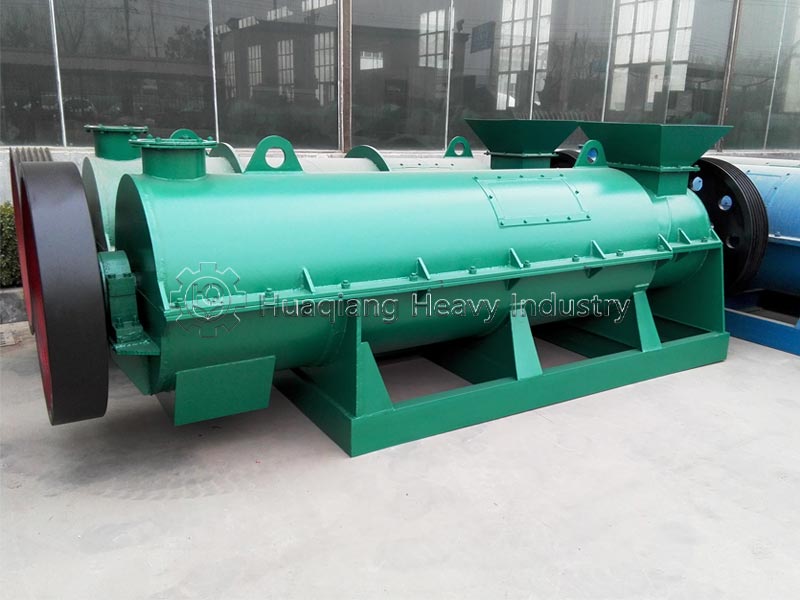
However, in specific scenarios, a drying process is indispensable. If the raw material moisture content is excessively high, the granules may stick together and clump after granulation, making proper screening and packaging impossible. In such instances, a drum fertilizer dryer must be employed to reduce the moisture level to below 12%, thereby preventing mold and spoilage during storage. Additionally, if the finished product requires long-distance transport, long-term storage, or large-scale commercial distribution, drying enhances granule stability, prevents moisture reabsorption, and safeguards overall product quality.
Moreover, new type organic fertilizer granulators are compatible with low-temperature drying processes. This capability allows for the maximum retention of organic matter and beneficial microorganisms within the fertilizer, preventing the nutrient loss that can result from exposure to high temperatures. In summary, a drying process is not a mandatory requirement for granulation; rather, the decision to include it should be made judiciously based on the specific characteristics of the raw materials and the intended application of the finished product.