
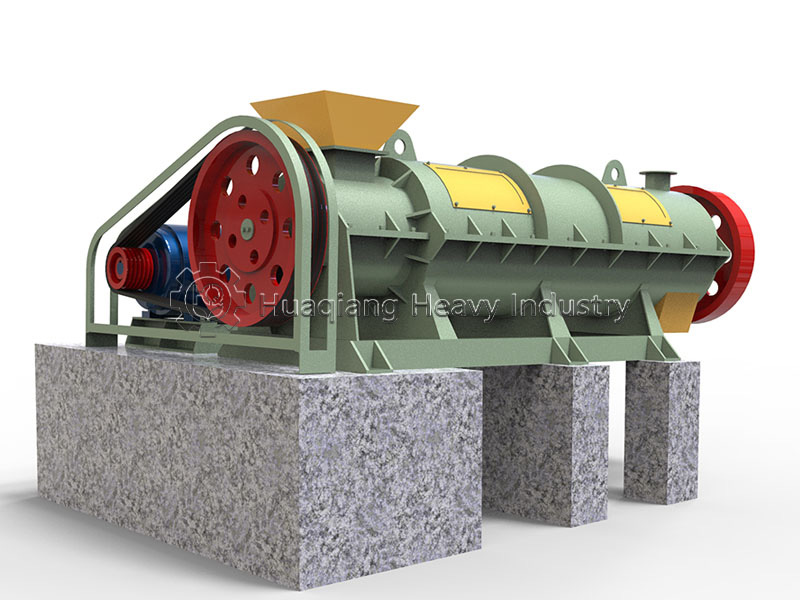
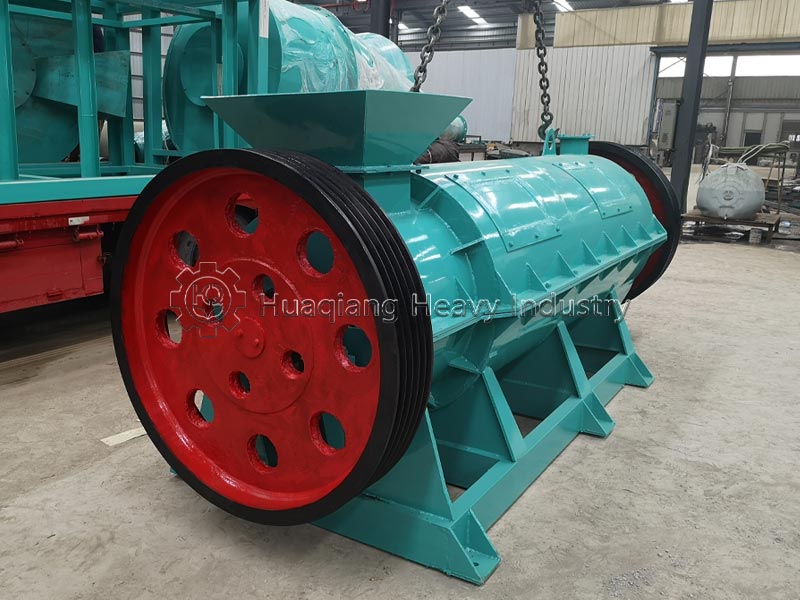
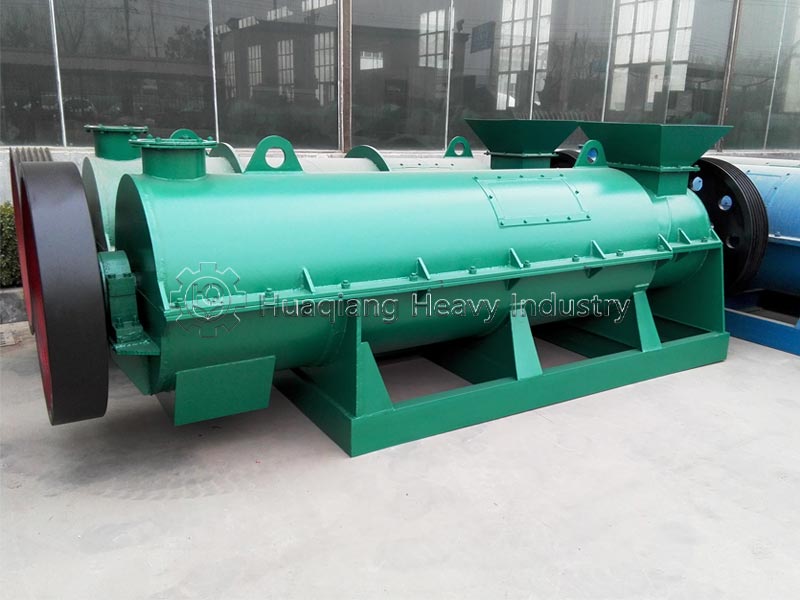
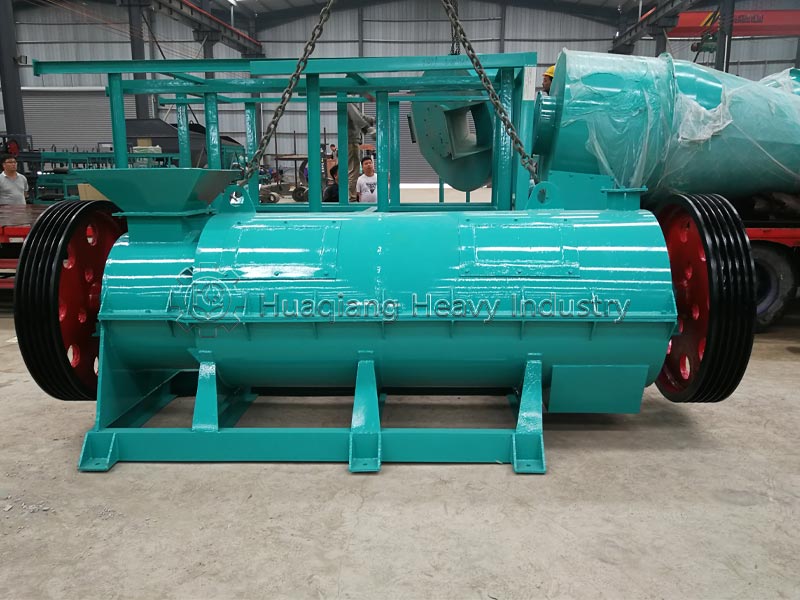
The agitator granulator utilizes high-speed rotating agitator teeth to produce granules. Its unique agitation and granulation method has distinguished it in the field of granule production. Its core operating principle is to feed the mixed material into the granulation drum, where the high-speed rotating agitator teeth vigorously stir, impact, and tumble the material. This causes the material to gradually agglomerate into granules due to friction, centrifugal force, and its own viscosity.
This granulation method does not require complex extrusion equipment and can meet the granulation needs of a variety of materials. It is particularly suitable for materials with high viscosity or containing certain fibers. Compared with other granulation equipment, the agitator granulator has a gentle granulation process, causes less damage to the material, and produces granules with good roundness and uniform size, making it suitable for small and medium-sized granulation production.
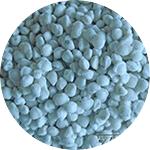
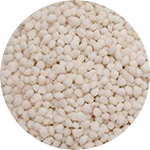
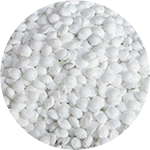
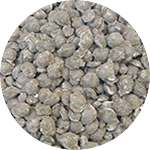
Where are the agitator granulators commonly used?
The agitator granulator is widely used in many fields due to its unique granulation principle and good adaptability. The specific application scenarios are as follows:
1.Fertilizer field
It can produce organic fertilizer, bio-organic fertilizer, compound microbial fertilizer, etc. It can ferment organic waste such as livestock and poultry manure, straw, mushroom residue, etc. into granular fertilizer, solving the problem of easy agglomeration and poor fluidity of organic fertilizer.
It excels in biofertilizer granulation, as the gentle granulation process effectively preserves the activity of the bacteria and ensures the effectiveness of the biofertilizer. It can also produce a variety of medium and trace element fertilizers to meet the specific nutrient requirements of different crops.
2.Other industrial fields
Chemical industry: Suitable for granulation of various viscous chemical raw materials, such as dyes, pigments, catalysts, etc., through granulation, these chemical products have better performance and storage stability.
Pharmaceutical industry: It can be used for the granulation of some traditional Chinese medicine granules and pharmaceutical excipients. The granulation process can reduce the loss of drug ingredients and ensure the quality of drugs.
Feed industry: It can mix various feed raw materials and granulate them to produce pellet feed suitable for livestock, poultry, aquatic products, etc., and improve the palatability and digestibility of feed.
How is the agitator granulator designed according to the granulation process?
The structural design of the agitator granulator is closely linked to the granulation process. All components work together to achieve efficient granulation. Its main components and functions are as follows:
1.Feeding device
It consists of a hopper and a screw feeder. The hopper is used to temporarily store the material to be granulated. Its capacity depends on the production scale and is generally 0.5-3 cubic meters.
The screw feeder controls the speed through a variable frequency motor to feed the material into the granulation drum evenly and stably, ensuring that the feed amount matches the granulation speed and providing a guarantee for uniform granulation.
2.Granulating cylinder
It is the main working part of the agitator granulator. It is usually cylindrical and made of stainless steel with good corrosion resistance and wear resistance.
The diameter and length of the granulating cylinder are determined by production capacity, generally 0.5-2 meters in diameter and 1-3 meters in length. Its inner wall is smooth to reduce material adhesion and wear.
3.Stirring teeth
Installed on the rotating shaft inside the granulating cylinder, it is the core component of the granulating process. There are usually 4-8 stirring teeth, which are symmetrically distributed. The stirring teeth are made of high-strength alloy steel and have high hardness and wear resistance after heat treatment.
The shapes of stirring teeth are various, the most common ones are paddle type, claw type, etc. Their length and angle are optimized to enhance the stirring, impact and turning effects on the material, and promote the agglomeration of the material into particles.
4.Drivetrain
It consists of a motor, a reducer, a coupling, etc. The motor provides power, and the power depends on the equipment model, generally 5.5-30kW.
The reducer converts the high-speed rotation of the motor into an appropriate speed for the stirring teeth. The speed of the stirring teeth is usually 300-1000 rpm. The power is transmitted to the stirring shaft through the coupling to ensure the stable rotation of the stirring teeth.
5.Water spray device
It consists of a water pipe and a nozzle, installed on the upper part of the granulating cylinder, and is used to spray an appropriate amount of water or binder onto the material in the granulating cylinder.
The number and position of the nozzles can be set according to the size of the granulating cylinder to ensure that the material can be evenly wetted and promote the formation and stability of the particles.
6.Discharging device
Located at the end of the granulation drum, this is usually an inclined chute that transports the granules to the subsequent process. The chute is made of stainless steel to prevent material from sticking and ensure smooth discharge.
How does the tooth granulator make fertilizer?
The process of fertilizer production by the agitator granulator is orderly and critical. Each link affects the quality of the final product. The specific steps are as follows:
1.Raw material pretreatment
Organic fertilizer raw materials must first be fermented and composted. The fermented material is then crushed and screened to a particle size of 40-80 mesh to ensure granulation. The moisture content of the material is also controlled between 20% and 30%. If the moisture content is too high, it needs to be air-dried or dried; if it is too low, water should be added.
For compound fertilizers, basic fertilizers such as nitrogen, phosphorus, and potassium should be accurately measured according to the formula ratio and then mixed. The mixing uniformity should reach more than 85%. An appropriate amount of binder can be added to the mixed materials as needed.
2.Feed granulation
The pre-treated material enters the granulation drum through the feeding device, and the water spray device sprays the material with an appropriate amount of water or binder. Driven by the transmission system, the stirring teeth rotate at high speed, vigorously stirring, impacting and turning the material, causing the material to gradually agglomerate into particles due to mutual collision and bonding.
During the granulation process, the feed rate, stirring tooth speed and water spraying amount need to be adjusted according to the formation of the particles. Generally, the particle diameter can be controlled at 1-5 mm.
3.Screening
The finished granules are discharged from the discharging device at the end of the granulating cylinder and enter the screening equipment for screening. Unqualified granules (oversized or undersized) are separated by screens of different mesh sizes. Unqualified granules are returned to the granulating system for re-granulation, while qualified granules enter the next stage.
4.Drying and cooling
Granular fertilizers with high moisture content need to be dried, usually using a dryer to reduce the moisture content of the granules to below 10%.
The temperature of the particles after drying is high and needs to be cooled. A cooling fan or cooler can be used to reduce the temperature of the particles to room temperature to prevent the particles from agglomerating.
5.Package
After cooling, the qualified granular fertilizer is measured and then packed. The packing materials can be woven bags, plastic bags, etc., which are convenient for storage and transportation.
What are the characteristics and advantages of the agitator granulator in the fertilizer production process?
Compared with other granulation equipment, the agitator granulator has the following advantages when producing fertilizers:
1.Good granulation effect
The fertilizer particles produced are highly round, uniform in size, smooth in surface, and have good fluidity. They are not easy to clump during storage and transportation, making fertilization operations easier.
2.Strong adaptability to materials
It can process fertilizer raw materials of various properties, especially organic raw materials with high viscosity and certain fiber content, and can achieve good granulation effect without complicated pretreatment.
3.Easy to operate
The equipment has a simple structure and an intuitive operation interface, and operators can become proficient in operation after simple training. During the granulation process, the granulation formation can be observed and relevant parameters can be easily adjusted to ensure granulation quality.
4.Lower energy consumption
Compared with some large-scale extrusion granulation equipment, the agitator granulator has lower power, lower energy consumption and relatively low operating cost, making it suitable for use by small and medium-sized fertilizer production enterprises.
5.Low equipment investment
The manufacturing cost of the agitator tooth granulator is low, the equipment price is relatively cheap, and the initial investment is small. For companies with limited funds, it is an economical and affordable choice.
What are the benefits of using a tooth granulator to make fertilizer?
Using a stirring tooth granulator to make fertilizer has many significant benefits, as follows:
1.Retaining the active ingredients of fertilizers
Since the granulation process of the agitator granulator is gentle, the extrusion and friction of the material are small, which can retain the effective ingredients in the fertilizer to the greatest extent, especially the organic matter in organic fertilizer and the beneficial microorganisms in biological fertilizer, thus ensuring the fertilizer efficiency.
2.Improve the convenience of fertilizer application
The resulting granular fertilizer has good fluidity, making it easy to apply manually or mechanically. The amount of fertilizer applied can be precisely controlled based on the specific crop and soil conditions, reducing fertilizer waste. Furthermore, the granular fertilizer produces less dust during application, improving the fertilization environment.
3.Enhanced fertilizer storage stability
Compared with powdered fertilizer, granular fertilizer is less likely to absorb moisture and clump, has good storage stability, and can be stored for 8-12 months under ventilated and dry conditions, extending the shelf life of the fertilizer.
4.Promoting resource utilization of organic waste
The agitator granulator can convert a large amount of organic waste such as livestock and poultry manure, crop straw, etc. into high-quality organic granular fertilizer, realizing the resource utilization of waste, reducing environmental pollution, and promoting the development of ecological agriculture.
5.Meeting diverse fertilizer needs
According to the needs of different crops and different growth stages, the fertilizer formula and particle size can be flexibly adjusted to produce a variety of special fertilizers, such as organic fertilizers for vegetables, biological fertilizers for fruit trees, etc., to meet the diversified needs of agricultural production.
How to properly perform regular maintenance on the agitator granulator?
In order to ensure the normal operation of the agitator granulator and extend the service life of the equipment, the following regular maintenance work must be done:
1.Regular inspection of components
Before starting the machine every day, check whether the feeding device is unobstructed and whether there is any material blockage; check whether the gap between the stirring teeth and the granulation cylinder is appropriate, generally 5-10 mm; check whether there is any abnormal noise or oil leakage in the transmission system.
Check the wear of the stirring teeth every week. If the stirring teeth are found to be worn, deformed or loose, they should be repaired, tightened or replaced in time. Check whether the inner wall of the granulation cylinder is worn or corroded. If there is any problem, deal with it in time.
Check the bolts at each connection every month to see if they are loose, and tighten them in time if found loose; check the operating temperature (normal temperature does not exceed 70℃) and vibration of the motor and reducer to ensure stable operation of the equipment.
Carry out a comprehensive inspection of the equipment every quarter, including the tightness of the drive belt, the lubrication condition of the bearings, etc., and replace severely worn parts in a timely manner.
2.Keep your equipment clean
After each production, clean the granulating cylinder, stirring teeth and feeding device in time to prevent the material from agglomerating and hardening, which will affect the next production. You can use clean water to rinse (for water-soluble materials) or special tools to clean (for non-water-soluble materials).
Regularly clean the dust, oil, etc. on the external surface of the equipment to keep the equipment clean and tidy, so as to facilitate observation of the equipment's operating status and detection of potential problems.
3.Lubrication maintenance
Regularly add lubricating oil or grease to transmission components according to the equipment manual. For reducers, generally replace the gear oil every 800-1000 hours of operation; and for bearings, add grease every 500-600 hours of operation.
When adding lubricating oil (grease), choose the appropriate type and amount to avoid increased wear of components due to poor lubrication.
4.Maintenance of stirring teeth
The stirring teeth are vulnerable parts of the equipment. If they are severely worn after a period of use, they should be replaced in time. When replacing, ensure that the installation position and angle of the stirring teeth are correct to ensure the granulation effect.
During use, avoid metal foreign matter from entering the granulation barrel to prevent damage to the stirring teeth and the granulation barrel.
5.Transmission system maintenance
Regularly check the tightness of the transmission belt or chain between the motor and the reducer. Too loose or too tight will affect the transmission efficiency and equipment life, and should be adjusted in time.
Check the sealing condition of the reducer. If oil leakage is found, the seal should be replaced in time to prevent the loss of lubricating oil from affecting the operation of the equipment.
| Model | Capacity (t/h) |
Output Granules Size (mm) |
Motor Power (Kw) |
Outside Dimension (mm) |
| YSL-60 | 1-2 | 1-5 | 37 | 3700*1800*1050 |
| YSL-80 | 2-4 | 1-5 | 45 | 3700*2100*1300 |
| YSL-100 | 3-5 | 1-5 | 55 | 3750*2500*1500 |
| YSL-120 | 4-7 | 1-5 | 75 | 4900*2950*1900 |
| YSL-150 | 5-8 | 1-5 | 90 | 5000*3300*2150 |