
Organic fertilizer granulation is a critical step that determines the product's form and commercial value. The new type organic fertilizer granulator, flat die pelleting machine, and ring die pelleting machine represent three distinct technical approaches, each suited to specific raw material conditions and production scales. All three are designed exclusively for granulating organic fertilizers and biomass materials; they are rarely used in compound fertilizer production.
The new type organic fertilizer granulator employs a wet process, utilizing high-speed agitation to continuously mix, granulate, and spheroidize fine powder materials. Its standout feature is the ability to process wet materials with moisture content ranging from 20% to 50%; fermented chicken or pig manure can be granulated directly without intensive drying. It achieves a granulation rate exceeding 90%, producing spherical granules. However, it has relatively high energy consumption and is sensitive to moisture fluctuations, making it ideal for high-moisture livestock and poultry manure.
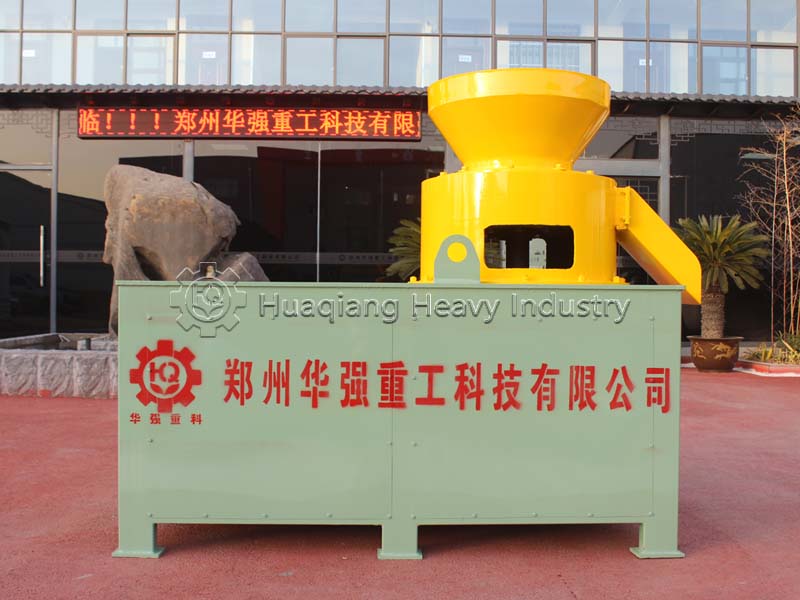
The flat die pelleting machine is an extrusion device; pressure rollers force material against a flat, perforated die, extruding cylindrical pellets that are then cut to length. The process requires no added water or drying, resulting in highly dense pellets. It adapts better to fibrous materials than ring die machines, making it particularly suitable for high-fiber feedstocks like straw and rice husks. With a simple structure and low investment cost, it is well-suited for small- to medium-sized organic fertilizer plants.
The ring die pelleting machine operates on a similar principle but utilizes a ring-shaped die, offering a much larger working area than the flat die version. It supports continuous 24-hour operation with a single-unit capacity of 5–20 tons per hour. It produces the densest, smoothest, and strongest pellets, though it entails higher investment and maintenance costs and imposes stricter requirements regarding raw material particle size and moisture content.
Each of the three types of equipment has its own strengths; selection should follow the principle of "determining the process based on the material and the equipment based on the scale of production."