
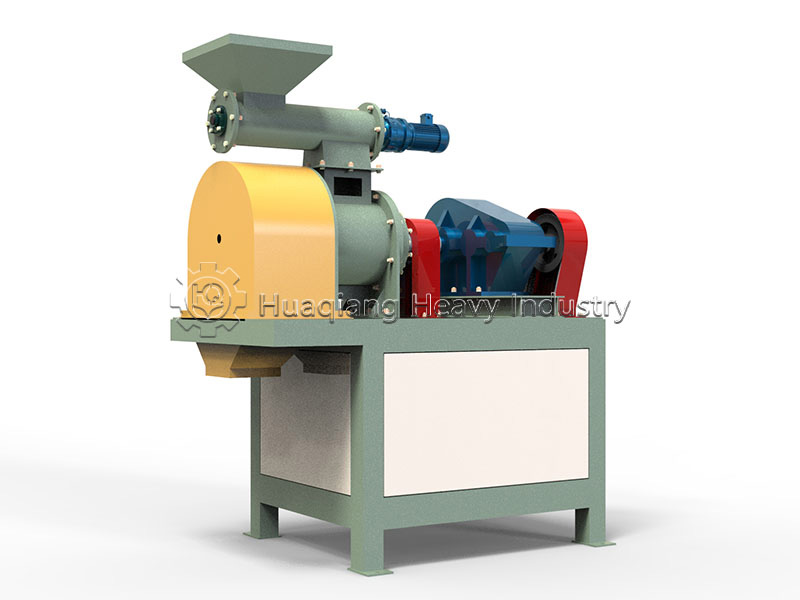
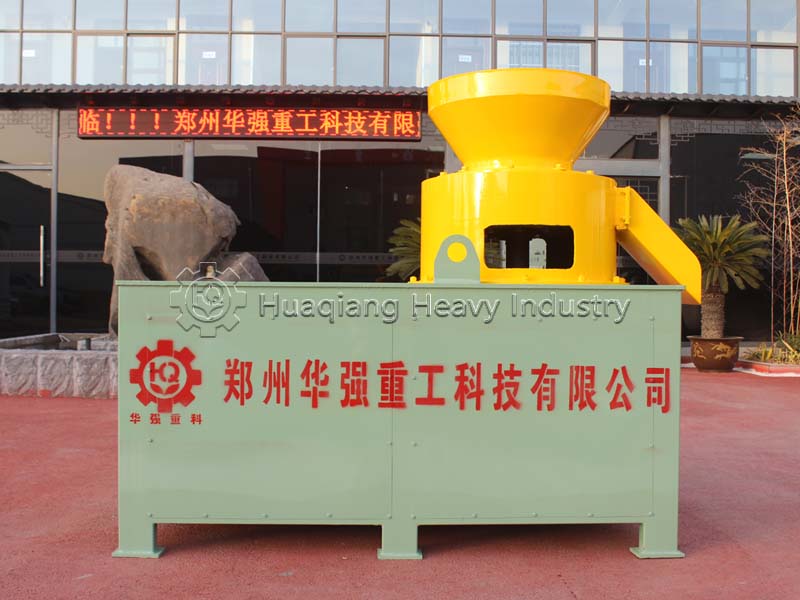
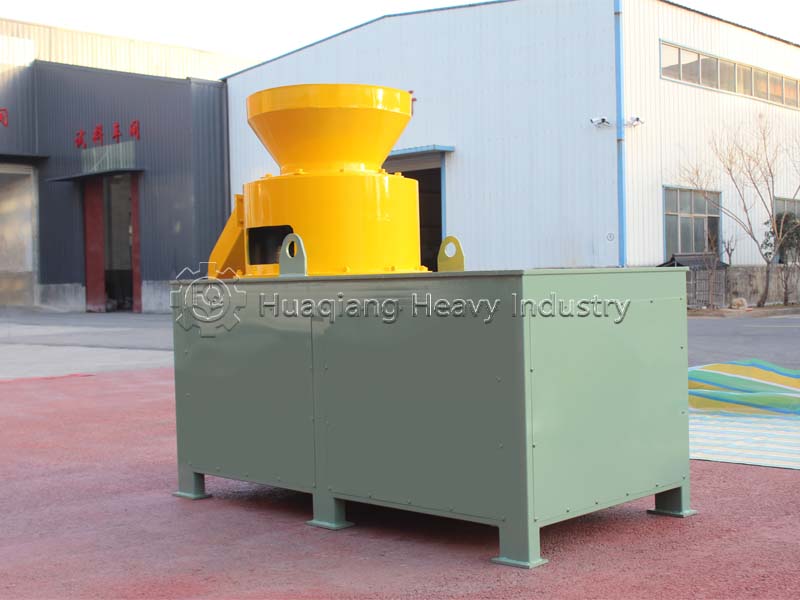
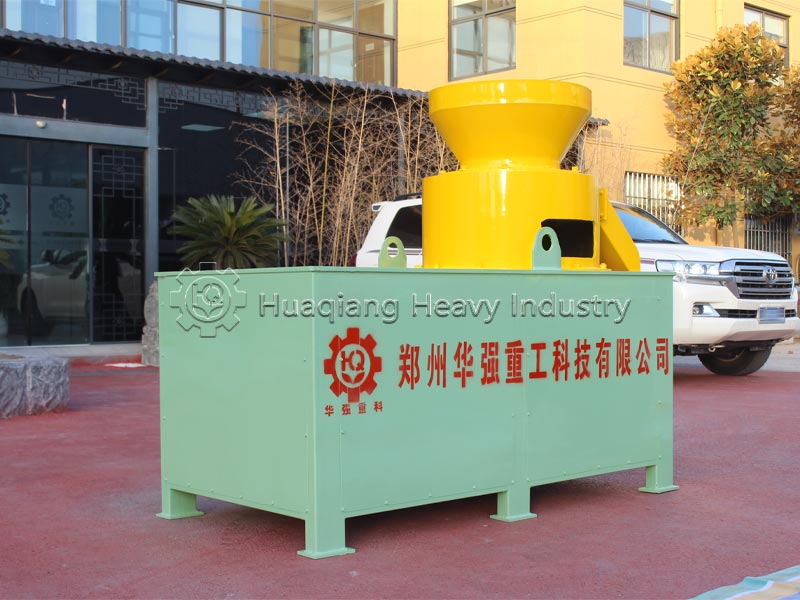
Ring die pelleting machines are a mainstay in the feed industry and large-scale organic fertilizer processing. Its core component is a vertically mounted ring die with thousands of perforations. Material is extruded from these perforations after being crushed by pressure rollers within the ring die cavity. The ring die's structural design gives it an inherent advantage in production capacity—a larger effective working area, more uniform material distribution, and higher output per unit time. A medium-sized ring die pelleting machine can achieve an hourly output of five to six tons, while large units can easily exceed ten tons per hour. The equipment is easy to operate according to established procedures, and runs stably after parameter adjustments.
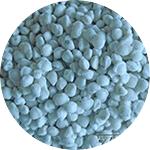
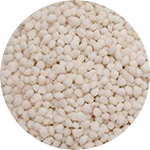
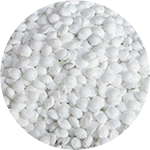
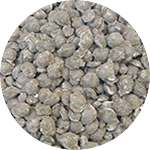
Working Principle of Ring Die Pelleting Machine
The ring die of the ring die pelleting machine is a ring-shaped steel sleeve with stepped perforations on its inner wall, rotating at a constant speed driven by a main motor. The inner cavity of the ring die contains two or three pressure rollers, which are mounted on a fixed eccentric shaft via bearings and do not rotate actively. When material enters the inner cavity of the ring die, it is evenly spread onto the inner wall of the ring die under the combined action of centrifugal force and material thrust. As the ring die rotates, it pulls the material into the gradually narrowing wedge-shaped gap between the pressure roller and the inner wall of the ring die. The material is tightly clamped and subjected to intense crushing. Under the pressure of the pressure roller, the material is forced into the die orifice, where it is further densified and shaped through the compression section. Finally, it is extruded from the outer wall of the ring die as a dense cylindrical strip. The cutter on the outside of the ring die cuts the continuously extruded strip, forming cylindrical particles of uniform length.
Operating Method for
Pre-start Inspection. Check if the gap between the ring die and the pressure roller is correct. Generally, the gap of a new ring die should be controlled at 0.3~0.5mm. The ring die should rotate easily by hand without obvious jamming. Check if the gap between the cutter and the outer wall of the ring die is uniform, and that the gaps of all cutters are consistent. Confirm that the reducer oil level is normal, the pressure roller bearings are well lubricated, and all bolts are tightened properly.
Starting Sequence. First, start the feeder, conditioner, and other auxiliary machines, then start the main motor to drive the ring die to rotate. Run it unloaded for two minutes to confirm there are no abnormalities before starting to feed material. Do not feed material before starting the machine; otherwise, the ring die cavity will fill with material, causing stalling and overload.
Break-in phase. After installing a new ring die or pressure roller, it cannot immediately operate at full capacity. It requires one to two hours of break-in using an oil-material mixture. The method is to mix fine bran or rice bran with a small amount of waste machine oil, adding small amounts multiple times to the granulation chamber for repeated extrusion, gradually polishing the inner wall of the die orifice and the surface of the pressure roller.
Stable operation phase. The key is to control the matching of the feed rate and the ring die speed. Excessive feed will cause the ring die to overload, current to spike, or even stall; insufficient feed will result in a thin material layer between the pressure roller and the ring die, leading to direct metal-to-metal friction and accelerated wear. Operators must closely monitor the ammeter, stabilizing the current within 80% to 90% of the motor's rated value.
Shutdown procedure. First, stop feeding. After the material in the granulation chamber is basically emptied, turn off the steam and conditioner. Let the ring die continue to idle for a short while to fully extrude any remaining material, and finally stop the main motor. Before long-term shutdown, the pelleting chamber must be flushed with an oil-based mixture to replace the material in the ring die orifice, preventing rust and the drying of residual material.
Equipment Problem Solutions
Ring die blockage preventing pelleting. This manifests as a sudden and sharp increase in current, with a rapid decrease in the number of pellets at the discharge port or no pellets being discharged at all. The cause is that large, hard objects are mixed in with the material, blocking the gap between the pressure roller and the ring die, or the feed rate is suddenly too high, exceeding the extrusion capacity. Feeding must be stopped immediately, and the machine should be allowed to idle for a short time to see if the pellets can be discharged automatically. If the current does not decrease, the machine must be stopped and the pelleting chamber disassembled for cleaning.
Poor pellet formation, loose and brittle pellets, or pellets of uneven length. An unsuitable material moisture content is a common cause—too dry, and the material will not be sufficiently plasticized in the die orifice, resulting in loose internal pellet bonding; too wet, and the pellets will easily deform and stick together after extrusion. Insufficient conditioning steam or inadequate temperature can also lead to insufficient maturation and substandard hardness of the feed pellets. A dull cutter or inconsistent gap between the cutter and the outer wall of the ring die will result in rough cuts and pellets of uneven length.
Ring die cracking or premature failure. The ring die itself is a high-value, easily damaged part, with a normal service life of several thousand hours. If cracks or extensive porosity appear shortly after use, the cause is usually improper operation—the gap between the ring die and the pressure roller is adjusted too small, and the high temperature generated by the hard friction between the metals causes the ring die material to anneal and crack; or hard objects such as iron blocks are mixed in the material, causing localized overload on the ring die wall when the pressure roller rolls over the hard objects.
Investment Costs for
Equipment Purchase Costs. Ring die pelleting machines have a precise structure and high material requirements, and the price of the main unit is relatively high among similar extrusion equipment. For the same capacity specifications, the price of a ring die pelleting machine is usually higher than that of a flat die pelleting machine, but lower than that of a comparable double roller press granulator and rotary drum granulator.
Auxiliary Equipment and Infrastructure. Organic fertilizer production lines are relatively simple, requiring no boiler, but requiring fermentation, crushing, and drying systems. The investment in auxiliary equipment and infrastructure for the entire line is usually comparable to the investment in the main unit. The total investment for the entire production line needs to be specifically calculated based on the capacity scale and degree of automation.
Operating Costs. Ring dies and pressure rollers are high-value, easily worn parts, resulting in high replacement costs. The lifespan of a set of ring dies and pressure rollers depends on the abrasiveness of the material and the level of operation and maintenance. Under normal operating conditions, the lifespan of ring dies can reach 2000-4000 hours, while the lifespan of pressure rollers is slightly shorter. Electricity consumption is another major expense. The main motor has a high power rating, and with the electricity used by auxiliary equipment, the electricity cost per ton of product needs to be included in the cost accounting. Maintenance costs mainly consist of regularly replacing pressure roller bearings, seals, and gearbox oil. Although the annual amortization is not high, continuous investment is required.
| Model | HP-450 | HP-650 |
| Capacity (t/h) | 2-5 | 4-8 |
| Pelleting Rate (%) | >95% | >95% |
| Motor Power(Kw) | 30+1.5 | 55+3 |
| Dimension(mm) | 2150*1350*2200 | 2500*1350*2535 |