
The production of NPK compound fertilizers requires specific manufacturing processes tailored to the NPK ratio, the types of raw materials used, and the desired granule specifications. Variations in raw material handling, granulation methods, and post-processing stages necessitate careful control to ensure high product quality.
1. Impact of Different Formulations on Raw Material Handling
The nitrogen, phosphorus, and potassium raw materials used in NPK fertilizers possess distinct physical properties. For instance, urea is highly hygroscopic, while phosphate and potash fertilizers may vary in terms of particle size and density. Before production, raw materials should be checked for particle size and moisture content; processes such as crushing, screening, and precise proportioning may be required to minimize segregation (layering) during mixing.
2. Key Control Points for Various Granulation Processes
NPK fertilizers can be produced using rotary drum granulation, pan (disc) granulation, or roller compaction (extrusion). In rotary drum granulation, moisture levels and rolling duration must be strictly controlled to prevent granules from sticking together. For pan granulation, the rotation speed, pan inclination angle, and water spray rate should be adjusted based on the specific characteristics of the raw materials. In roller compaction, attention must be paid to the fineness of the raw materials, the uniformity of the mixture, and the compaction pressure to ensure high-quality granule formation.
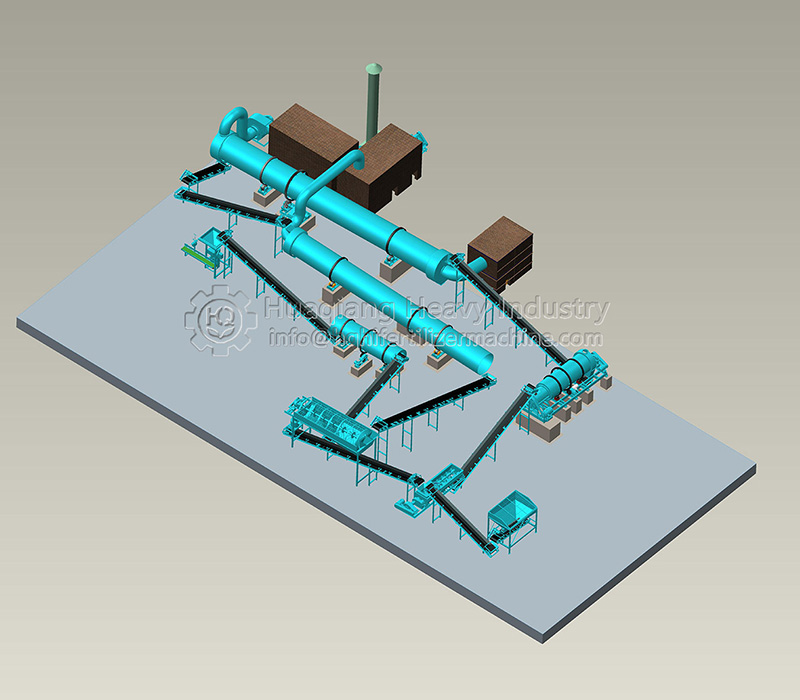
3. Adjusting Drying and Cooling Parameters
Wet granulation processes typically require subsequent drying and cooling. Since different formulations exhibit varying sensitivities to temperature, drying temperatures and processing durations must be carefully calibrated to avoid performance degradation caused by excessive heat. Furthermore, thorough cooling helps reduce the moisture content of the final product and lowers the risk of caking.
4. Setting Screening Standards Based on Product Requirements
As different NPK products have specific requirements for granule size and strength, appropriate screen specifications must be selected. Granules that do not meet these standards should be separated and returned to the relevant production stage for reprocessing. Additionally, regular testing of nutrient content, moisture levels, and granule strength is essential to guarantee consistent product quality.
The NPK fertilizer production process involves distinct priorities depending on the specific formulation, granulation method, and final product requirements. Adjusting process parameters accordingly is crucial for enhancing production efficiency, ensuring granule quality, and maintaining operational stability.