
A complete organic fertilizer production process involves multiple stages. Among them, compost turning and mixing are two core steps that determine product quality, carried out respectively by large wheel compost turning machines and fertilizer mixer machines.
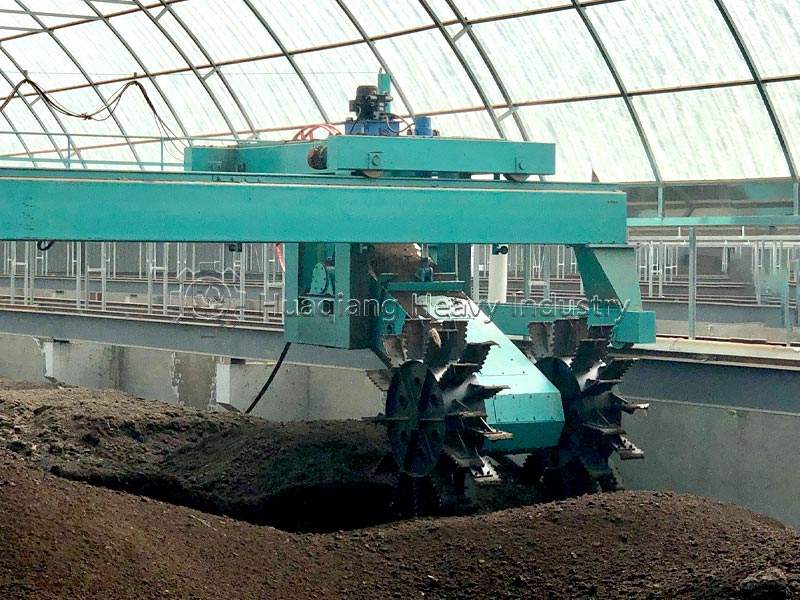
Aerobic fermentation marks the beginning of the production line and is the most time-consuming stage. After raw materials—such as livestock manure and crop straw—are mixed in specific proportions and piled into windrows, regular turning is required to replenish oxygen and dissipate moisture and heat. The large wheel compost turning machine is the primary piece of equipment designed for this type of large-scale fermentation. Featuring two large-diameter turning wheels, it offers a turning depth of 1.5–3 meters and a maximum working width of 30 meters. It reduces energy consumption by approximately 70% compared to traditional equipment. When combined with automated controls, the wheel-type turner can shorten the composting cycle to 15–20 days, making it ideal for large organic fertilizer plants with an annual output exceeding 50,000 tons.
Once fermentation is complete, the decomposed material moves to the crushing and mixing stages. The fertilizer mixer uniformly blends the decomposed, pulverized material with additives such as functional microbial agents and trace elements, creating a consistent material base for subsequent granulation. Taking the double shaft paddle mixer as an example: two counter-rotating shafts toss the materials into a "weightless" state, completing a batch mix in just 30–120 seconds. This process achieves a coefficient of variation of less than 5% and minimal residue, facilitating rapid formula switching.
Viewed as a whole, the compost turner determines fermentation quality—insufficient turning leads to uneven decomposition, directly impacting all subsequent steps—while the mixer determines nutrient consistency—uneven mixing results in inconsistent fertilizer efficacy across product batches. Together, these two sequential processes establish the foundation for the final product's quality.