
Yesterday afternoon, two of our 2.5-meter crawler-type compost turning machines were successfully loaded into a container at the shipping yard. After passing an off-center load inspection, the container was sealed and is now ready for transport to the port for shipment to Malaysia.
The two units feature a crawler-drive system and a 2.5-meter turning span, making them suitable for windrow-style organic fertilizer fermentation. The equipment is heavy—weighing nearly 6 tons per unit—and the width of the crawler chassis exceeds the standard internal width clearance of a container. Before loading, the logistics team adjusted the crawler tensioning mechanism to its minimum setting and removed the cab's sunshade and the upper section of the exhaust pipe to reduce the machine's width to fit inside the container. A triangular balancing method using dual lifting straps and shackles was employed for hoisting; the two units were lifted into the container one by one using a reach stacker, positioned with their fronts facing forward and rear frames facing each other, leaving a 30-centimeter gap between them for maneuvering.
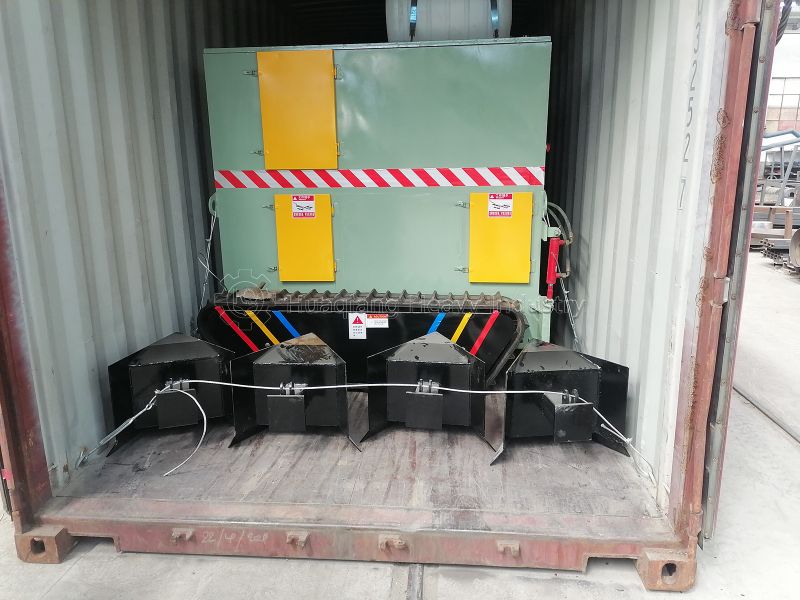
During the securing process, workers drove triangular wooden wedges in front of and behind each crawler track and used ratchet straps to lash the chassis towing hooks to the container's floor anchor points. Multi-layer inflatable dunnage bags were inserted along the container walls, and wooden bracing was installed against the upper crossbeams to prevent the equipment from shifting during sea transport. Given the high temperature and humidity along the shipping route to Malaysia, exposed piston rods on the hydraulic cylinders were coated with anti-rust grease and wrapped in stretch film, while moisture-absorbing bags were placed inside the electrical control boxes.
Accompanying documents—including the packing list (in both Chinese and English), operation manual, hydraulic schematic, and spare parts list—were included in the shipment. The foreign trade department has completed export customs declarations, and the cargo is scheduled to enter the port tomorrow. The on-site loading supervisor confirmed that both units are securely fastened and the center of gravity is balanced, meeting all maritime safety standards.