
Unlike the chemical reactions in compound fertilizers, blended fertilizers aim for purely physical mixing. Urea, monoammonium phosphate, potassium chloride, and other raw material particles are kept separate, and the goal of mixing is to ensure that the nitrogen, phosphorus, and potassium ratios in each batch of fertilizer match the formulation.
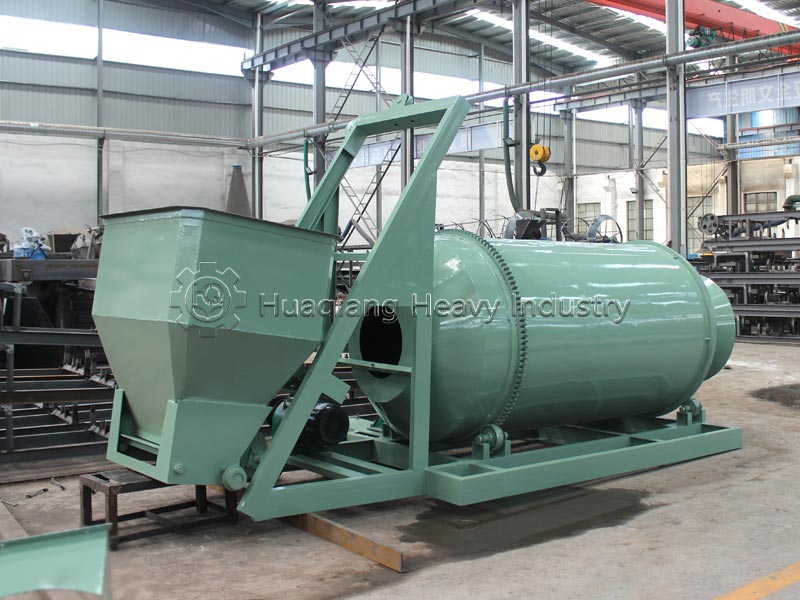
The biggest challenge in the mixing process is segregation. Particles of different sizes will automatically separate during vibration and descent, disrupting the mixing effect. To address this, the production line employs multiple safeguards: Particle size is tested before raw materials enter the plant, requiring that the average particle size of each raw material be similar; after mixing, transfer drop is minimized by using belt conveyors instead of chutes to reduce free fall distance; a buffer silo is installed before packaging to maintain material flow and prevent accumulation.
In recent years, continuous mixing processes have emerged. Raw materials are simultaneously fed into a continuous BB fertilizer mixer via multiple metering scales, and the materials flow and mix within the machine, achieving uninterrupted production. This method avoids the waiting time associated with batch mixing and is more suitable for large-scale production scenarios with simple formulas.
From single-batch mixing to continuous production, from equipment selection to process control, the mixing process of the NPK blending fertilizer production line always revolves around one goal: ensuring that every granule of fertilizer carries a scientifically formulated ratio.