
At the heart of NPK fertilizer production lies the transformation of raw materials—nitrogen, phosphorus, and potassium—into granules with uniform nutrient distribution and adequate structural strength. The process typically encompasses proportioning and mixing, granulation, drying, cooling, screening, and coating. Among these, granulation serves as the pivotal link, directly determining granule morphology, strength, and production efficiency.
Mainstream granulation methods each have their specific operational scope. Rotary drum granulators utilize an agglomeration technique where materials form spheres through the addition of water or steam within a rotating cylinder; this method suits large-scale production of medium-to-high concentration fertilizers, yielding uniform granules but requiring a supporting drying system. Disc granulators feature simple structures and low investment costs, making them ideal for small-to-medium-scale production of low-to-medium concentration formulas; however, the granulation rate is heavily influenced by material viscosity, and the volume of recycled material tends to be high. Extrusion granulators employ a dry-forming process that eliminates the need for drying and offers low energy consumption, making them suitable for high-concentration or heat-sensitive formulas, though the resulting granules—often cylindrical or flattened—may lack visual appeal. Tower granulation (melt granulation) produces highly spherical, strong granules ideal for high-concentration compound fertilizers; however, it entails high initial investment, risks nitrogen loss due to high temperatures, and imposes strict requirements on the thermal stability of raw materials.
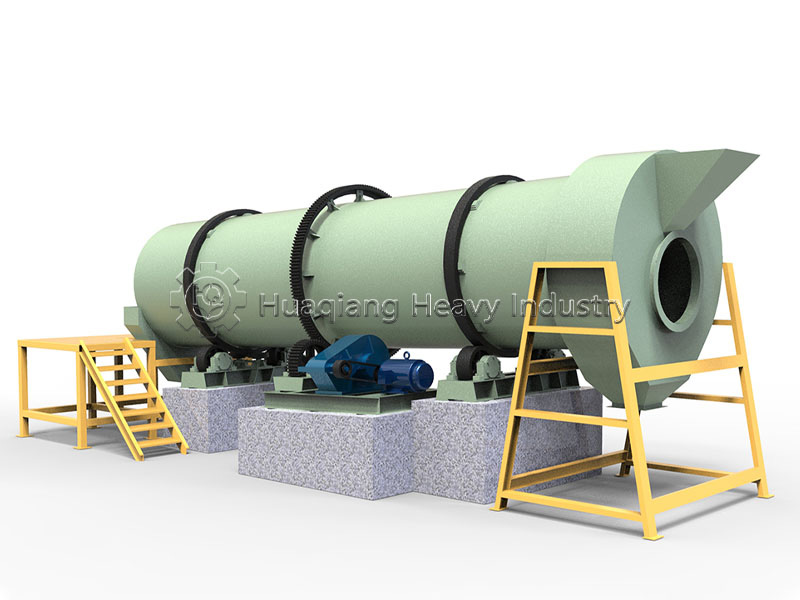
Selecting a granulation technology is essentially a matter of balancing product positioning, raw material characteristics, and return on investment. Rotary drum or tower granulation methods are preferable for high-concentration, large-scale production, whereas disc or extrusion granulation offers better cost-effectiveness for flexible formulations and limited production capacities. It is also important to note that granulation is not an isolated step: the precision of upstream proportioning determines nutrient compliance, while downstream drying and cooling affect granule strength and storage stability.
There is no "one-size-fits-all" solution in NPK fertilizer production technology. Understanding the advantages and trade-offs of each granulation method allows the process to be tailored to the product, rather than forcing the product to conform to the equipment. Choosing the right granulation method lays the foundation for the efficiency and quality of the entire production line.