
Rotary drum granulation production lines and NPK fertilizer production lines are often conflated, yet the former is a specific granulation process, while the latter is a comprehensive production system.
Differences in process positioning: The rotary drum granulator is a cylindrical rotating device where materials are sprayed with water or steam and rolled into granules; it is suitable for organic fertilizers or low-concentration compound fertilizers. In contrast, an NPK fertilizer production line encompasses a complete sequence of operations—including proportioning, crushing, mixing, granulation, drying, cooling, screening, and coating. Rotary drum granulation is merely one optional step within this workflow; other methods, such as extrusion or high-tower melt granulation, can also be employed.
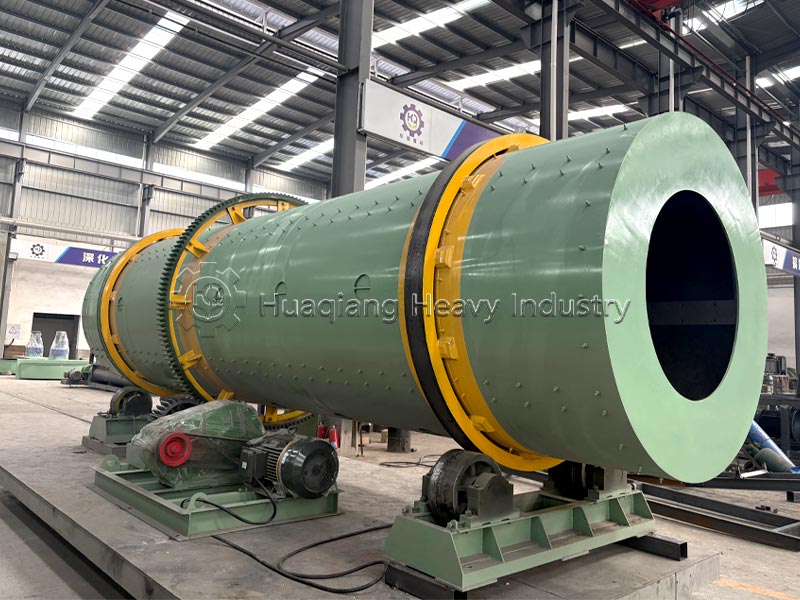
Differences in raw material logic: Rotary drum granulation offers broad adaptability to raw materials, handling both organic matter and inorganic salts; however, the granulation rate is heavily influenced by material viscosity, often necessitating the addition of binders. NPK production lines require strict metering based on specific N-P-K ratios, utilizing raw materials such as urea, monoammonium phosphate (MAP), and potassium chloride. Formula precision directly determines whether nutrient standards are met, placing extremely high demands on the proportioning system.
Differences in product positioning: Rotary drum granulation typically yields low-to-medium concentration granules that are round but possess moderate structural strength. NPK production lines can manufacture high-concentration compound fertilizers with total nutrient content exceeding 45%; these granules feature high strength and excellent storage and transport durability, though the process is complex and the investment cost is far higher than that of a standalone rotary drum line.
In short, rotary drum granulation represents a specific process route, whereas an NPK fertilizer production line constitutes a comprehensive system. When selecting equipment, first clarify the product positioning: for organic fertilizer, a rotary drum granulation line offers high cost-effectiveness; for high-concentration compound fertilizer, a complete NPK system is required.