
In an organic fertilizer production line, the chain-plate compost turner and the granulator operate at opposite ends of the process—one handles fermentation, while the other manages shaping. Although they appear to perform distinct roles, together they determine whether the product can be successfully manufactured and whether its quality remains consistent.
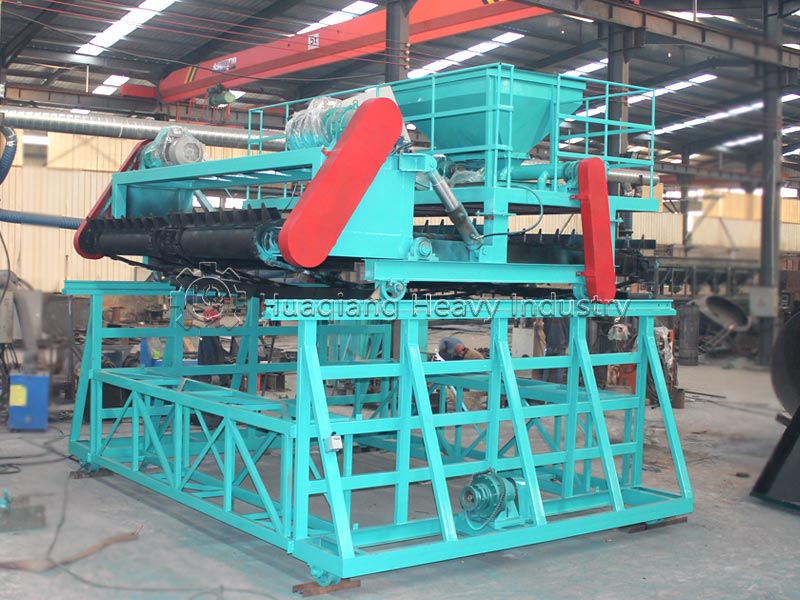
The chain-plate compost turner is used for aerobic fermentation in troughs; its core value lies in its ability to turn material thoroughly and evenly. Traveling along the fermentation trough's rails, the chain plates lift material from the bottom to the top, ensuring full mixing of the pile's interior and exterior layers. This process not only regulates moisture and oxygen levels uniformly but also breaks up clumps, preventing localized anaerobic conditions. Turning depth and travel speed must be matched to the fermentation cycle: turning too shallow leaves the bottom layer oxygen-deprived, while turning too frequently causes excessive heat loss. Typically, turning occurs every 1–2 days, with the frequency increased during the high-temperature phase.
Once fermentation is complete, the material enters the organic fertilizer granules machine. At this stage, the material's moisture content, fiber length, and viscosity directly determine the success of granulation. If the turning process is well-controlled—resulting in evenly decomposed material with optimal moisture—the granulator can produce pellets consistently. Conversely, uneven turning that leaves some material overly wet or incompletely decomposed can cause issues such as die clogging or loose, crumbling pellets. While the granulator allows for adjustments to the die compression ratio and rotation speed based on material characteristics, it cannot compensate for deficiencies in the preceding fermentation stage.
Clearly, the chain-plate compost turner determines the quality of the raw material, while the granulator determines the quality of the finished product. The two machines are linked in a continuous workflow rather than operating in isolation. When selecting equipment, one should not focus solely on individual machine specifications but must consider the turning performance in conjunction with granulation requirements.
Only through the coordination of these upstream and downstream processes can organic fertilizer production evolve from merely "making pellets" to "making high-quality pellets." The synergy between these pieces of equipment is the fundamental logic behind efficient production.