
Organic-inorganic compound fertilizers are often misunderstood as merely "organic fertilizer mixed with a bit of chemical fertilizer." In reality, their technical essence is quite different: the integration of organic and inorganic components is not a simple physical blend, but rather a systematic design involving precise formulation logic, specific processing pathways, and carefully calibrated nutrient-release kinetics.
These fertilizers are produced by taking organic materials—such as livestock and poultry manure or plant and animal residues—subjecting them to fermentation and harmless treatment, and then incorporating inorganic fertilizers. The critical step occurs before this incorporation: the organic materials must be fully decomposed (matured). If undecomposed organic matter is applied to the soil, it may undergo secondary fermentation, consuming oxygen needed by the crops and potentially causing "root burn."
The ratio of organic matter to inorganic nutrients is not arbitrary. Commercially available products typically feature organic matter content ranging from ≥10% to ≥35%, with total nutrient content varying from ≥25% to ≥35%. If the organic matter content is too low, the soil-improvement benefits are effectively lost; conversely, if inorganic nutrient levels are too low, the fertilizer cannot provide the rapid nutrient supply required during peak crop growth stages. A high-quality, technically sophisticated product leverages organic matter to act as a "slow-release carrier" and a "carbon source for microorganisms," while the inorganic nutrients ensure "timely nutrient availability"—creating a synergistic micro-environment within each granule.
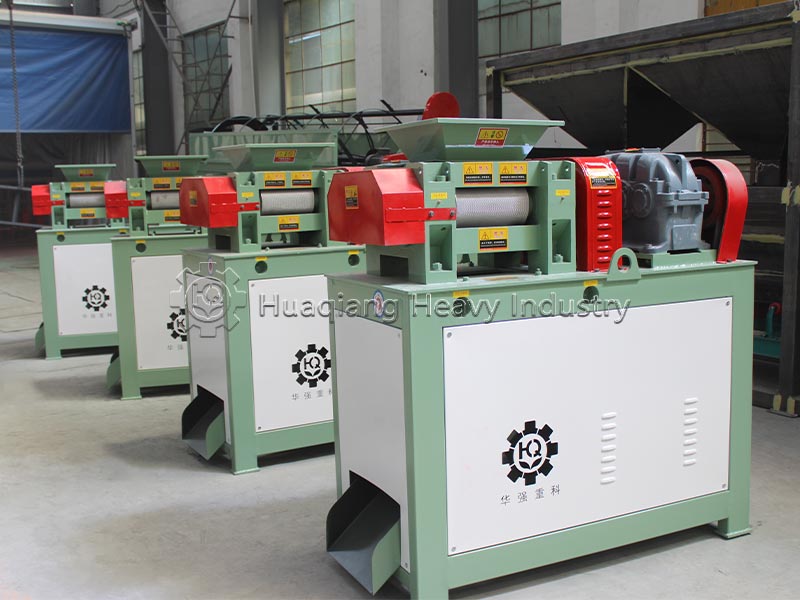
Because organic and inorganic materials differ significantly in terms of moisture content, viscosity, and particle size, the production equipment cannot simply be borrowed from standard organic fertilizer or NPK compound fertilizer production lines. A typical production process involves: fermenting and maturing the organic materials; blending them with urea, ammonium phosphates, potassium salts, and essential secondary or trace elements; pulverizing and mixing the mixture; and then granulating it. The granules are subsequently dried, cooled, and screened. Acceptable granules may then undergo a coating process—such as the application of functional microorganisms or a protective coating powder—before final packaging. The primary technical challenge lies in the granulation stage: due to the stark differences in plasticity between organic materials and inorganic salts, equipment like disc or rotary drum granulators requires precise, iterative adjustments to moisture levels and binding conditions. Alternatively, double roller press granulators are often better suited for formulations with high organic matter content.
The value of organic-inorganic compound fertilizers lies not in "how many nutrients they contain," but in "whether the organic and inorganic components truly work in synergy."