
In an NPK blending fertilizer production line, the choice of fertilizer mixer machine directly impacts blending uniformity and the quality of the finished product; however, not all organic fertilizer mixers are suited to the specific demands of NPK blending.
Such machinery must possess three core adaptive characteristics. First is high mixing uniformity: the equipment must be capable of accommodating the varying densities and particle sizes of organic fertilizers and NPK raw materials. Through a specialized mixing structure that eliminates "dead zones," it ensures uniform nutrient distribution—preventing segregation and clumping—thereby meeting the precise requirements of NPK blending.
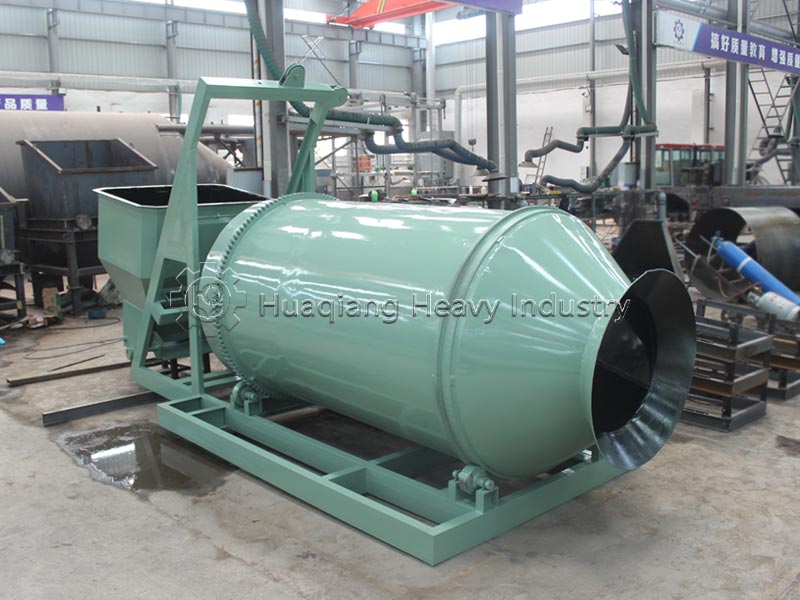
Second are low residue levels and contamination prevention: the interior walls of the equipment must be smooth and free of dead zones to ensure complete discharge. This eliminates the need for tedious cleaning when switching between NPK formulations, thereby minimizing raw material waste and preventing cross-contamination. Furthermore, the equipment must offer strong versatility, capable of processing a wide range of materials—including powdered and granular organic fertilizers, as well as single-nutrient NPK fertilizers—without requiring equipment changes.
Additionally, ease of operation and moderate energy consumption are crucial factors. The mixer should be capable of adapting to various blending ratios without requiring complex adjustments, thereby accommodating diverse production needs while avoiding over-mixing—which can lead to particle breakage and nutrient loss. Only organic fertilizer mixers that embody these specific characteristics are truly suitable for use as NPK blending machines.