
During the setup and operation of NPK blending fertilizer production lines, the decision of whether or not to include a drying process is a common source of confusion for many industry professionals. Unlike compound fertilizers—which strictly require drying after granulation—the drying process for NPK blended fertilizers is not an absolute necessity.
If the nitrogen, phosphorus, and potassium single fertilizers, as well as the auxiliary materials used in the NPK blending fertilizer production line, meet moisture standards (i.e., have a moisture content below 12%), and if the finished product is intended solely for local, short-term application—without the need for long-distance transport or prolonged storage—then no additional drying is required after blending. In such cases, the product can be shipped out immediately following screening and packaging. Omitting the drying step in this scenario not only saves on equipment investment and energy consumption but also prevents the loss of nutrients that can occur during high-temperature drying.
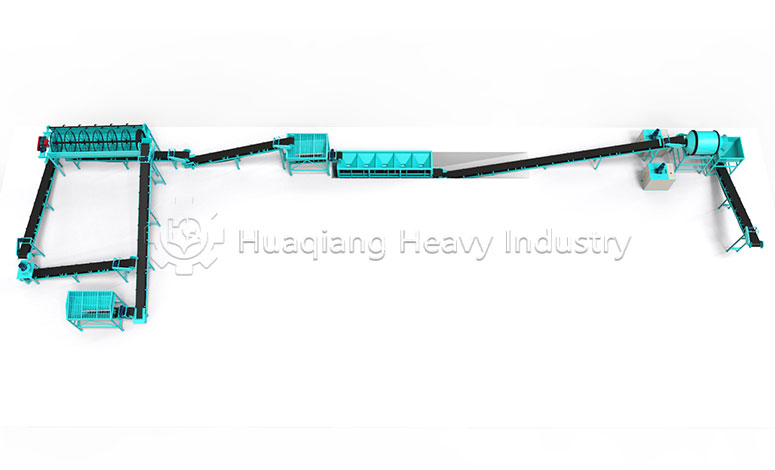
However, in specific scenarios, the drying process is indispensable. If the raw materials have a high moisture content, the blended granules are prone to absorbing moisture, sticking together, and caking; this renders them impossible to screen and package properly. Consequently, a drying process is required to control the finished product's moisture content within the 8%–12% range, thereby preventing mold growth during storage. Furthermore, if the finished product requires long-distance transport, long-term storage, or is intended for commercial retail, drying enhances granule stability, prevents moisture re-absorption and deterioration, and safeguards both the product's physical appearance and overall quality.
It is crucial to note that when drying NPK blended fertilizers, temperatures must be kept low to avoid high-heat degradation of the nitrogen, phosphorus, and potassium nutrients. In summary, there is no single fixed standard for deciding whether or not to include a drying process. By making a rational choice based on the moisture levels of the raw materials and the specific requirements for storage and transport, manufacturers can effectively balance production efficiency, product quality, and cost control, thereby ensuring that their NPK blending fertilizer production lines are optimally adapted to their specific needs.