
In NPK compound fertilizer production, granulation is merely "shaping"; the drying process truly determines granule quality. Freshly produced wet granules from the NPK fertilizer granulator machine have a moisture content as high as 12%-15%, crumbling easily when squeezed. The dryer's task is to quickly remove moisture before the granules harden, making them firm and suitable for storage.
1. The Drying Journey of Wet Granules
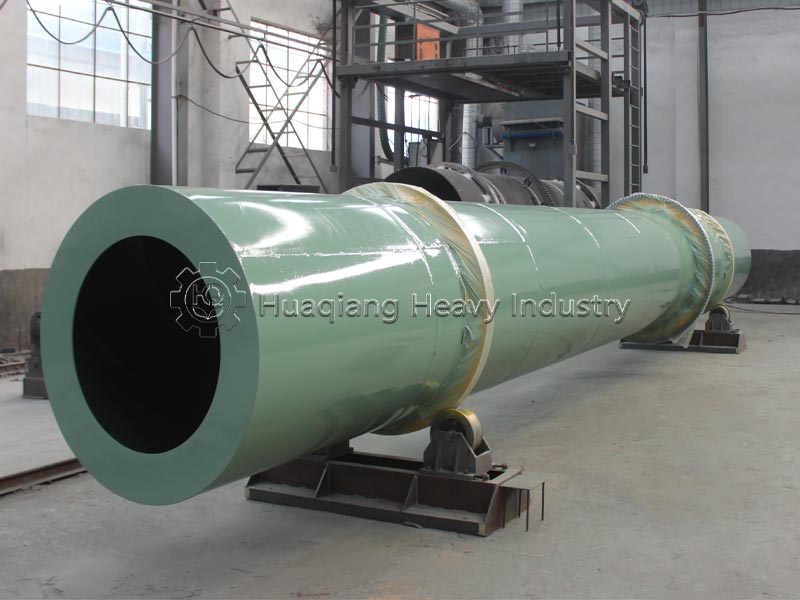
The mainstream drying equipment is the rotary drum fertilizer dryer: a giant, tilted rotating drum equipped with lifting plates inside. Wet granules enter from the upper end, are continuously tossed by the lifting plates, and come into full contact with the high-temperature airflow from the hot air furnace. Moisture evaporates rapidly, and dry granules flow out from the lower end. The entire process is continuous, with the material remaining in the dryer for approximately 30 minutes.
2. Precise Control of Temperature and Airflow
Drying requires precise control. Too low a temperature will not remove all moisture, while too high a temperature will cause granule charring and nutrient decomposition. Mature NPK compound fertilizer production lines typically control the inlet temperature at 250-300℃ for rapid evaporation, then lower it to below 100℃ at the outlet to prevent moisture regain. Airflow is equally crucial—too much airflow will draw away fine powder, while too little will hinder moisture removal.
The dryer is connected to the granulator at the front and to the cooling and screening system at the back, working in tandem. When the granules fall from the drum, their moisture content has dropped to below 2%, resulting in a hard and smooth texture, ready for subsequent packaging.