
NPK blending machines and bulk-blend (BB) fertilizer production lines utilize a process distinct from that of compound fertilizers; rather than relying on chemical granulation, they employ physical blending to combine granular nitrogen, phosphorus, and potassium fertilizers according to specific ratio requirements.
The fundamental difference lies in physical blending versus chemical granulation. While compound fertilizers require complex processes such as crushing, granulation, and drying, BB fertilizer production lines eliminate these steps, focusing instead on "precision proportioning" and "gentle mixing." The equipment features a simple structure and requires a lower initial investment.
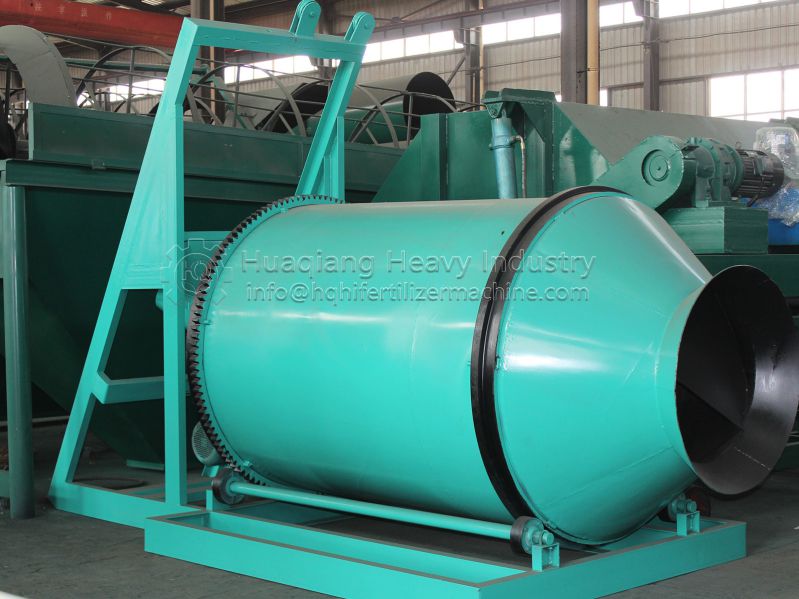
The production line typically comprises an automatic proportioning system, a mixer, a lifting mechanism, a packaging machine, and a PLC control system. The mixing stage is particularly critical; unlike the kneading and pulverizing actions used for organic fertilizers, BB fertilizer mixers generally employ drum or horizontal ribbon designs. These operate at low speeds (20–40 rpm) to achieve high blending uniformity while preserving the integrity of the granules.
Two key factors should guide equipment selection: first, proportioning accuracy determines the product pass rate, making the stability of weighing sensors crucial; second, anti-segregation design is vital, as granules of varying sizes tend to separate during transport. Regarding materials, 304 stainless steel is recommended for components in prolonged contact with corrosive fertilizers.
The value of NPK blending equipment lies in "precision" and "flexibility," enabling fertilizer formulas to be tailored to the specific needs of the soil and crops. Selecting the right equipment lays a solid hardware foundation for the practical implementation of soil-test-based formula fertilization.