
The nutrient ratios of high-nitrogen NPK fertilizers—such as "30-5-5" or "28-0-6"—are often discussed as isolated figures. However, the feasibility of these ratios is fundamentally determined by the underlying raw material composition.
By working backward from the raw materials, the logic behind high-nitrogen formulations becomes clear. Urea, with its high nitrogen content, serves as the primary nitrogen source; typical formulations may include 45–65 parts urea, 10–30 parts monoammonium phosphate (MAP), 8–20 parts potassium chloride (KCl), and 8–24 parts ammonium chloride. The addition of ammonium chloride not only supplements nitrogen but also helps mitigate the excessive stickiness of urea during the granulation process. This trend is reflected in agricultural extension recommendations, such as the use of 30-0-6 for rice top-dressing or 30-5-0 for high-nitrogen corn fertilization.
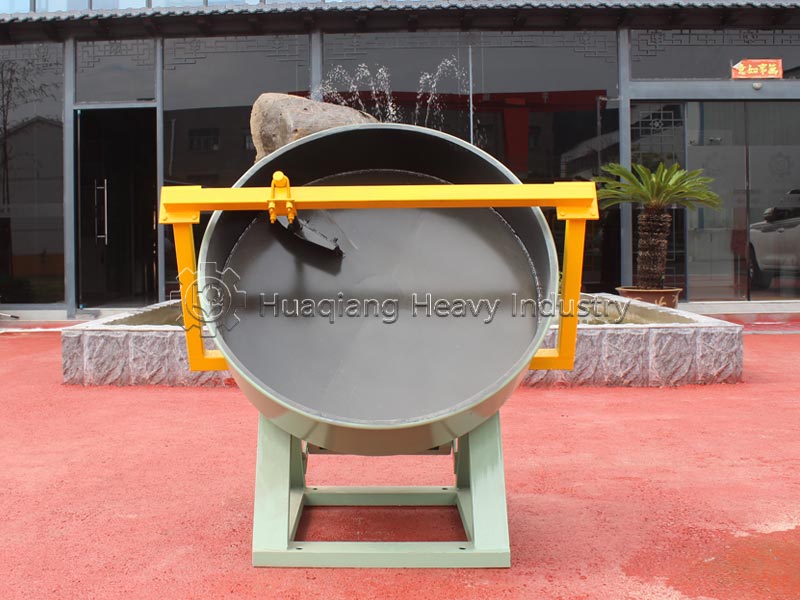
Yet, the higher the nitrogen content, the more stringent the constraints during granulation. Urea has a low decomposition temperature and high solubility; in wet granulation, if the material temperature exceeds 60°C, the granules begin to soften and adhere to the equipment walls—in severe cases, this can even cause the machinery to clog. Consequently, process adjustments for high-nitrogen formulations are not merely optional: in wet granulation, the material temperature must be strictly maintained between 50°C and 60°C, and the proportion of recycled material (fines) should be increased to dilute the urea concentration. When the nitrogen content exceeds 30%, dry compaction (extrusion) granulation becomes a more reliable alternative, effectively bypassing the issues associated with high-temperature adhesion.
Processing equipment for such formulations typically includes: proportioning/batching system, fertilizer crusher, mixer, granulator (such as a wet-process rotary drum or disc granulator, or a dry-process double roller press granulator), a dryer, a cooler, a screening unit, and a packaging machine. For high-nitrogen formulations, particular attention must be paid to batching precision and temperature control during granulation; equipment selection should be specifically tailored to account for the low melting point of urea. An NPK ratio weighted toward nitrogen is, in essence, a matter of balancing raw materials, production processes, and equipment.