
Chicken manure is a core raw material in organic fertilizer production; the choice of granulation equipment directly determines the quality of the final product, production efficiency, and overall costs. New type organic fertilizer granulators and flat die pelleting machines are currently the two mainstream types of forming equipment, differing significantly in their granulation mechanisms, raw material adaptability, and operational performance.
Regarding granulation principles and raw material adaptability, flat die pelleting machines impose strict requirements on the moisture content and fineness of the raw material. Because chicken manure has a high fiber content and significant moisture fluctuations, inadequate pre-processing can easily clog the die holes, leading to production interruptions and frequent downtime for cleaning. In contrast, new type organic fertilizer granulators are better suited for chicken manure with high moisture and fiber content; they can achieve stable granulation without requiring precise moisture control, drastically reducing the risk of clogging.
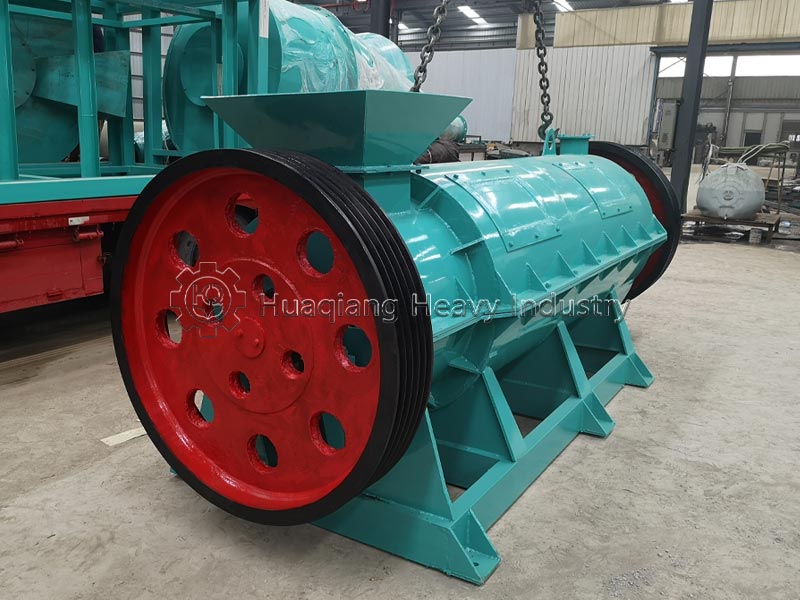
In terms of product quality and operational costs, flat die pelleting machines produce hard, durable granules that are well-suited for long-distance transport. However, these granules tend to be cylindrical and dissolve relatively slowly after application. Furthermore, when processing chicken manure, the die holes and pressure rollers in flat die pelleting machines experience rapid wear, necessitating frequent replacement of consumable parts and resulting in higher long-term maintenance costs. New type organic fertilizer granulators produce uniform, spherical granules with excellent permeability, which allow for faster activation of microorganisms upon application. These machines offer stable operation with fewer wear-prone components, leading to lower long-term maintenance costs for large-scale production, despite a slightly higher initial investment.
Overall, flat die pelleting machines are better suited for small-scale operations that involve meticulous raw material pre-processing and focus on long-distance distribution. New type organic fertilizer granulators, meanwhile, are better adapted for medium-to-large-scale production where raw material moisture levels may fluctuate, and where the primary objective is local soil improvement.