
In fertilizer processing, crushing, mixing, and screening are often selected as standalone pieces of equipment; however, the efficiency and quality of the operation depend on how they are integrated. No matter how high-quality the individual machines are, the entire line will fail to run smoothly if the process flow is misaligned or capacities are mismatched.
The key to linking crushing and mixing lies in particle fineness and uniformity. Fertilizer crushers refine raw materials to facilitate rapid, uniform mixing. If the crushed material is too coarse, the mixer faces a heavy load and uniformity suffers; if it is too fine, the material tends to clump and energy consumption rises. The crusher's hourly output should slightly exceed that of the fertilizer mixer machine, with fineness determined by the formula—typically 20–40 mesh.
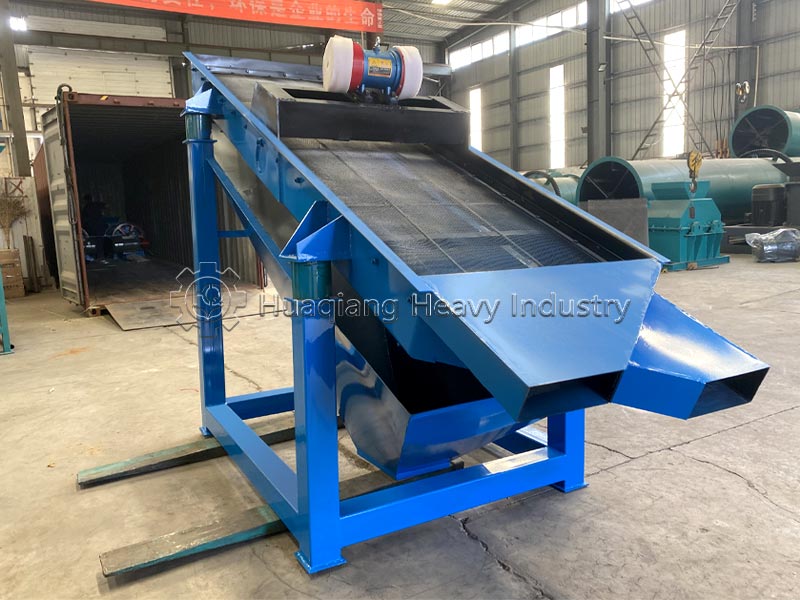
The placement of the fertilizer screener machine determines the efficiency of the entire line. There are two common configurations: screening before crushing (to remove impurities and protect crusher blades) and screening after mixing (to separate unmixed clumps or oversized particles for reprocessing). For granular fertilizer production, screening also serves to grade the finished product. Pre-crushing screening prevents damage, while post-mixing screening ensures quality; often, both are employed simultaneously.
Matching the capacities of these three units is crucial for a closed-loop system. Hourly outputs should be tiered—increasing slightly from crushing to mixing to screening—to create a stable "crushing → mixing → screening → material return → re-crushing" loop. A bottleneck at any stage leads to material blockages or idle running. Material moisture content must also be controlled; excessive moisture can clog the crusher, cause material to stick to the mixer, and blind the screen mesh.
When selecting equipment, first map out the material flow, then determine the parameters for each unit. Crushing prepares the material, mixing ensures homogeneity, and screening acts as the final quality check—only through their synergy can the entire line operate efficiently.