
The statement that "the rotary drum granulator is the most widely used granulation equipment in the organic fertilizer industry" is frequently heard, yet strictly speaking, it is inaccurate. A more precise description is that while rotary drum granulators dominate large-scale, continuous mass production scenarios, disc granulators actually have a higher penetration rate when measured by the total number of units in use.
The advantage of the rotary drum granulator lies in its production capacity. Materials tumble and agglomerate continuously within the rotating drum; a single unit can achieve an hourly output of 10–50 tons and is suitable for 24-hour uninterrupted operation, producing granules with high strength and excellent storage and transport durability. Consequently, large organic fertilizer plants (with annual outputs exceeding tens of thousands of tons) and livestock manure resource utilization projects generally prioritize rotary drum granulators, giving them a dominant position in large-scale applications.
However, "dominating large-scale projects" is not synonymous with "being the most widely used." Industry data indicates that disc granulators still account for approximately 70% of the market share in the organic fertilizer sector. There is a vast number of small-to-medium-sized organic fertilizer plants and on-site production lines at livestock farms; these operations often have limited investment budgets and modest capacity requirements. The disc granulator—characterized by its simple structure, low investment cost, and ease of operation and maintenance—perfectly meets these needs. In terms of the sheer number of units, the reach of disc granulators far exceeds that of rotary drum models.
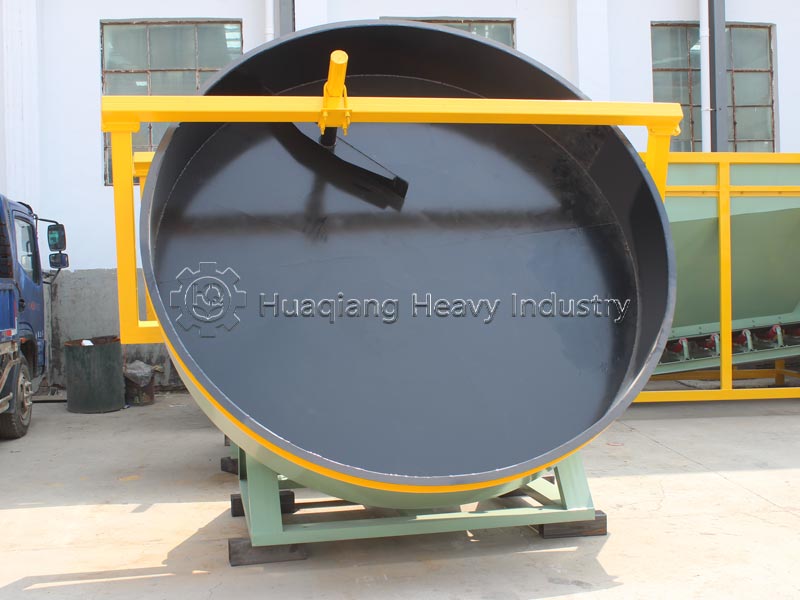
The distinction between the two essentially comes down to scale: the rotary drum granulator is the workhorse for large-scale mass production, while the disc granulator is the preferred choice for small-to-medium production lines. If one focuses solely on large factories, rotary drum granulators appear ubiquitous; however, when surveying the entire industry, small-to-medium lines constitute the majority in terms of quantity.
Therefore, while the rotary drum granulator is the mainstream choice for large-scale organic fertilizer projects, the claim that it is the "most widely used across the entire industry" does not hold true. The key to equipment selection lies not in pursuing the "most widely used" option, but in aligning with one's specific production capacity goals: rotary drum granulators are suited for large-scale mass production, whereas disc granulators are ideal for small-to-medium batches and frequent formula switching—each has its own optimal application scope.