
Pig manure drying is a crucial step in its resource utilization and conversion into organic fertilizer. However, improper process control can lead to high energy consumption, uneven drying, and nutrient loss. Optimizing the pig manure drying process requires focusing on three core aspects: "raw material suitability, equipment coordination, and precise parameter control."
Raw material pretreatment optimization. Fresh pig manure has a moisture content of 70%-80%, and direct drying can easily lead to equipment sticking and low heat transfer efficiency. It is necessary to first reduce the initial moisture content to 50%-60% through solid-liquid separation equipment, and then remove stones and impurities using a fertilizer screener machine to ensure uniform material particle size (recommended ≤3mm). For severely caked pig manure, a small amount of bulking agent can be added to improve permeability, reduce thermal resistance during the drying process, and improve heat utilization efficiency.
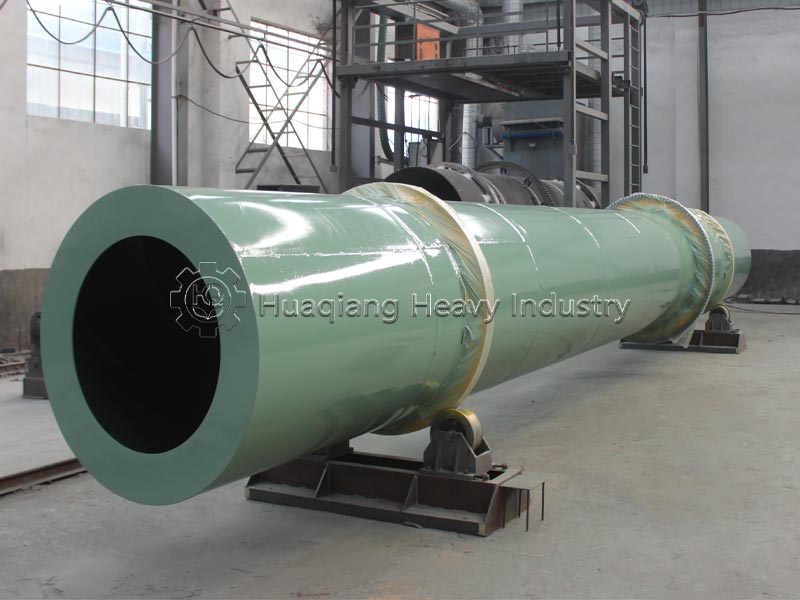
Drying equipment selection and parameter adjustment. Prioritize the use of highly adaptable equipment such as rotary dryers, and precisely adjust parameters based on material characteristics: control the drum rotation speed at 3-6 r/min to ensure sufficient contact between the material and hot air; the hot air temperature should be adjusted according to the subsequent use, controlling it at 120-150℃ for organic fertilizer production to avoid high-temperature damage to organic matter; the wind speed should match the material residence time, generally 1.5-2.5 m/s is appropriate.
Heat source selection and process coordination. Prioritize the use of low-cost heat sources such as biomass energy and industrial waste heat. At the same time, connect the processes before and after drying, matching the capacity of the front-end solid-liquid separation equipment with the drum fertilizer dryer to avoid material accumulation; a cooling device should be installed at the back end to quickly cool the product to room temperature, reducing moisture regain and maximizing overall process efficiency.