The raw materials for organic fertilizer production are mostly livestock and poultry manure, straw, and mushroom residue, which are generally high in moisture, viscous, and contain a large amount of impurities. This places stringent requirements on the anti-sticking, wear-resistant, and spill-proof performance of the belt conveyor. Selecting the right conveyor for each production process is key to ensuring stable operation of the organic fertilizer production line and reducing material loss.
For the raw material pretreatment process, a thickened, non-slip rubber belt conveyor is suitable. In this process, the materials are mixed with moisture and contain hard impurities. The thickened belt provides stronger wear resistance, effectively resisting material wear and extending the equipment's service life.
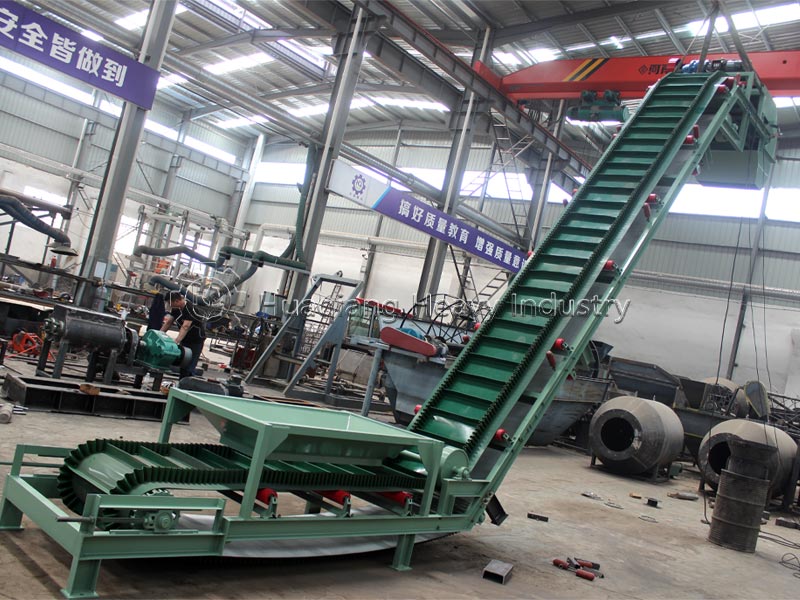
For the fermentation and composting transfer process, an organic fertilizer large angle belt conveyor is preferred. Fermentation workshops often have limited space, and material conveying often involves height differences. Models with skirts and baffles can achieve large-angle material lifting, preventing wet material slippage and spillage. They also have a small footprint, making them suitable for the confined working environment of fermentation workshops.
For the finished product screening and packaging process, a closed belt conveyor is suitable. Organic fertilizer granules, after drying and granulation, are fragile and prone to dust generation. This machine operates smoothly, effectively protecting the integrity of the granules, while its sealed structure inhibits dust dispersion.
In summary, organic fertilizer production lines do not need to be equipped with the same type of belt conveyor. Precise selection based on the material characteristics of different processes can significantly reduce equipment failure rates and minimize material waste.