
Compared to NPK compound fertilizer production lines, NPK blending fertilizer production lines have a simpler process, require no high-temperature deep processing, and have simplified equipment configuration, resulting in a lower barrier to entry and making them an excellent choice for small and medium-sized fertilizer enterprises.
Equipment procurement is the main cost of starting a plant. Blended fertilizers rely on physical mixing and molding, eliminating the need for complex equipment such as granulation, drying, and cooling. The entire production line only requires a batching machine, blending machine, conveyor, screening machine, and packaging machine. Basic semi-automatic equipment requires a lower investment and can meet regular mass production needs; high-end fully automatic intelligent production lines offer higher mixing accuracy and larger capacity, but the overall cost is significantly lower than that of granular compound fertilizer production lines.
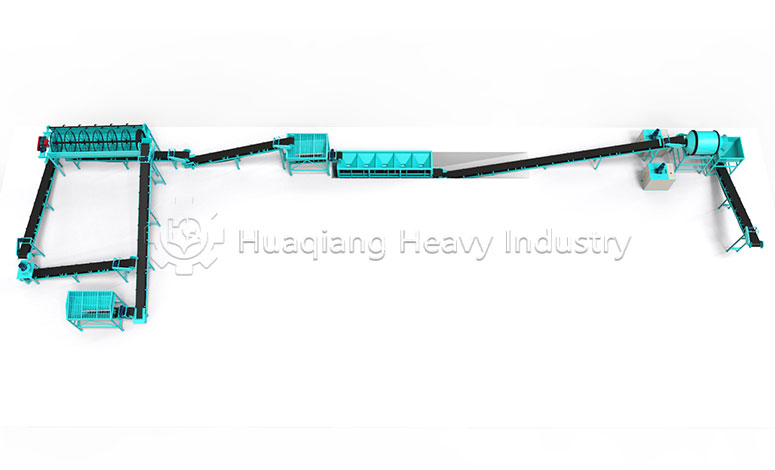
Infrastructure investment is very limited. This production line uses ambient temperature physical processing, producing no waste pollution, and requires no supporting professional environmental protection facilities or special enclosed workshops. The overall equipment has a compact footprint and can be adapted to ordinary standard factory buildings, eliminating the need for large-scale civil engineering modifications, effectively saving infrastructure expenses and shortening the construction period.
Later operation and maintenance costs and hidden costs are also lower. The equipment features a simple structure, low energy consumption, few easily damaged parts, and low daily maintenance costs. The production process requires no binders or other auxiliary materials; only granular raw materials need to be purchased, resulting in no additional consumable expenses and strong overall controllability of operating costs.
In summary, the NPK blending fertilizer production line offers a lightweight overall investment, low production risk, and a fast return on investment, making it a highly cost-effective fertilizer investment project.