
Flat die pelleting machines and ring die pelleting machines are the two most commonly used types of granulation equipment in organic fertilizer processing. While the core function of both is to transform fermented organic fertilizer raw materials into granules, they exhibit distinct differences in their granulation principles, molding effects, and practical operational suitability.
In terms of granulation principle, the flat die pelleting machine employs a method where pressure rollers compress the raw material against a flat die; the material is extruded through the die holes to form granules. This design features a simple structure and a low operational threshold. Conversely, the ring die pelleting machine utilizes the coordinated action of a ring die and pressure rollers to compress the raw material, resulting in more uniform force distribution and greater continuity in the granulation process.
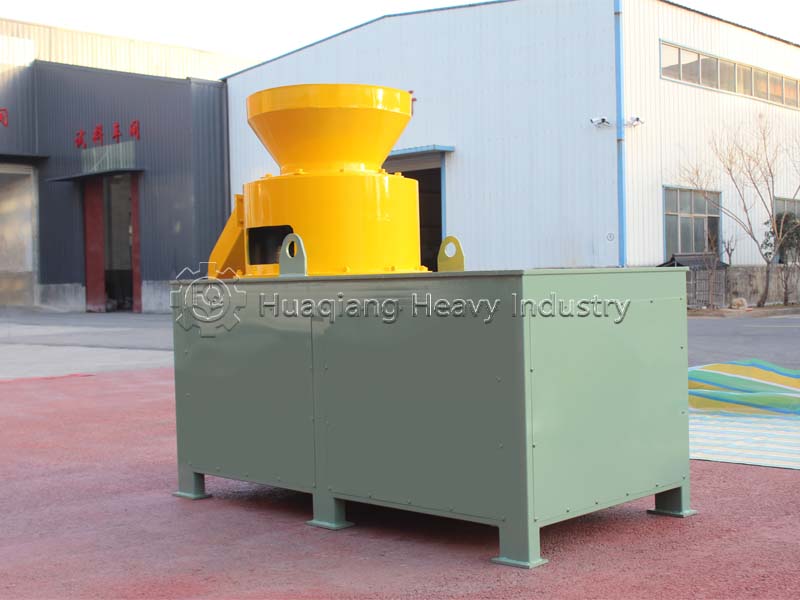
Regarding molding effects, flat die pelleting machines produce granules with moderate hardness and slightly varying sizes; they accommodate a wide range of raw material moisture levels and are less prone to clogging. Ring die pelleting machines, on the other hand, produce granules that are regular, uniform, and smooth-surfaced, boasting a high molding rate; however, they impose stricter requirements on the fineness and moisture content of the raw materials, making them more susceptible to die-hole clogging.
In terms of practical operation and energy consumption, flat die pelleting machines feature a simple structure, are easy to maintain, and consume less energy, making them suitable for small to medium-sized processing plants. Ring die pelleting machines offer higher efficiency and are capable of continuous operation, but they possess a more complex structure and entail slightly higher maintenance costs and energy consumption.
In summary, flat die pelleting machines are well-suited for small-scale and flexible processing requirements, whereas ring die pelleting machines are better suited for large-scale, high-standard production. Neither type is inherently superior to the other; the appropriate choice should be made based on a rational assessment of the specific processing scale and the requirements for the finished product.