
The processing quality of an NPK blending fertilizer production line directly determines the quality of the fertilizer and its efficacy in application. The entire processing workflow must adhere to four core requirements—"precision, standardization, efficiency, and safety"—with strict quality control standards applied to every stage, from raw materials to the finished product.
Raw material processing serves as the foundation; it requires the selection of individual nitrogen, phosphorus, and potassium fertilizers—as well as secondary and trace element additives—that meet purity standards and are free of impurities. Prior to entering the facility, these materials must undergo screening to remove impurities and be subjected to crushing to ensure uniform particle size, thereby preparing them for the subsequent blending and mixing stages.
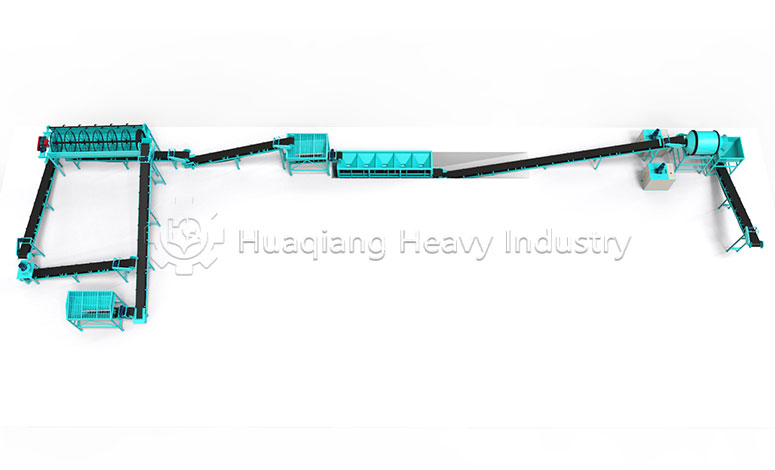
Proportioning and blending constitute the core of the process. Automated metering equipment must be utilized to precisely control the dosage of each raw material, thereby preventing any imbalance in nutrient ratios. During the blending phase, the NPK blending machine must provide thorough agitation to ensure there is no stratification or clumping, guaranteeing uniform and consistent nutrient distribution across every batch of fertilizer.
Forming, drying, and screening operations must meet established standards. Following granulation, the fertilizer particles must be uniform in shape; after drying, the moisture content must be controlled within the 8%–12% range to prevent moisture reabsorption and subsequent clumping. The screening stage serves to remove substandard particles, which can then be recycled for secondary processing to minimize waste. Additionally, equipment calibration and cleaning must be diligently performed to prevent cross-contamination.
Furthermore, the processing workflow must strictly comply with environmental protection and safety regulations—specifically by minimizing dust emissions and ensuring the proper disposal of waste materials—to maintain an orderly and safe production environment. Only through the rigorous implementation of these processing requirements can the NPK blending fertilizer production line ensure stable product quality and effectively meet the diverse needs of agricultural cultivation.