
In the post-processing stage of an NPK fertilizer production line, the drum fertilizer dryer and cooler are by no means standalone units; rather, they must operate in close coordination to complete the closed-loop transformation of wet granules into qualified finished products.
If the dryer is operated while the subsequent cooling step is omitted, the high-temperature fertilizer granules—retaining their residual heat—will, upon direct packaging, create a stifling, humid environment within the bags, leading to severe caking and adhesion. Furthermore, high-temperature granules possess a softer texture, making them prone to fragmentation and waste generation during transport; moreover, the residual heat accelerates nutrient volatilization, thereby diminishing the fertilizer's efficacy. Conversely, if cooling is attempted directly without the prerequisite drying process, the moisture content of the wet granules will remain above acceptable limits, rendering the cooling operation entirely futile.
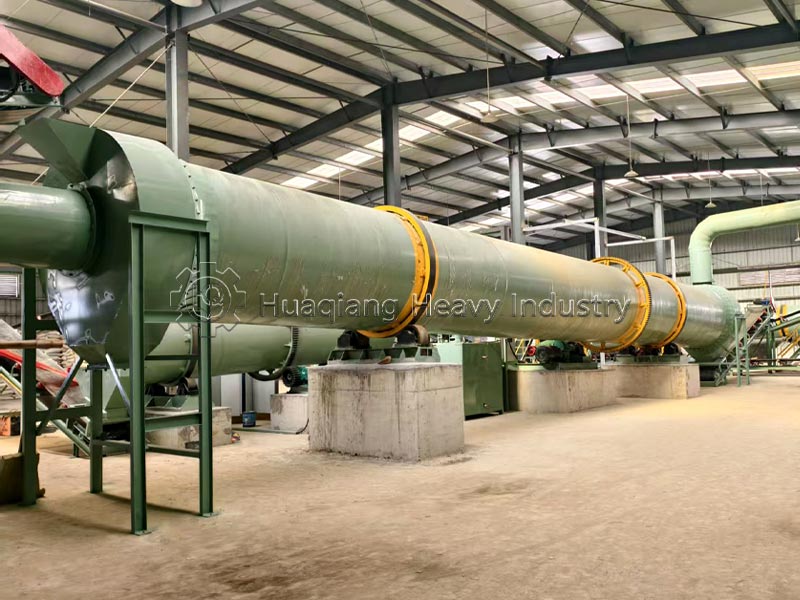
The core principle of this coordinated operation lies in matching the processing rhythm and ensuring seamless temperature control transitions. By aligning with the production line's overall capacity, the rotation speed of the drum fertilizer dryer and the airflow volume of the cooler are synchronized. This ensures that high-temperature granules flow at a steady rate into the cooler immediately after discharge, where they are rapidly cooled to near-ambient temperatures. This process serves a dual purpose: it effectively locks in nitrogen, phosphorus, and potassium nutrients while preventing moisture regain and caking; simultaneously, it hardens the granules, thereby minimizing fragmentation and material loss.
Moreover, the synchronized operation of these two units enhances production workflow efficiency, enabling a continuous sequence of drying, cooling, screening, and packaging operations, which in turn reduces intermediate downtime and manual handling costs.
In essence, the drum fertilizer dryer is responsible for dehydration and granule shaping, while the drum fertilizer cooler is tasked with solidifying the fertilizer and preserving its quality; these two units are mutually complementary and absolutely indispensable to one another.