
In the fertilizer, organic fertilizer, and mineral processing industries, the performance of a disc granulator and its associated production line directly impacts both granule quality and production efficiency. Achieving stable production requires not only a focus on equipment performance but also the proper configuration of the entire production line.
1. How to Select a Disc Granulation Production Line?
When selecting a disc granulation production line, one must consider the characteristics of the raw materials, the scale of production, and the requirements for the finished product. Factors such as the moisture content, viscosity, and flowability of different materials directly affect the granulation process; therefore, equipment specifications and process parameters must be determined based on specific operational conditions.
Furthermore, it is essential to ensure that the production capacities of individual pieces of equipment are well-matched. Stages such as proportioning, mixing, disc granulation, drying, cooling, and screening must be seamlessly integrated to prevent bottlenecks—where the insufficient capacity of a single unit compromises the performance of the entire line.
2. Daily Operation and Maintenance Tips
During the operation of a disc granulator, the disc’s rotational speed, tilt angle, and water spray volume should be adjusted based on the granule formation process to maintain optimal material moisture. If issues arise—such as inconsistent granule size or a drop in the pelletization rate—operators should first verify the raw material mix ratio and moisture control, rather than making arbitrary adjustments to equipment parameters.
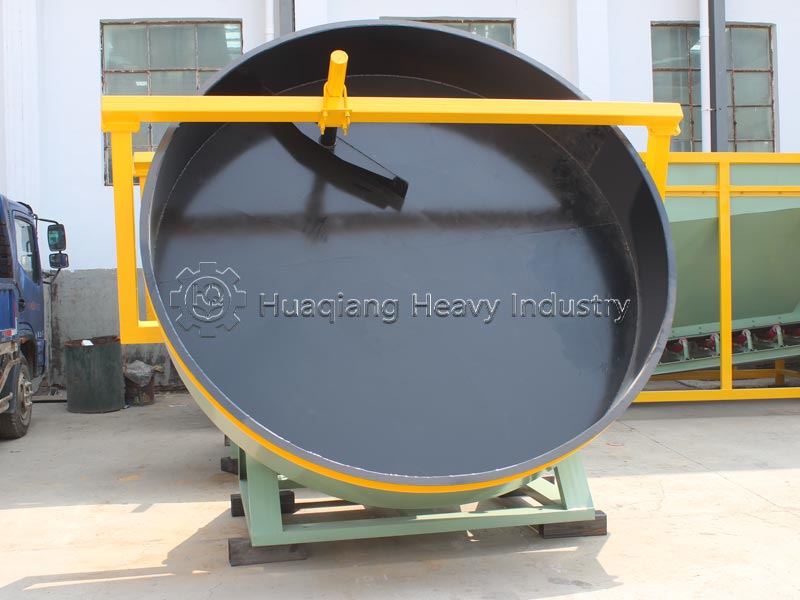
Daily maintenance should focus on the motor, gearbox, bearings, and transmission components; these should be checked regularly for abnormal vibration, noise, or wear. Additionally, the interior of the granulation disc should be kept free of material buildup, and wear-resistant liners and fasteners should be inspected periodically to minimize the risk of equipment failure.
3. Optimizing Processes to Enhance Production Efficiency
Carefully controlling the raw material mix ratio, moisture content, and the proportion of recycled material (fines/oversize) can improve granule uniformity and increase the yield of high-quality finished products. Adjusting process parameters in response to variations in raw materials helps maintain production stability.
The efficient operation of a disc granulator and its production line relies on proper equipment selection, standardized operating procedures, and regular maintenance. Optimizing both equipment configuration and production processes can effectively improve granulation quality while reducing operational costs.