
BB Fertilizer Mixers: Preserving Granule Integrity
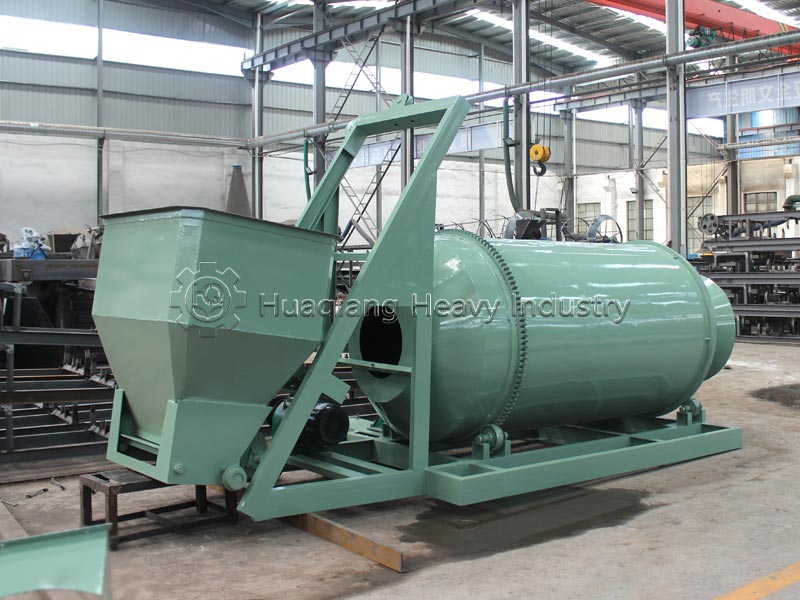
BB fertilizers are created by physically blending various granular fertilizers (such as urea, diammonium phosphate, and potash) of similar particle sizes according to a specific formula. The primary task of a BB fertilizer mixer is not to alter the physical form of the materials but to combine them uniformly; it demands a high degree of mixing homogeneity, typically requiring a coefficient of variation of less than 7%. Crucially, the mixing process must preserve the original shape of the granules as much as possible, preventing breakage, abrasion, and segregation. To achieve this, BB fertilizer mixers often utilize rotating drums or low-speed ribbon structures characterized by gentle rotation and low shear forces; they are also equipped with anti-segregation mechanisms to ensure that granules of varying densities maintain consistent proportions during discharge.
Other Fertilizer Mixer Machines: Handling Complex Materials
In contrast, organic fertilizer mixer machines often deal with wet, sticky materials (such as manure or crop stalks) containing over 40% moisture. Their focus lies in breaking down materials, turning piles, and mixing; they typically employ twin-shaft paddle or vertical screw structures that provide high-intensity mixing while requiring resistance to corrosion and wear. Meanwhile, mixers for inorganic compound fertilizers often need to facilitate heating, steam injection, or chemical reactions, serving both mixing and pre-granulation functions, which imposes even stricter requirements on material corrosion resistance.
In short, BB fertilizer mixers aim for "precise blending with zero granule damage," functioning as precision physical mixing equipment. Other fertilizer mixer machines, however, prioritize "powerful homogenization and adaptability to complex materials," often integrating functions such as crushing and material conditioning. When selecting equipment, it is essential to clearly define the raw material form, moisture content, formulation precision, and production capacity requirements; choosing the right mixer ensures greater efficiency in subsequent packaging stages and guarantees the production of high-quality, consistent fertilizer products.