
In the organic fertilizer production process, the transformation from powdered fertilizer to granulated fertilizer, and the upgrade from ordinary organic fertilizer to bio-organic fertilizer, are two important watersheds. These two watersheds are respectively bridged by organic fertilizer pellet mills and bio-organic fertilizer equipment.
The primary task of an organic fertilizer granules machine is "shaping." Ungranulated powdered fertilizer is prone to clumping during storage and easily dispersed by the wind during application, failing to meet the particle size requirements of mechanized sowing. Pellet mills process fermented and decomposed materials into uniformly sized and moderately strong granules through physical force—either compression or rolling agglomeration. This process not only improves the flowability of the fertilizer, facilitating bagged transportation and field application, but also increases the product's added value, giving what was originally cheap waste a standardized "value."
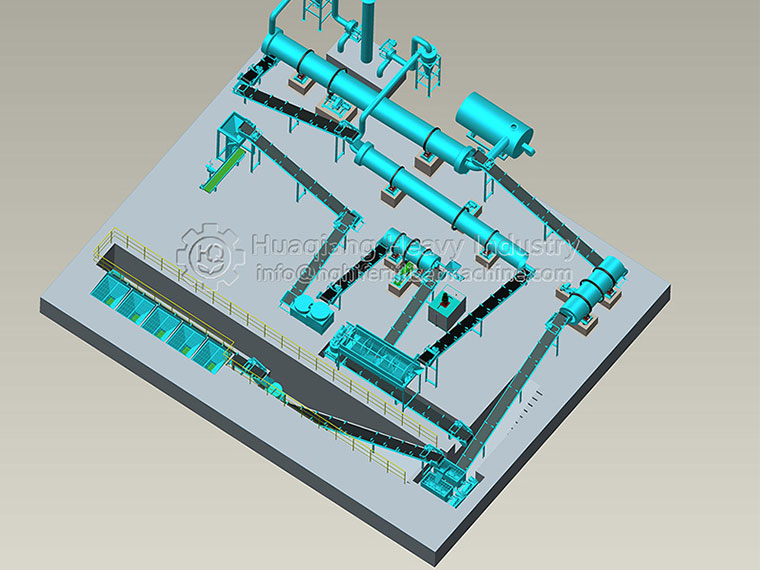
However, when organic fertilizer needs to be infused with functional microorganisms and upgraded to bio-organic fertilizer, the equipment must address entirely new technological challenges. Functional microorganisms are the soul of bio-fertilizers, but they are extremely sensitive to temperature. The high-temperature drying process in conventional granulation easily leads to microbial inactivation. Therefore, the core breakthrough of specialized bio-organic fertilizer equipment lies in the "low-temperature microbial preservation process," ensuring that the temperature is controlled between 40-60℃ throughout the granulation process to maximize the preservation of microbial activity. Simultaneously, considering the high viscosity and tendency of microbial-containing materials to adhere to the walls, the internal structure of the equipment has been optimized to prevent sticking, ensuring continuous and stable production.
In short, organic fertilizer granules machine have achieved standardized form, making fertilizers "easy to use"; bio-organic fertilizer equipment has achieved functional activation, making fertilizers "effective." The two complement each other, jointly defining the quality standard of modern organic fertilizer production—from commercialization to functionalization, each advancement in equipment reflects a deeper concern for soil health and crop quality.