
BB fertilizer, also known as NPK blended fertilizer, is widely used in agricultural planting due to its flexible formulation, balanced nutrients, and wide adaptability. Unlike traditional compound fertilizers, it requires no high-temperature or granulation processes; production is completed through physical blending, resulting in a low entry barrier and strong practicality.
The NPK blending machine is the core equipment in BB fertilizer production, specifically designed for blending granular fertilizers. It can handle nitrogen, phosphorus, and potassium granular raw materials of different specific gravities and particle sizes, effectively solving common problems such as material stratification, segregation, and uneven mixing, ensuring uniform nutrient content and precise proportions in each batch of fertilizer.
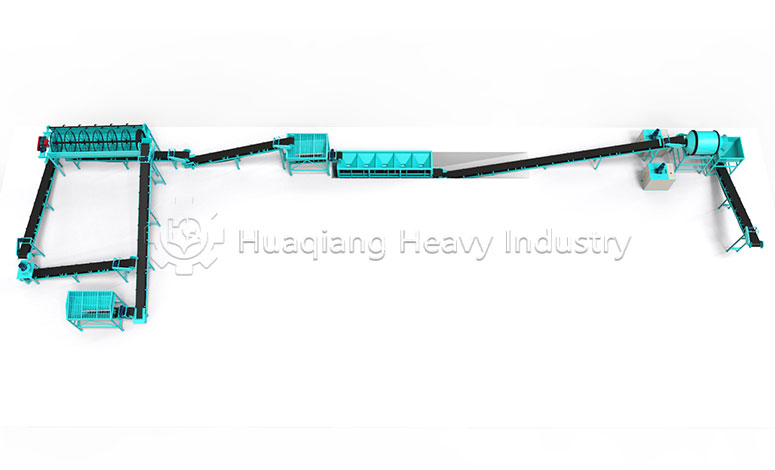
The BB fertilizer production process is a room-temperature physical process, simple and efficient. During production, granular urea, phosphorus, and potassium fertilizers are first screened to remove impurities and lumps. Then, an intelligent batching system accurately weighs and feeds the materials according to the formula. After thorough mixing in the blending machine, the materials undergo simple sieving to remove agglomerated particles, and finally, they are directly packaged and stored.
BB fertilizer production costs offer extremely high cost-effectiveness. Production requires no binders, conditioners, or other auxiliary materials, only basic granular raw materials, resulting in extremely low consumable costs. Simultaneously, the production equipment is streamlined with fewer processes, lower water and electricity consumption, and features a simple structure, low failure rate, and minimal wear and tear on vulnerable parts, thus reducing overall production investment pressure.
In summary, BB fertilizer boasts a streamlined production process, stable quality, and low cost, making it highly suitable for the large-scale, routine production of small and medium-sized fertilizer enterprises.