
For a machine with an output of two tons per hour, a traditional granulator might cost tens of thousands of yuan, while a new-generation model could cost twice as much. The higher price isn't due to the number of parts; rather, it reflects the fact that the manufacturer has already accounted for—and priced in—the most unpredictable and difficult-to-control variables in the production process.
They are worth the cost for their fault tolerance. Traditional granulators are highly sensitive to fluctuations in raw material moisture, viscosity, and particle size. Even a slight change in the feedstock requires an operator to manually adjust the pan speed, water input, and tilt angle based on experience—meaning batch consistency relies entirely on constant human supervision. In contrast, new-generation equipment integrates real-time moisture monitoring, torque feedback, and adaptive control systems. When raw material properties shift, the system automatically compensates by adjusting parameters, reducing the reliance on the "intuition" of a seasoned operator.
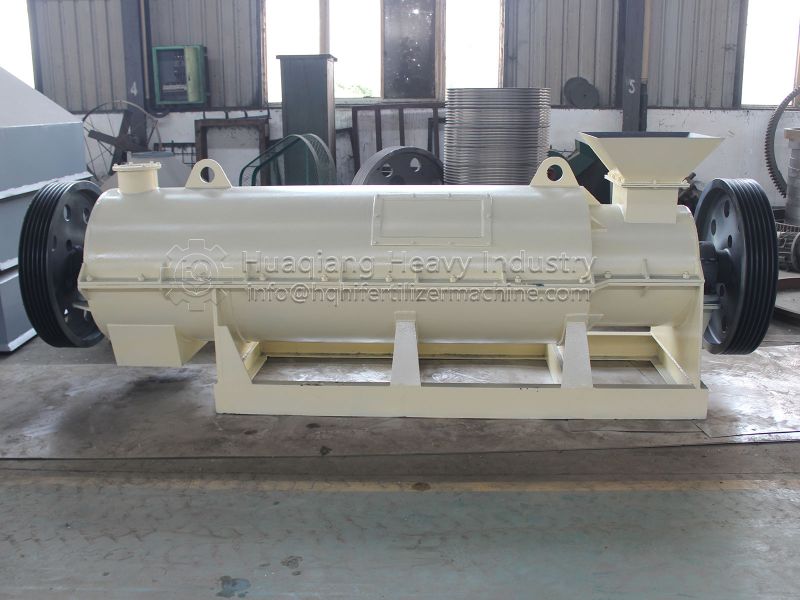
They are worth the cost for their durability. Organic fertilizer feedstock is often highly moist, ammonia-rich, and abrasive (containing sand), which causes standard carbon-steel molds and mixing paddles to wear down or deform within months. New type granulators utilize wear-resistant alloys, tungsten carbide coatings, or polymer linings for high-wear components. While this increases the initial investment, it extends the replacement cycle from a few months to one or two years, ultimately lowering the total cost of maintenance.
They are worth the cost for regulatory compliance. Environmental and safety standards are becoming increasingly stringent. New-generation equipment often comes with built-in features such as dust-extraction ports, explosion-proof motors, noise-reduction structures, and sealed, odor-proof designs—sparing you the hassle of future retrofitting and the losses incurred from production downtime. Purchasing a cheaper machine only to have to add compliance equipment later often proves more expensive in the long run.
When comparing the prices of granulators, one should look beyond the initial purchase cost. The higher price tag of a new type organic fertilizer granulator essentially bundles various hidden costs—such as high material recirculation rates, unplanned downtime, reliance on specialized human expertise, and the need for future environmental upgrades—into the upfront purchase price.