
Nutrient deficiencies in crops gradually manifest through changes in the appearance of leaves, stems, and fruits, with different nutrient deficiencies showing distinct symptoms. Understanding these characteristics allows for timely fertilization to mitigate losses. Targeted fertilizers produced by equipment such as organic fertilizer production lines and NPK fertilizer production lines can be used for supplementation.
Nitrogen, phosphorus, and potassium deficiencies are the most common. Nitrogen deficiency causes older leaves to yellow first, spreading from the leaf tip to the petiole. The plants are stunted and weak, and the leaves are dull. High-nitrogen compound fertilizers produced by NPK fertilizer production lines can be used for supplementation. Phosphorus deficiency results in dark green or purplish-red leaves, which are more noticeable in new leaves. The root system is weak, the stems are thin, and the crops mature late with low fruit set. Potassium deficiency causes scorching and browning of the leaf margins, forming "scorched edges," which are first seen in older leaves. Stems are prone to lodging, and fruit expansion is slow. Potassium fertilizers produced by specialized fertilizer production equipment can alleviate this.
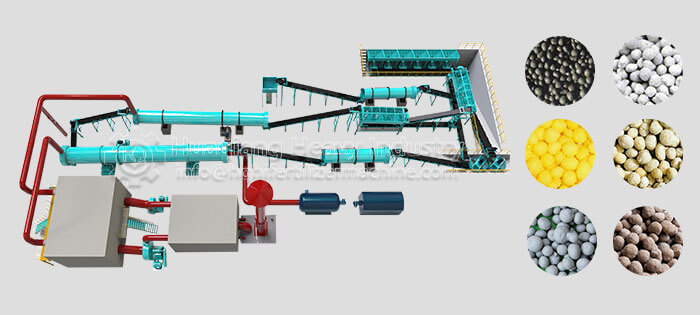
Micronutrient deficiencies have specific symptoms. Iron deficiency causes new leaves to yellow first, with the veins remaining green, forming "green veins on yellow leaves," commonly seen in acidic soils. Magnesium deficiency causes chlorosis between the veins of older leaves, resulting in patchy discoloration, followed by leaf shedding, affecting photosynthesis. Boron deficiency can lead to crops failing to set fruit, deformed fruits, and root tip necrosis, which is particularly significant for fruits and vegetables.
Diagnostic tips: First, observe the location of the deficiency (old leaves/new leaves), then observe the color changes, and make a comprehensive judgment based on the crop and soil conditions. It is important to note that nutrient deficiency symptoms can be easily confused with diseases, pests, and drought. Local fertilization and observation of growth can help confirm the diagnosis. Accurate fertilization requires professional equipment such as NPK fertilizer production lines to produce balanced fertilizers tailored to specific needs.