
The dry granulation double roller press granulator, with its core advantages of "no drying, low energy consumption, and wide adaptability," breaks through the bottlenecks of traditional granulation technology, providing solid support for high-quality agricultural development and becoming a key carrier for the upgrading of modern agricultural equipment.
Solving the pain points of traditional granulation. This equipment does not require high-temperature drying; it directly forms dry powder raw materials through roller pressing, reducing energy consumption by more than 30% and significantly reducing production costs. It is also compatible with various raw materials such as NPK compound fertilizers and mineral fertilizers. After pretreatment by a fertilizer screener machine and mixing by a fertilizer mixer, it can quickly produce high-strength granular fertilizers.
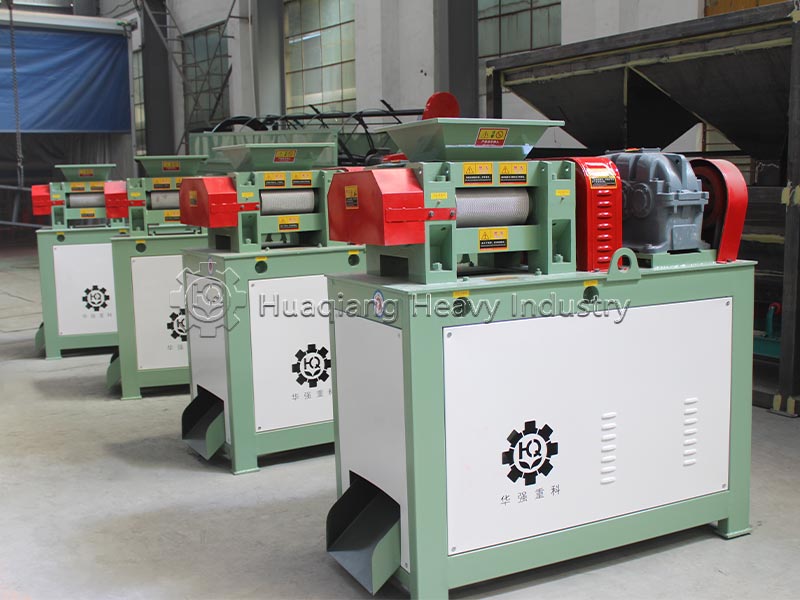
Optimizing fertilizer application efficiency. The granular fertilizers produced by this equipment have uniform strength and are not easily powdered, reducing transportation and storage losses to less than 2%; when applied, it is compatible with mechanized operations, and nutrient release is slow and sustained, effectively improving fertilizer utilization and preventing soil compaction. Especially in large-scale planting, granular fertilizers of different particle sizes can be customized to meet the differentiated needs of crops such as corn and fruits and vegetables.
Empowering green circular agriculture. This equipment can directly process dry powder raw materials made from agricultural waste such as livestock and poultry manure and crop straw, realizing the resource-based transformation of "waste → organic fertilizer." At the same time, there are no wastewater or exhaust gas emissions, reducing agricultural non-point source pollution and promoting the transformation of agriculture from a "resource-consuming" type to a "circular and efficient" type.