
In industries such as fertilizer production, grain processing, and mining, vertical material handling is an indispensable part of the production process. Bucket elevators, with their efficiency and convenience, have become the preferred equipment for many companies.
For the fertilizer production industry, bucket elevators are one of the core pieces of equipment in the fertilizer production line. The granular or powdered fertilizers involved in fertilizer production require high demands on the sealing of the equipment. These bucket elevators usually adopt a closed design, which effectively reduces the loss of fertilizer and dust dispersion during transportation, ensuring a clean production environment and reducing raw material waste. At the same time, the hopper design is adjusted according to the different particle sizes of the fertilizer to ensure smooth material handling and prevent blockages.
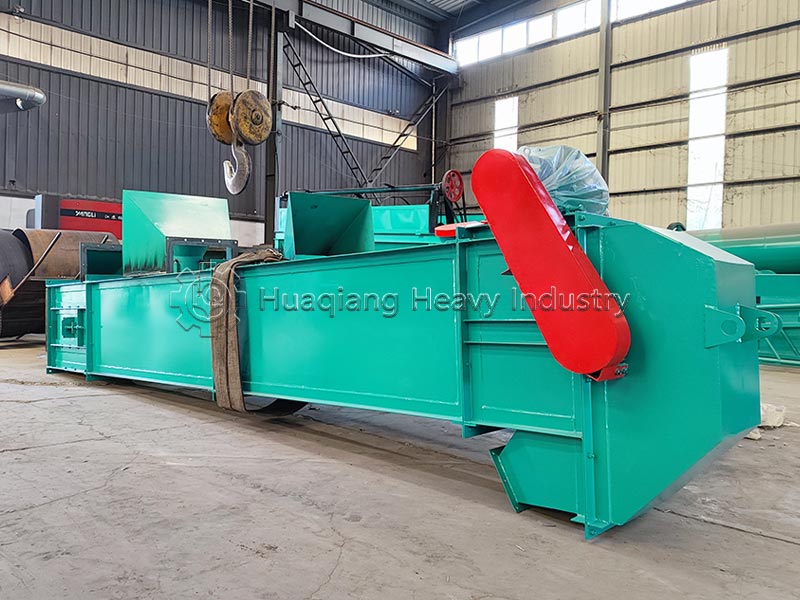
Similarly, vertical bucket elevators for granular materials perform excellently when handling different materials such as grains and ores. Taking the grain industry as an example, grain particles are full and fragile. The hoppers of these elevators use softer materials, and the operating speed is precisely controlled to prevent grain breakage during lifting. In the mining industry, when dealing with harder ores, the traction components and hoppers of the elevator are made of high-strength materials to ensure the durability and stability of the equipment.
High-capacity bucket elevators play a crucial role in large-scale production scenarios. Large-scale fertilizer plants and grain storage facilities, for example, require extremely high material handling volumes. These elevators optimize parameters such as hopper volume and lifting speed to transport more materials per unit time, significantly improving production efficiency and helping enterprises achieve large-scale production.
When purchasing, companies need to consider their production scale, material characteristics, and other factors, and comprehensively compare various parameters to select the equipment that best suits their needs, so that the bucket elevator can better serve their production.