
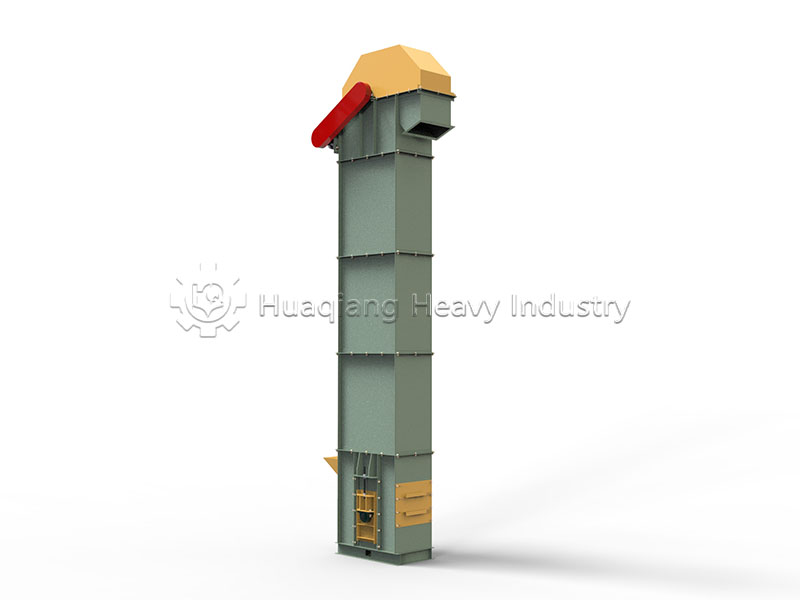
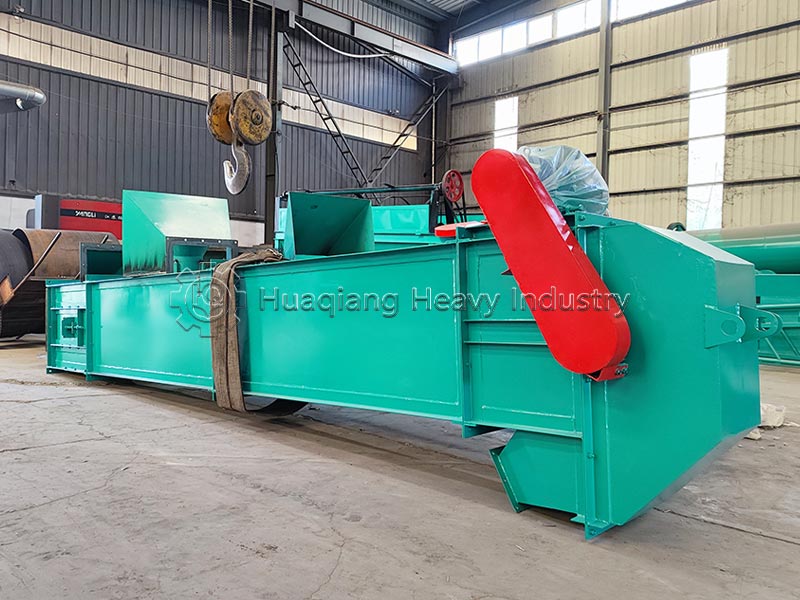
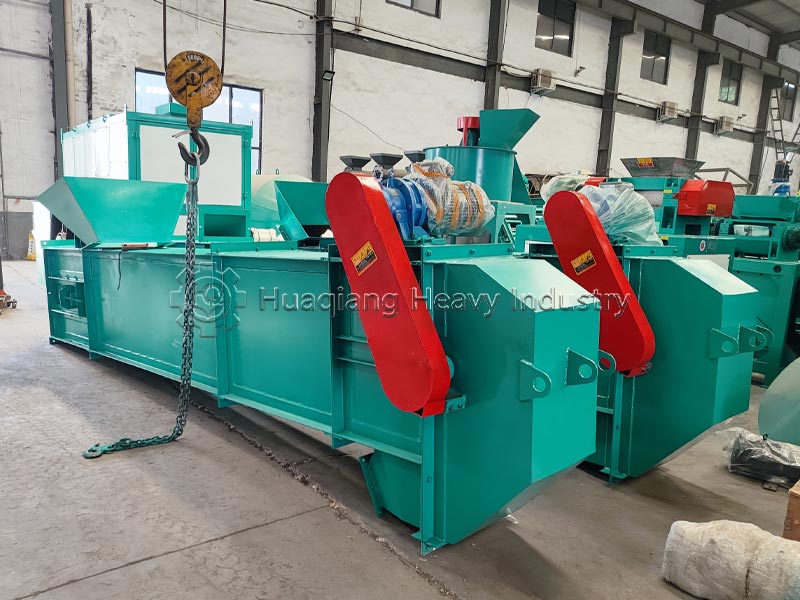
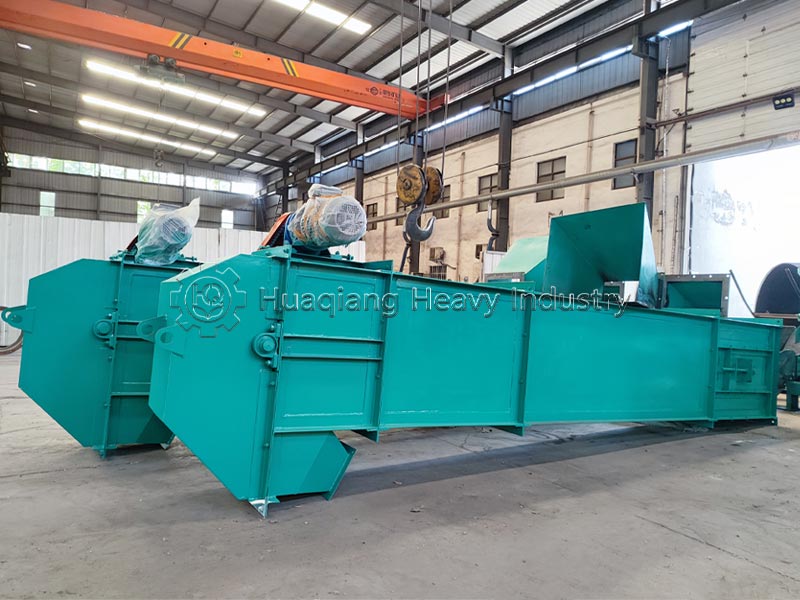
Bucket elevators are simple to operate and reliable vertical lifting equipment in fertilizer production lines, responsible for lifting materials from lower to higher workstations. Like an automated material elevator, it works silently within a closed casing, requiring operators to only monitor feed uniformity and equipment noise. Combined with belt conveyors for horizontal transport and bucket elevators for vertical lifting, it forms a complete conveying network in the fertilizer workshop. The equipment boasts a high degree of automation and can be integrated into the entire line's PLC control system for one-button start/stop, making it a mature piece of equipment for fertilizer companies to achieve three-dimensional continuous production.
Working Principle
Material enters the machine base through the bottom feed inlet and is scooped or loaded into continuously moving buckets. The traction belt or chain drives the buckets vertically upwards to the top drive wheel, where the buckets tilt and the material is ejected. The empty buckets return to the bottom from the other side of the cylinder for reloading. The entire process is completed within the closed casing, preventing material spillage and dust, ensuring continuous and stable conveying. The lifting capacity can be adjusted within a certain range by regulating the drive motor speed.
Operating Procedures
Before starting the machine, check for material accumulation on the base. Open the inspection door to confirm the hopper is intact and not detached, and that the tension of the traction belt or chain is appropriate. Start the bucket elevator under no-load. After listening for normal operating sounds, notify the preceding process to begin feeding evenly.
The feed rate is controlled by the feeder and should be kept stable to avoid fluctuations. During operation, regularly inspect the temperature of the drive motor and reducer, the operating status of the traction components, and the unobstructed flow at the discharge port each shift. If material blockage or obstruction is found at the discharge port, stop feeding first, and stop the machine for cleaning after the material inside has been emptied.
For normal shutdown, follow the sequence of stopping feeding first, emptying the material inside the machine, and finally stopping the main unit. In case of emergency, pull the rope switch for an emergency stop. Record the operating current and equipment status at each shift handover.
Scope of Application
Organic fertilizer production line: Lifting fermentation powder, mixtures, and finished granules into the hopper of the granulator or packaging machine.
Compound fertilizer production line: Vertical lifting and conveying of various raw materials to the hopper of the granulator after batching.
Bio-organic fertilizer production: Lifting materials containing microbial agents in a sealed environment to prevent dust escape and microbial agent contamination.
Feed processing: Vertical lifting of powdered and granular feed raw materials and finished products within the workshop.
Chemical and building materials: Vertical closed conveying of various powdered and granular materials within the factory.
| Model | Th315 | Th400 | Th500 | Th630 | ||||
| Hopper Type | ZH | SH | ZH | SH | ZH | SH | ZH | SH |
| Conveying Capacity | 35 | 59 | 58 | 94 | 73 | 118 | 114 | 185 |
| Hopper Volume | 3.75 | 6 | 5.9 | 9.5 | 9.3 | 15 | 14.6 | 23.6 |
| Hopper Distance | 512 | 688 | ||||||
|
Round steel diameter×Pitch
|
Φ18×64 | Φ12.1×86 | ||||||
| Single chain strength | 320 | 480 | ||||||
|
Traction weight per unit length
|
25.64 | 26.58 | 31 | 31.9 | 41.5 | 44.2 | 49 | 52.3 |
|
Driving gear speed
|
42.5 | 37.6 | 35.8 | 31.8 | ||||
|
Max conveying particle size
|
35 | 40 | 50 | 60 | ||||
| Hopper running speed | 1.4 | 1.5 | ||||||