
For an NPK fertilizer project, finalizing the technical scheme is merely the first step. The quality of the process—specifically, translating the NPK fertilizer manufacturing process into concrete equipment parameters and workshop layouts—directly determines whether the entire NPK compound fertilizer production line can meet its performance targets.
Process design requires establishing parameters for each operational stage. Taking drum granulation as an example, factors such as material residence time, steam pressure, and water spray flow rate directly influence the granulation rate and particle size distribution. These parameters must be adjusted based on raw material characteristics; for instance, formulations with high potassium chloride content tend to be sticky, necessitating reduced water spraying and extended residence time.
Equipment selection is critical to successful implementation. Specifications for each piece of equipment should be matched to the production line's overall capacity rather than just individual machine performance. The processing capacity of the crusher should exceed the granulator's requirements by 10–15% to accommodate fluctuations in raw material moisture content, while the dryer's hot-air parameters must align with the material's heat tolerance and initial moisture levels.
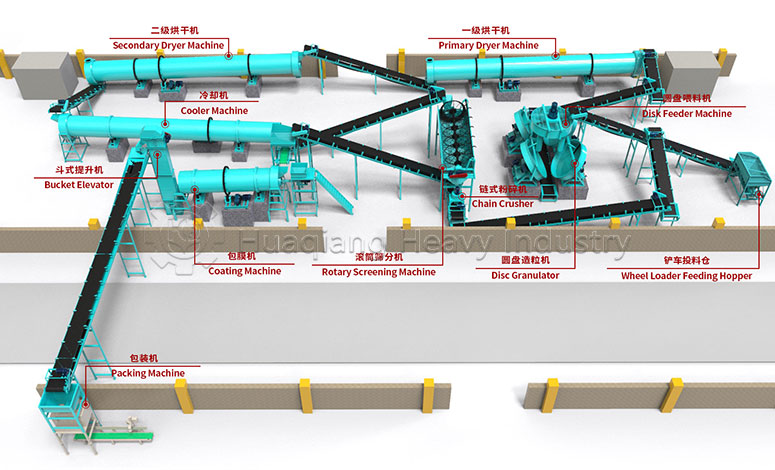
Engineering considerations regarding material flow are equally important. Materials undergo multiple transfers from batching to packaging, with each conveying stage posing risks of dust generation and product breakage. A sound design minimizes horizontal conveying distances, utilizes enclosed equipment to suppress dust, and incorporates buffer devices at transfer points to reduce breakage rates.
Workshop layout impacts operational efficiency and safety. Granulation and drying zones should be situated near heat sources and exhaust vents, while batching and packaging areas are best located close to raw material and finished product warehouses. Adequate space for maintenance access and operator movement must be provided between processing sections.
In summary, the successful implementation of an NPK fertilizer project requires the systematic execution of every aspect—from defining process parameters and matching equipment to optimizing material flow and workshop layout.