
Potassium sulfate and potassium chloride are two of the most commonly used potassium fertilizers. Their core function is to supplement potassium and improve crop resistance. They are often used as raw materials, crushed by fertilizer crushers and mixed by fertilizer mixers before being incorporated into NPK fertilizer production lines. Due to differences in composition, they differ significantly in terms of suitability for different crops, soil impact, and cost, requiring careful selection.
Composition is the fundamental difference: Potassium sulfate contains no chlorine, has a moderate potassium content, and also provides sulfur, making it gentle on the soil; potassium chloride has a high chlorine content and slightly higher potassium content, offering excellent cost-effectiveness, but long-term use can lead to soil acidification and compaction, harming chlorine-sensitive crops.
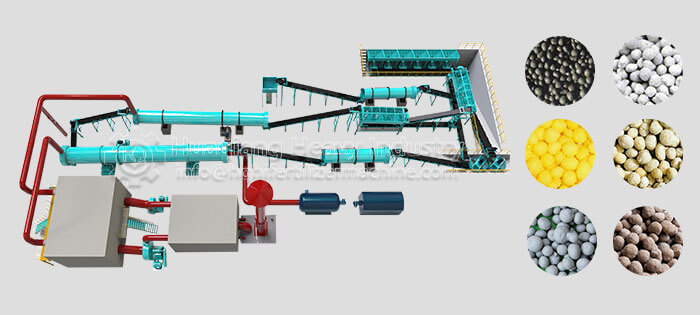
Key differences in application scenarios: Potassium sulfate is suitable for chlorine-sensitive crops and saline-alkali soils, and can be applied alone after mixing with a fertilizer mixer or incorporated into NPK fertilizer production lines; potassium chloride is suitable for chlorine-tolerant field crops and can be processed in bulk using fertilizer crushers and incorporated into NPK fertilizer production lines, making it suitable for cost-effective conventional farming.
Cost and soil impact must be considered: Potassium chloride is more affordable, but the amount applied needs to be controlled to prevent chlorine accumulation; potassium sulfate is more expensive, but long-term use is more soil-friendly, although excessive application can lead to sulfate residue.
In summary, neither is inherently superior; the key is suitability: for chlorine-tolerant crops and cost-effectiveness, choose potassium chloride and incorporate it into NPK fertilizer production lines; for chlorine-sensitive crops and when prioritizing soil health and quality, prioritize potassium sulfate.