
In an NPK blending fertilizer production line, the blender is the core equipment determining fertilizer quality. It directly affects the uniformity of mixing nitrogen, phosphorus, potassium, and trace elements, and is key to overcoming the uneven mixing and large deviations in fertilizer efficacy associated with traditional methods.
Its core advantage is its seamless, uniform mixing. Equipped with a specially designed stirring paddle, the equipment can agitate the raw materials from all directions during operation, preventing stratification and clumping of nitrogen, phosphorus, potassium, and trace elements. This ensures that the nutrient ratio of each batch of fertilizer perfectly matches the preset standards, eliminating localized nutrient imbalances.
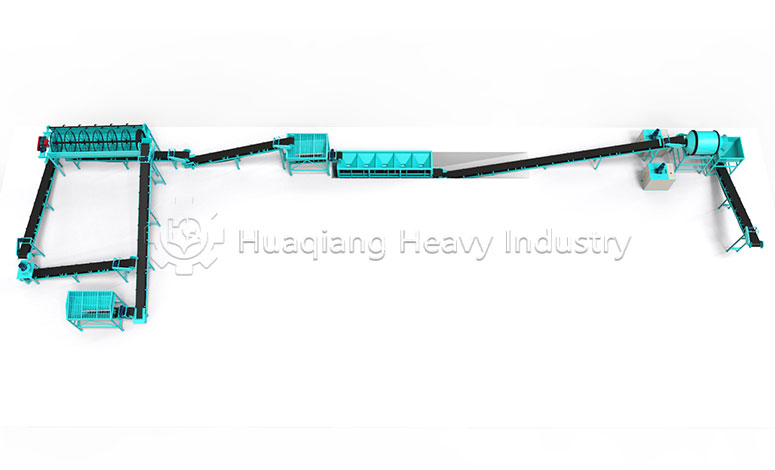
In practical terms, the NPK blending machine is highly adaptable, flexibly switching between various NPK formulas without changing core components. It can process granular raw materials and is compatible with powdered additives. Combined with an automated metering system, it achieves integrated batching and mixing operations, significantly improving production efficiency.
From a production value perspective, the NPK blending machine simplifies the mixing process, reduces labor costs, and improves fertilizer qualification rates and reduces rework losses through precise mixing. It can seamlessly connect granulation, drying, and packaging processes, streamlining the entire production line and making blended fertilizer production more efficient and of more stable quality.