
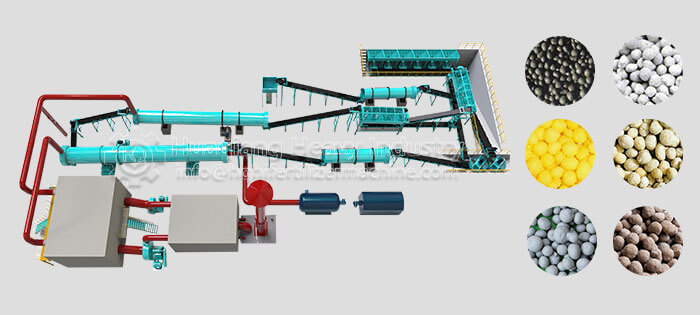
In NPK fertilizer production lines, compound fertilizer additives are key auxiliary materials for improving fertilizer quality and optimizing production processes. Although used in small quantities, they address pain points such as difficulty in granulation, easy clumping, and short-term fertilizer effectiveness. They are compatible with the operational needs of NPK fertilizer granulator machines and drum fertilizer dryers, ensuring the finished fertilizer better meets agricultural standards.
Granulation and forming additives are a necessity for the production line, primarily assisting in granulation and improving granule strength and forming rate. Commonly used binders include bentonite, starch, and sodium humate, which allow nitrogen, phosphorus, and potassium raw materials to quickly bind together, reducing granule breakage and avoiding raw material waste. They are suitable for continuous operation of granulators.
Quality preservation additives address pain points in fertilizer storage and transportation. Commonly used powdered and oily anti-caking agents prevent granules from sticking together and prevent moisture-induced clumping. They are suitable for storing dried finished products, effectively extending the fertilizer's shelf life.
Fertilizer-enhancing additives focus on improving nutrient utilization. Common types include nutrient activators, slow-release agents, and chelating agents. Activators can activate nitrogen, phosphorus, and potassium nutrients and reduce soil fixation. Slow-release agents can delay nutrient release and extend the fertilizer effect cycle. Chelating agents can avoid element antagonism and achieve a balanced supply of nutrients when combined with micronutrients.