
The organic fertilizer disc granulator, as a commonly used fertilizer granulator and one of the core pieces of organic fertilizer production equipment, has an operational complexity that directly affects production efficiency and product quality. This complexity can be judged from four dimensions: operating procedures, parameter adjustment, ease of use, and troubleshooting.
The complexity of the operating procedures is a fundamental point of judgment. If multiple steps such as feeding, angle adjustment, and discharging need to be completed manually without integrated control functions, the operational complexity is high; conversely, if the process is highly automated, allowing for integrated feeding, granulation, and discharging with only simple monitoring required, the complexity is low.
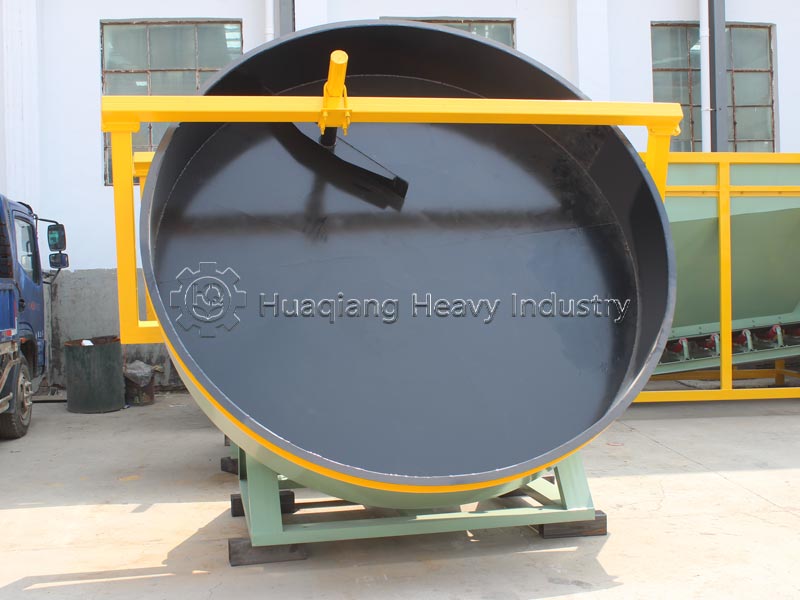
The difficulty of parameter adjustment is a core indicator. If parameters such as disc speed, inclination angle, and material humidity require frequent manual fine-tuning without precise scales and feedback, easily leading to uneven granulation, it indicates high operational difficulty; if parameters can be precisely preset and provide real-time feedback without repeated adjustments, operation is simpler.
Ease of use and troubleshooting convenience are also important factors. If the machine can be operated quickly without professional training, daily cleaning and maintenance steps are simple, and faults can be easily identified, it is considered easy to operate; if professional personnel are required for operation, troubleshooting is complex, and maintenance is cumbersome, then the complexity is high.
In summary, to determine the operational complexity of this type of fertilizer granulator, the key is to consider the degree of automation and the convenience of parameter adjustment, combined with ease of use and maintenance costs, to accurately match your own needs for organic fertilizer production equipment and avoid operational difficulties.