
Potassium fertilizers come in various forms, including granular, powdered, liquid, and natural mineral types. The differences between them lie primarily in their form, processing, application effects, and suitability for different scenarios, directly impacting planting efficiency and nutrient utilization. Therefore, the choice should be based on specific needs.
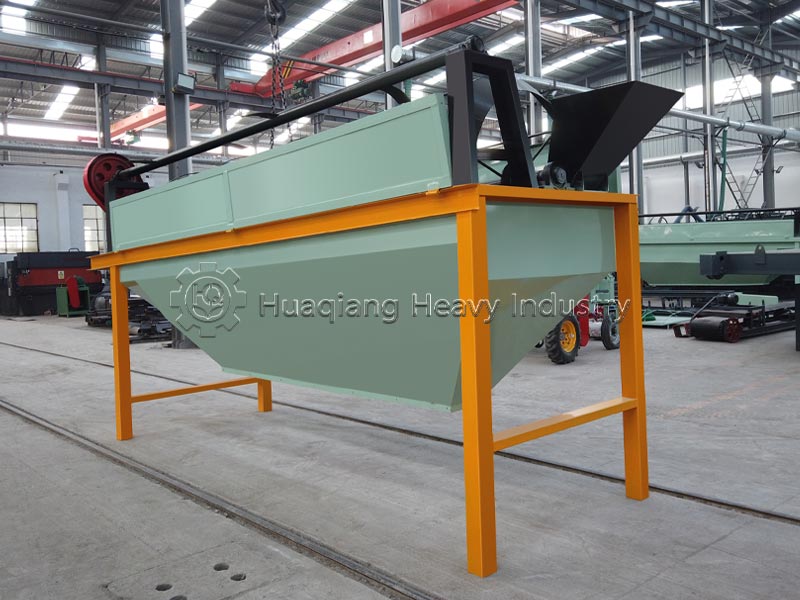
Form and processing technology are fundamental differences. Granular potassium fertilizer requires shaping through an NPK fertilizer production line and screening with a fertilizer screener machine to produce uniform, dense granules; powdered potassium fertilizer does not require shaping and exists as a loose powder; natural mineral potassium fertilizer is mostly a product of crushed raw ore, with irregular shapes; liquid potassium fertilizer is a fluid, with a simpler processing process that does not require the aforementioned equipment.
There are significant differences in application convenience and loss rate. Granular potassium fertilizer has good fluidity, is suitable for mechanized fertilization, is less prone to dusting and caking, and offers even nutrient release and low loss; powdered fertilizer is easily scattered and caked, requiring manual application and resulting in high losses; liquid fertilizer requires irrigation equipment, and transportation and storage require leak prevention, limiting its application scenarios.
Nutrient utilization rate and suitability for different scenarios also differ. Granular fertilizer releases nutrients gradually over a long period, making it suitable for various soil types and large-scale planting; natural mineral potassium fertilizer has low purity and slow release, requiring long-term application; liquid fertilizer is absorbed quickly, suitable for rapid nutrient replenishment in crops, but is easily lost with water flow, requiring controlled application.
In summary, granular potassium fertilizer combines convenience and practicality, is suitable for large-scale production on NPK fertilizer production lines, and is more aligned with modern large-scale agriculture. Other types of potassium fertilizer should be selected based on planting patterns and crop needs.