
Among common livestock and poultry manures, chicken manure typically ranks highest in nitrogen, phosphorus, and potassium content. Air-dried chicken manure generally contains 1.5%–2.5% nitrogen, 1.5%–2.5% phosphorus, and 0.8%–1.5% potassium—levels significantly higher than those found in pig or cattle manure. This characteristic is determined by a combination of the chicken's physiological structure and its feeding regimen.
Chickens have short digestive tracts, meaning feed transit time is limited; however, the nutrient density of chicken feed is high, with protein and mineral levels far exceeding the roughage consumed by cattle and sheep. Unabsorbed nutrients are excreted, giving chicken manure a high baseline content of nitrogen, phosphorus, and potassium. Furthermore, the primary end-product of nitrogen metabolism in chickens is uric acid—which is nitrogen-rich—and the fact that feces and urine are excreted together further elevates nitrogen levels. Chickens consume relatively little water, resulting in lower moisture content in their manure compared to pig manure, which effectively "concentrates" the nutrients. Additionally, additives such as dicalcium phosphate and limestone powder are often included in the feed; unabsorbed portions pass into the manure, raising both phosphorus and calcium levels.
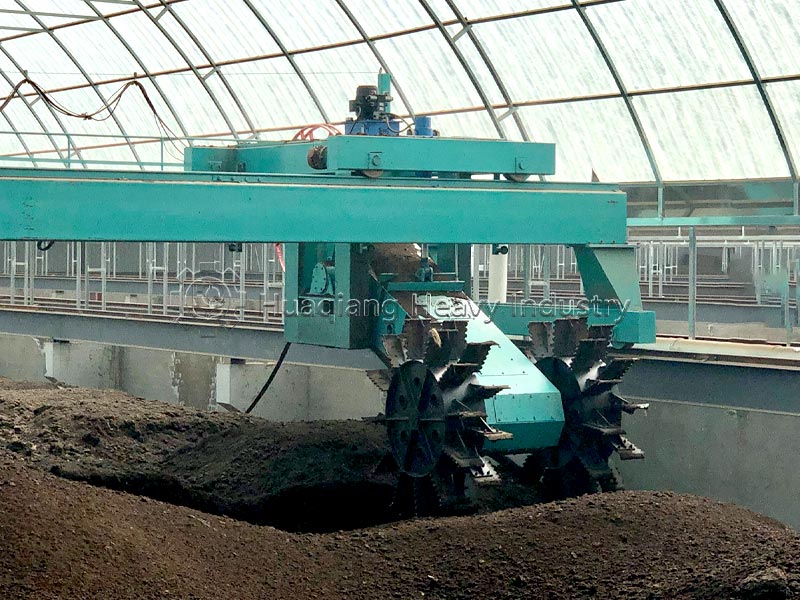
However, the high nutrient content of chicken manure also presents processing challenges: nitrogen is prone to volatilization, fresh manure is sticky and prone to clumping, and direct application can easily "burn" crops. Consequently, processing typically begins with solid-liquid separation or the addition of materials like straw or sawdust to adjust moisture content and the carbon-to-nitrogen (C/N) ratio, followed by aerobic fermentation. A trough-type compost turning machine regularly aerates the material to ensure oxygen supply, control temperature, and minimize ammonia loss. After decomposition, the material is pulverized in a half-wet material crusher and screened to remove impurities; a metering mixer then incorporates functional bacteria or medium and trace elements according to the formula. If producing granular fertilizer, additional steps—granulation, drying, cooling, screening, and packaging—are required, whereas granulation and drying can be omitted for powdered fertilizer.
Chicken manure's nutrient advantage stems from the bird's digestive physiology and feed composition; however, transforming this advantage into a safe, stable commercial fertilizer relies on appropriate processing equipment.