
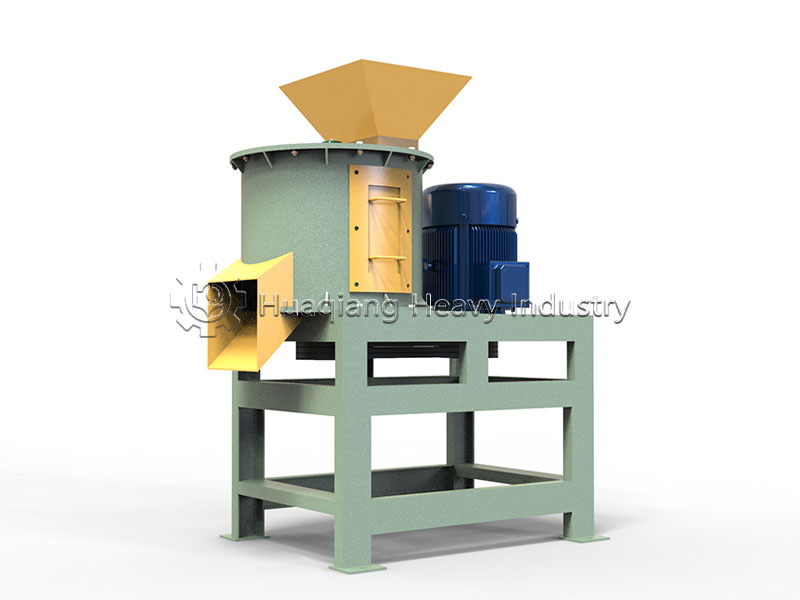
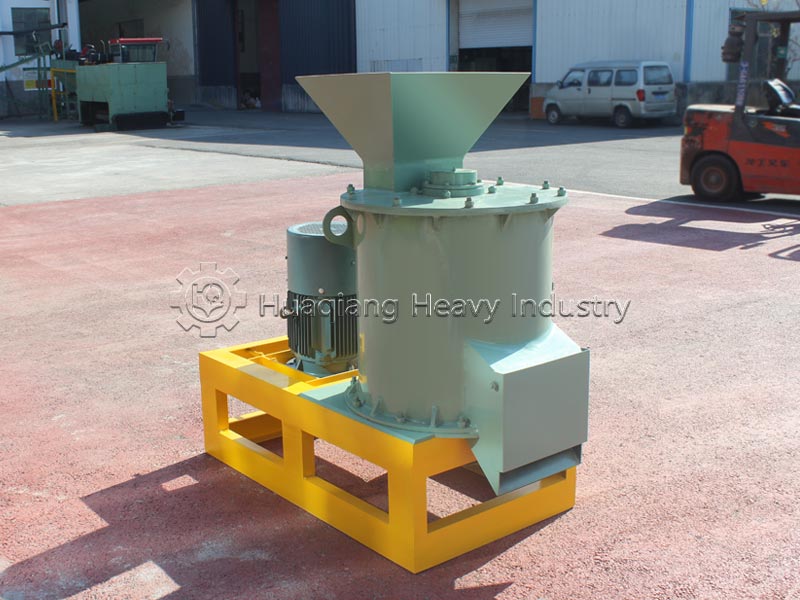
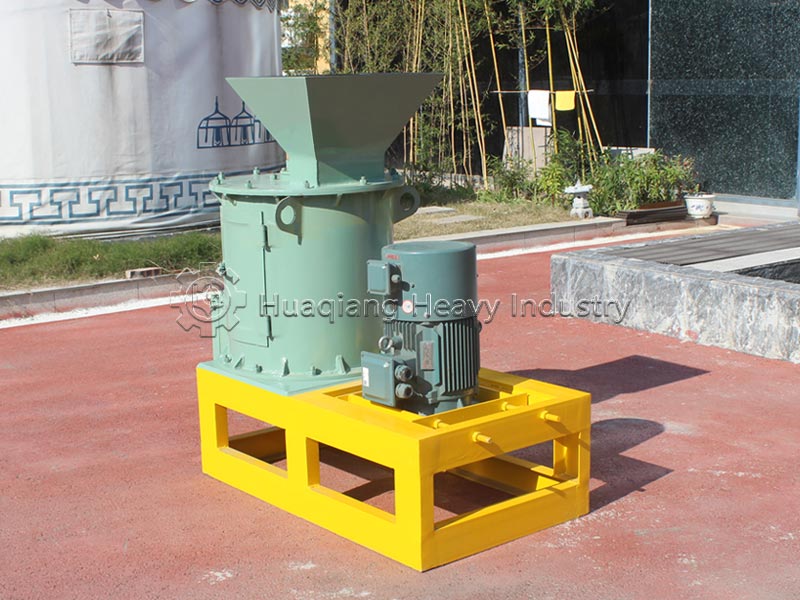
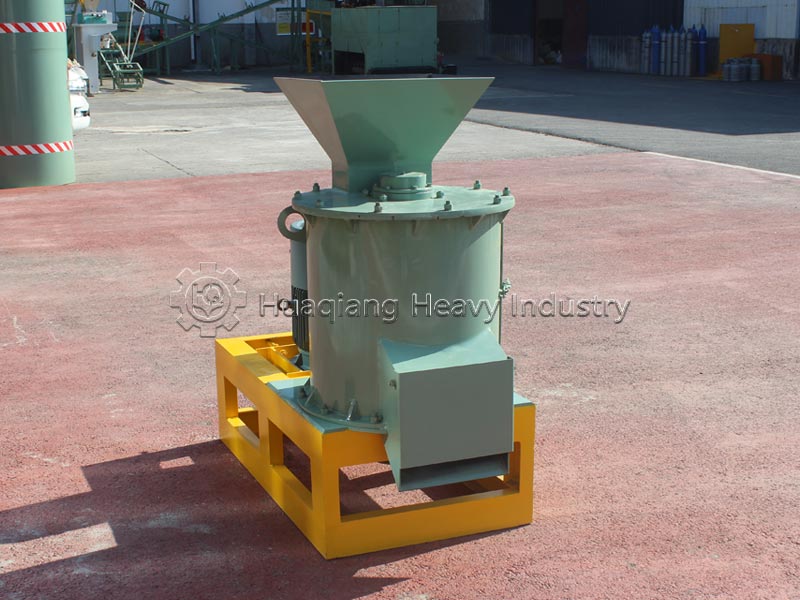
The half-wet material crusher is an easy-to-operate crushing device suitable for various wet materials. In organic fertilizer workshops, it is typically placed between the fermentation and granulation zones to break up fermented but clump-like materials into fine powder. Operators only need to control the feeding speed and pay attention to daily maintenance for the equipment to operate stably for a long time. It is not sensitive to the moisture content of the material; wet materials will not cause blockages, and the output material has a uniform fineness, making it a highly practical and widely used crusher in organic fertilizer production lines.
Working Principle
Material enters the crushing chamber through the feed inlet. The high-speed rotating rotor drives the crushing blades to forcefully shear and impact the material. The material is repeatedly crushed between the rotor and the chamber wall, while simultaneously moving towards the discharge direction under the action of centrifugal force and airflow. Particles that meet the fineness requirements pass through the screen and are discharged, while coarse materials that do not meet the standards continue to circulate and be crushed within the chamber. The high-speed rotation of the rotor causes adhering wet material to be thrown away from the crushing components, keeping the crushing chamber unobstructed.
Operating Instructions
Before starting the machine, check for any residual material in the crushing chamber, ensure the blades are intact and securely fastened, and check for any damage to the screen. After confirming everything is normal, start the machine empty. Once it is running smoothly, begin feeding material evenly.
Maintain a stable feed rate to avoid overload or idling caused by sudden changes in feed volume. During production, carefully observe the fineness of the output material and the motor current. Coarser output material may indicate screen or blade wear. An abnormally high current indicates foreign objects may have entered the machine or excessive feeding.
Before stopping the machine, stop feeding and wait until the material in the chamber is emptied before disconnecting the power. For long-term shutdowns, clean the residual material in the crushing chamber to prevent material from drying and agglomerating.
Applications
Organic Fertilizer Production Line: Crushing fermented materials to provide qualified powder for subsequent granulation.
Compound Fertilizer Production Line: Crushing and returning agglomerated raw materials.
Bio-Organic Fertilizer Production: Room-temperature crushing of materials after adding microbial agents to maintain agent activity.
Sludge Treatment Projects: Crushing and dispersing dewatered sludge mixed with auxiliary materials.
Agricultural Waste Resource Utilization: Crushing and processing of straw, mushroom residue, and other materials.
| Model | BSFS-40 | BSFS-60 | BSFS-80 | BSFS-90 |
| Prod capacity(t/h)
|
1~2 | 2~4 | 3~6 | 4~8 |
| Particle size | 0.5~5 | 0.5~5 | 0.5~5 | 0.5~5 |
| Power | 22 | 30 | 37 | 45 |
| Overall Dimensions L×W×H | 960×560×850 | 1632×1560×1180 | 2100×2060×1800 | 2500×2040×1800 |