
In the production of NPK blended fertilizers, the blending machine is responsible for uniformly mixing various granular raw materials; its operational status directly impacts both the quality of the finished product and production efficiency. Therefore, effective equipment maintenance requires focusing on several key areas, including mixing performance, the condition of critical components, and routine cleaning.
1. Controlling Mixing Quality
The primary function of an NPK blending machine is to ensure that raw materials containing different nutrients are thoroughly mixed. If the finished product exhibits uneven nutrient distribution or particle segregation, the particle size, density, and the proportions of the raw materials should be reviewed. Additionally, the mixing duration, feed rate, and batch size should be adjusted appropriately to prevent overloading, which can compromise mixing effectiveness.
2. Regular Inspection of Critical Components
Long-term operation can lead to wear on bearings, drive mechanisms, and mixing components. Routine checks should be performed on the motor, gearbox, and connecting parts, with particular attention paid to any abnormal noise, vibration, or temperature increases. Mixing blades and liner plates that show significant wear should be repaired or replaced promptly; furthermore, the lubrication system and fastening bolts should be inspected on a regular basis.
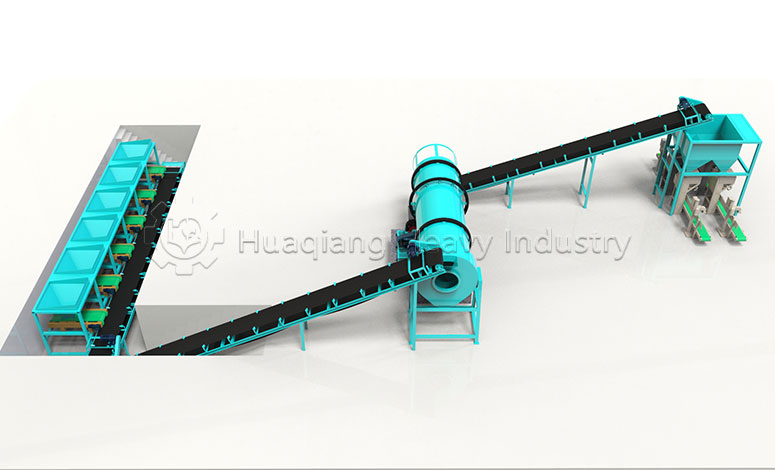
3. Prioritizing Equipment Cleaning and Corrosion Prevention
Residual material from different fertilizer formulations can contaminate subsequent batches, affecting product quality. The mixing chamber, feed inlets, and discharge outlets should be cleaned thoroughly after every formula change or at the end of a production run to prevent material accumulation and caking. Additionally, the interior of the equipment should be kept dry, and metal surfaces should be inspected periodically to mitigate corrosion caused by humid environments.
4. Establishing a Routine Maintenance System
Implementing a schedule for regular inspections and maintenance—while keeping detailed records of equipment performance, component wear, and repairs—helps in identifying potential issues early and reducing the risk of unplanned downtime.
Proper maintenance of an NPK blending machine not only extends the equipment's service life but also ensures the uniformity of the fertilizer blend. Through standardized operating procedures, regular inspections, and timely cleaning, the stability of the equipment can be enhanced, ensuring continuous, reliable operation for the NPK blending fertilizer production line.