
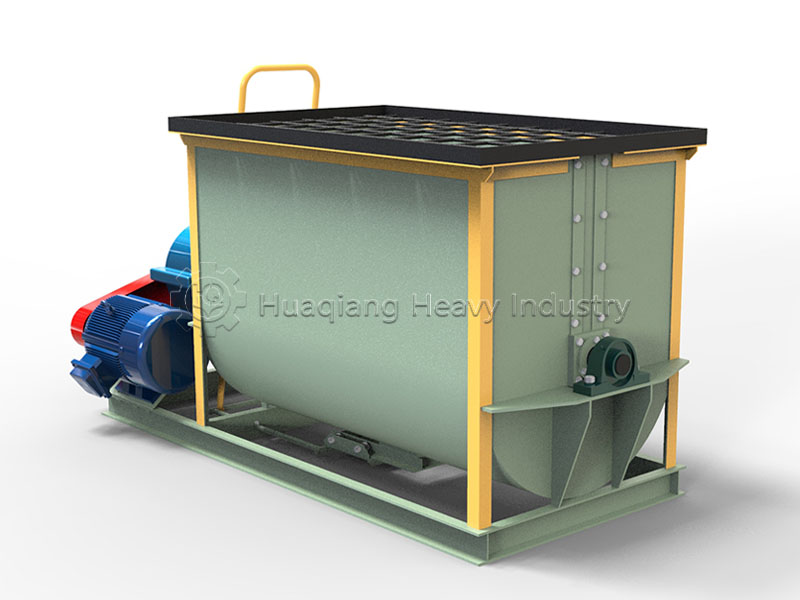
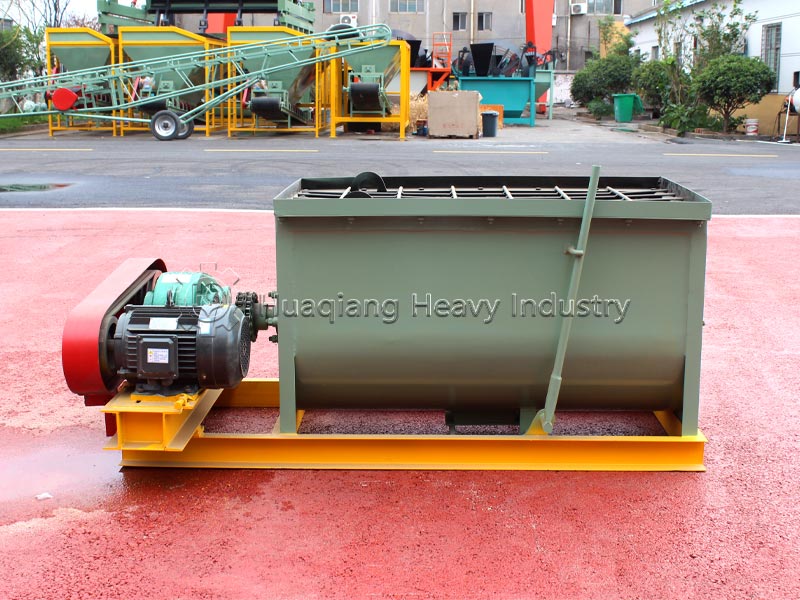
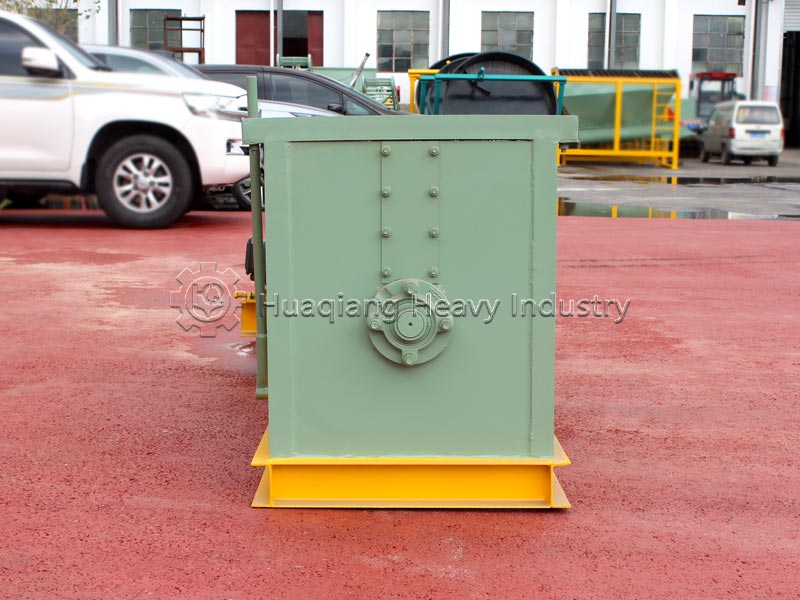
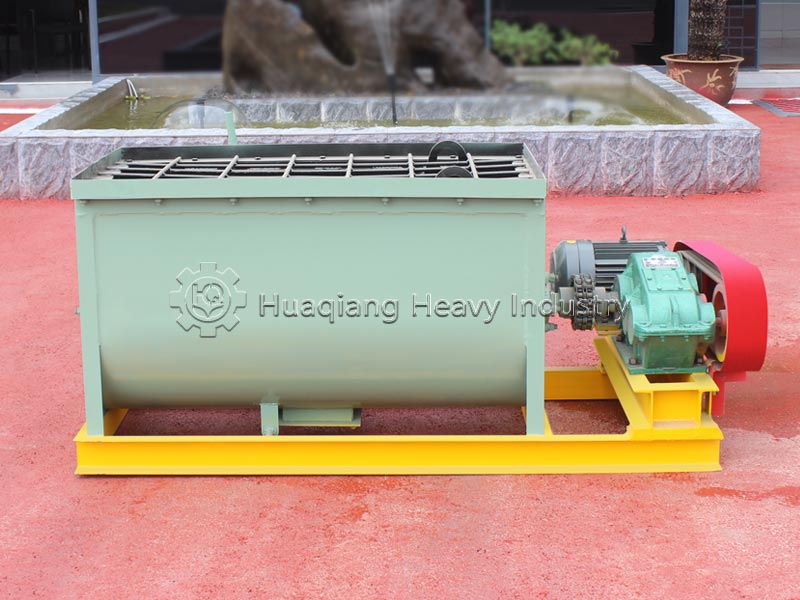
The horizontal ribbon mixer is widely used in the organic and compound fertilizer industries due to its rapid mixing speed, high uniformity, and reliable operation. The ribbon agitator features an optimized design that creates a bidirectional circulating flow of materials within the mixing trough, achieving high mixing uniformity in a short time. The main shaft and ribbons are constructed from wear-resistant materials and feature a reliable sealing structure, making the equipment suitable for prolonged, continuous operation. It can be equipped with a liquid spraying system to add moisture or liquid binders during the mixing process, offering versatile functionality.
Working Principle
After materials enter the mixing trough, the horizontal main shaft drives the ribbon agitator to rotate. As the ribbons rotate, they push the material in two axial directions—moving the outer layer forward and the inner layer backward—creating intense convective turnover. Simultaneously, the shearing action of the ribbons breaks up any small agglomerates, ensuring thorough mixing of components at the granular level. After several minutes of mixing, the material reaches a uniform state and is discharged.
Performance Features
High Mixing Efficiency: Bidirectional convective mixing results in short batch times and high productivity.
Excellent Uniformity: Materials circulate repeatedly within the trough, ensuring even distribution of components and a low coefficient of variation.
Wear-Resistant and Durable: Agitator blades are made of wear-resistant steel, and the trough can be fitted with liners, ensuring a long service life.
Leak-Proof Sealing: Multi-layer sealing structures at the shaft ends prevent powder leakage and dust emissions.
Liquid Spraying Capability: Optional liquid spraying device allows for the addition of liquids during mixing, simplifying the production process.
Maintenance Methods
Check blade tightness every shift and promptly tighten any loose bolts. Clean off residual material adhering to the trough and ribbons to prevent accumulation and hardening over time.
Inspect shaft-end seals weekly; replace seals immediately if leakage is detected.
Check gearbox oil levels and bearing lubrication monthly; replenish or replace grease as needed.
Inspect blade wear quarterly; replace blades if wear is severe.
Conduct a comprehensive inspection of the main shaft and bearings during the annual overhaul; replace all seals and worn ribbons.
|
Model
|
Capacity(t/h)
|
Power(kw)
|
Rotation Speed | Dimensions |
| (r/min) | (L× W ×H)(mm) | |||
| WJ600×1200 | 1.5-2 | 5.5 | 45 | 2100×1100×900 |
| WJ700×1500 | 2-3 | 7.5 | 45 | 2300×1150×1100 |
| WJ900×1500 | 3-5 | 11 | 45 | 2300×1300×1200 |
| WJ1000×2000 | 5-8 | 15 | 45 | 2900×1400×1400 |