
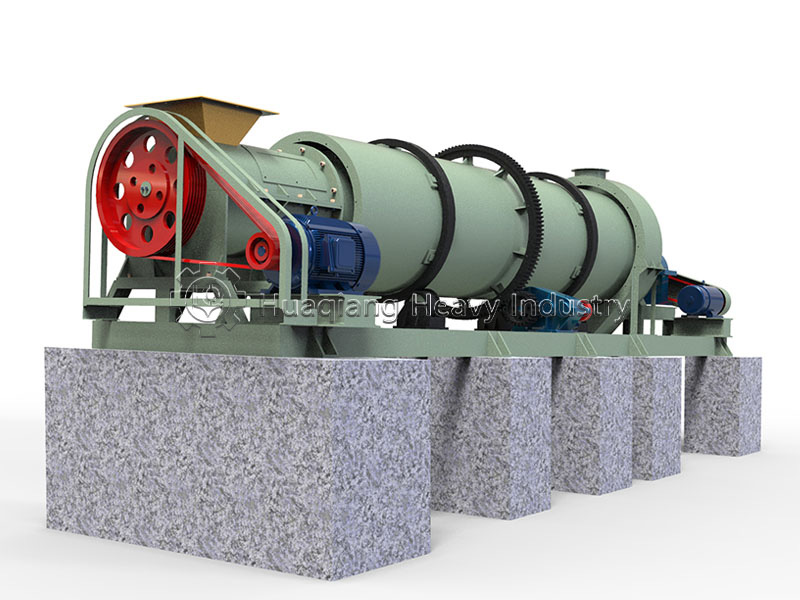
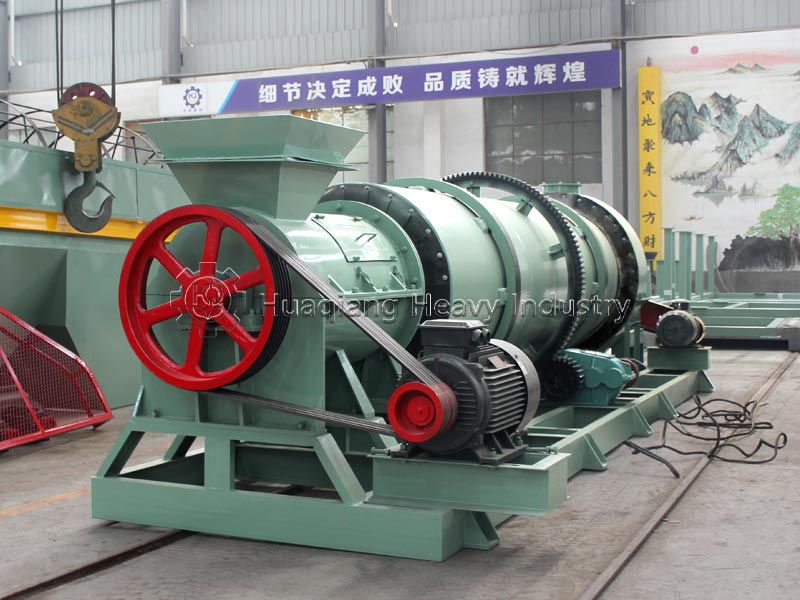
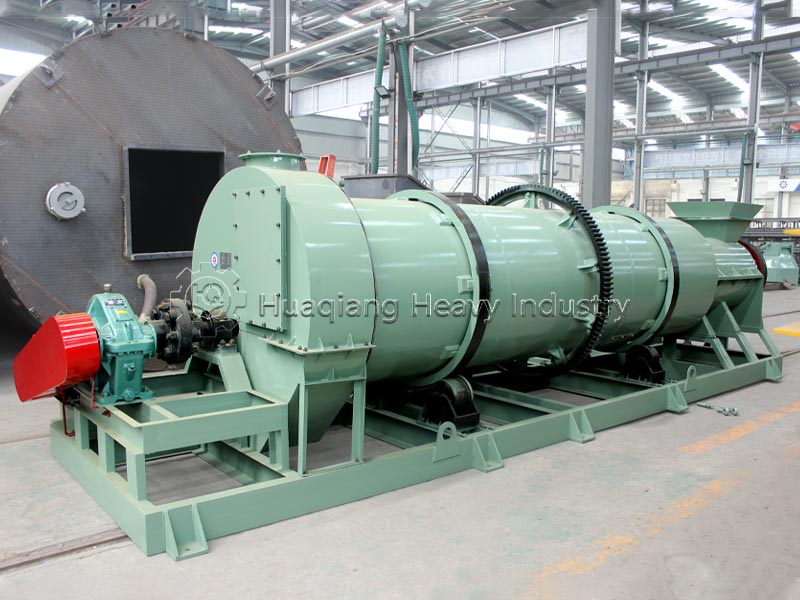
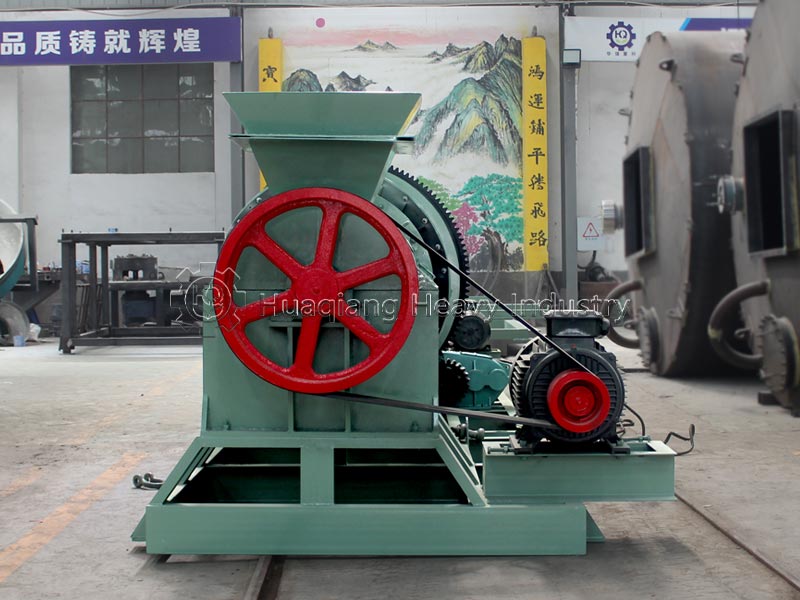
The new two-in-one organic fertilizer granulator is a highly efficient granulation device that combines mixing and granulation functions. Designed specifically for organic fertilizer production, it achieves integrated material mixing and granulation. Its core operating principle is that after fermented organic raw materials are fed into the machine, they are first thoroughly mixed by a built-in stirring device to achieve uniform distribution of the material components. The machine then switches to granulation mode, where a special granulation mechanism (typically combining stirring, extrusion, or rolling principles) processes the mixed material, causing it to agglomerate into granules through mechanical force and its own viscosity.
This two-in-one design eliminates the material transfer process between the mixing and granulation equipment in traditional production, reducing material loss and energy consumption, and significantly improving production efficiency. Compared with single-function granulation equipment, it occupies a smaller area and is more convenient to operate, making it particularly suitable for small and medium-sized organic fertilizer manufacturers to achieve intensive production.
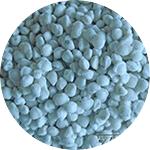
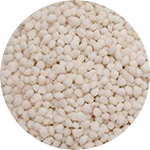
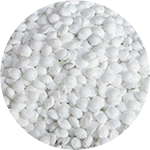
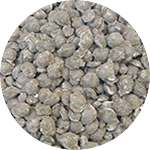
Where is the new two-in-one organic fertilizer granulator commonly used?
The new two-in-one organic fertilizer granulator is mainly used in the field of organic fertilizer production due to its integrated functions and good adaptability to organic materials. The specific scenarios are as follows:
1.Organic fertilizer production field
It can process various organic waste raw materials, such as livestock and poultry manure (chicken manure, pig manure, cow manure, etc.), crop straw, edible fungus residue, wine lees, vinegar lees, municipal sludge, etc., and convert them into commercial organic fertilizer granules.
It is suitable for the production of organic fertilizer for self-use in large-scale organic fertilizer production plants, organic fertilizer processing cooperatives and large-scale planting bases. It can meet the granulation needs of organic fertilizers of different scales. The granular organic fertilizers produced can be used in farmland, orchards, vegetable gardens, flower planting and other scenarios.
2.Other related fields
In the production of organic-inorganic compound fertilizers, it can be used for the pretreatment and granulation of the organic part, and then mixed with inorganic fertilizers to produce compound fertilizers with the advantages of both organic and inorganic fertilizers.
It can also be used in the production of bio-organic fertilizer. During the granulation process, it can better retain the activity of beneficial microorganisms and ensure the functionality of the bio-organic fertilizer.
How is the new two-in-one organic fertilizer granulator designed according to the granulation process?
The structural design of the new two-in-one organic fertilizer granulator is closely combined with the characteristics of the organic fertilizer granulation process, integrating the mixing and granulation systems into one. The functions of each core component are as follows:
1.Hybrid system
It consists of a mixing shaft, mixing blades, and a mixing chamber. The shaft is made of high-strength alloy steel, with bearings installed at both ends to ensure stability. The mixing blades are distributed in a spiral or paddle shape and are made of wear-resistant cast iron or stainless steel, which can be selected according to the characteristics of the material.
The mixing silo's capacity is designed based on production scale, typically ranging from 1 to 8 cubic meters. Its inner walls feature rounded transitions to minimize material residue. The mixing system is driven by a variable-frequency motor with an adjustable speed between 20 and 60 rpm, ensuring a mixing uniformity of at least 90%.
2.Granulation system
The core components include a pelletizing disc (or drum), a forming mechanism, and a transmission. The disc's tilt angle is hydraulically adjustable (ranging from 30° to 50°). The disc is constructed of stainless steel and lined with a wear-resistant rubber lining to reduce material wear and adhesion.
The forming mechanism is categorized as agitator, roller, or combination types, depending on the granulation principle. The agitator uses high-speed rotating teeth to aggregate the material into granules, while the roller-type forms the material through the compression of rollers and a mold plate. The transmission uses a reduction motor with a power of 11-45kW, depending on the machine model, to ensure a stable granulation process.
3.Feeding and discharging devices
The feeding device consists of a hopper and a screw feeder. The hopper is equipped with a liquid level sensor to automatically control the feeding amount. The screw feeder adopts variable frequency speed regulation to match the conveying amount with the mixing and granulation rhythm.
The discharging device is located at the end of the granulation system. It is an inclined chute or belt conveyor. A vibration device is installed at the bottom of the chute to prevent material blockage and transport the formed granules to the subsequent process.
4.Control system
The PLC touchscreen control system integrates monitoring and adjustment functions for parameters such as mixing time, granulation speed, material moisture, and output. Sensors are equipped to monitor material status in real time. When indicators such as moisture and mixing uniformity deviate from set values, automatic alarms and prompts for adjustments are generated, enabling intelligent production.
How does the new two-in-one organic fertilizer granulator make fertilizer?
The process of manufacturing organic fertilizer by the new two-in-one organic fertilizer granulator is compact and efficient, and each link is smoothly connected. The specific steps are as follows:
1.Raw material pretreatment
Crush fermented and decomposed organic materials (such as livestock and poultry manure and straw) to a particle size of 40-60 mesh, removing impurities such as stones and plastic. Test the moisture content of the raw materials and control the moisture content to 25%-35% by airing or adding water. Excessively high moisture content can easily cause pellets to stick together, while too low a moisture content can make pellets difficult to form.
2.Mixing stage
The pretreated raw materials enter the mixing system through the feeding device. A small amount of binder (such as bentonite, starch, etc., generally not exceeding 3%) is added as needed. The stirring device is started and the mixing time is set to 5-10 minutes to fully mix the raw materials and additives, ensuring uniform material composition and laying the foundation for subsequent granulation.
3.Granulation stage
After mixing, the material automatically enters the granulation system. The granulation mode is selected based on the material's characteristics: if the material is highly viscous, use the agitator granulation method, where the teeth and claws stir the material at high speed to agglomerate it into 1-6 mm particles. If the material has a high fiber content, switch to the roller granulation method, where rollers squeeze the material through a die plate to form it.
During the granulation process, the material humidity is adjusted in real time through the water spray device to maintain the stability of the granule formation. The formed granules are transported to the screening stage through the discharging device.
4.Screening and return
The finished particles enter the vibrating screen and are screened through a 1-6 mm sieve. Qualified particles enter the drying process; the fine powder and oversized particles screened out are sent back to the mixing system through the return device for re-granulation. The raw material utilization rate can reach more than 95%.
5.Drying and packaging
Qualified pellets enter the dryer and are dried at 60-80°C to a moisture content below 10% to prevent mold during storage. The dried pellets are cooled, measured, and packaged in woven or laminated bags for easy storage and transportation.
What are the characteristics and advantages of the new two-in-one organic fertilizer granulator in the fertilizer production process?
The new two-in-one organic fertilizer granulator has significant advantages over traditional equipment in organic fertilizer production:
1.High degree of integration
The mixing and granulation functions are integrated into one, eliminating the need for conveying equipment between the mixer and granulator in traditional production lines, reducing material losses during transportation (the loss rate is reduced from the traditional 5%-8% to 1%-2%), and saving 30%-50% of the equipment floor space.
2.High production efficiency
Integrated operations shorten production cycles, enabling a single unit to produce 1-5 tons of product per hour, a 20%-40% increase compared to traditional, split-type equipment. This also reduces equipment startup and shutdown times and material waiting times, making it suitable for continuous production.
3.Good granulation effect
The granulation mechanism is designed according to the characteristics of organic fertilizer raw materials. It can adapt to high-fiber, high-moisture organic materials. The granules produced have high roundness (sphericity above 85%) and moderate granule strength (10-30N). They are easy to transport and can be naturally decomposed in the soil.
4.Low energy consumption and cost
The integrated design reduces the number of power equipment such as motors, and reduces energy consumption per unit product by 15%-25% compared to traditional production lines. It also reduces the number of equipment maintenance points and operators, lowering production management costs.
5.Strong operational flexibility
The control system can flexibly adjust parameters such as mixing time, granulation speed, and humidity to meet the granulation needs of different organic raw materials (such as chicken manure, straw, sludge, etc.). There is no need to adjust the equipment on a large scale when changing raw materials.
What are the benefits of using the new two-in-one organic fertilizer granulator to make fertilizer?
Using the new two-in-one organic fertilizer granulator to make organic fertilizer has many significant benefits:
1.Improve the quality of organic fertilizer
High mixing uniformity ensures uniform distribution of organic matter, nitrogen, phosphorus, potassium and other nutrients in the organic fertilizer, avoiding local nutrient over- or under-content. The granulated organic fertilizer particles are dust-free and non-lumpy, and can be evenly distributed in the soil when applied, improving fertilizer utilization.
2.Promoting the resource utilization of organic waste
It can efficiently process various types of organic waste, convert livestock and poultry manure, straw, etc. that originally polluted the environment into high-quality organic fertilizer, realizing "turning waste into treasure". Every ton of organic waste processed can produce 0.3-0.5 tons of organic fertilizer, reducing the pollution caused by waste landfill or incineration.
3.Adapting to the needs of modern agriculture
The granular organic fertilizer produced is convenient for mechanized fertilization. When used with agricultural machinery such as seeders and fertilizer spreaders, the fertilization efficiency is increased by 5-10 times, meeting the fertilization needs of large-scale planting bases and promoting the modernization of agricultural production.
4.Improve soil ecology
After granular organic fertilizer is applied to the soil, it can slowly release nutrients, continuously improve soil structure, increase soil organic matter content, improve soil water and fertilizer retention capacity, promote soil microbial activity, and achieve sustainable improvement of soil fertility.
5.Significant economic benefits
The integrated equipment has a short payback period, 1-2 years shorter than traditional production lines. The resulting granular organic fertilizer is highly competitive in the market, fetching a price 100-200 yuan higher per ton than powdered organic fertilizer, bringing higher economic benefits to the company.
How to properly perform regular maintenance on the new two-in-one organic fertilizer granulator?
In order to ensure the stable operation and extend the service life of the new two-in-one organic fertilizer granulator, the following regular maintenance work needs to be done:
1.Regular inspection of components
Before starting the machine every day, check whether the feeding device is unobstructed and whether there is any abnormal noise in the transmission parts of the mixing system and the granulation system; check the wear of the mixing blades, granulation claws or pressure rollers to ensure that they are not loose or deformed.
Check the tightness of each connecting bolt every week, especially the connection between the stirring shaft and the blades, and the granulating mechanism and the transmission device; check the bearing temperature (normally not exceeding 70°C). If the temperature rises abnormally, stop the machine for investigation.
Check the wear degree of the wear-resistant lining and screen every month. If the lining thickness is reduced by 1/3 or the screen is damaged, replace it in time; check whether the oil pressure of the hydraulic system (such as the granulating disk tilting device) is normal and whether there is any oil leakage.
The equipment is comprehensively overhauled every quarter, including the replacement of reducer lubricating oil, motor insulation testing, control system sensor calibration, etc., to ensure that all systems of the equipment are operating normally.
2.Cleaning and maintenance
After each production, thoroughly clean the residual materials in the mixing bin and granulation plate (drum). You can use a high-pressure water gun to flush (be careful to avoid the motor and electrical components) to prevent the materials from drying and hardening, which will affect the next production.
Every week, perform rust removal and maintenance on the parts in contact with the materials, such as the mixing blades and granulating mechanism, and apply anti-rust oil; clean the dust and oil stains on the outside of the equipment and keep the equipment clean.
3.Lubrication maintenance
Regularly add lubricating oil or grease to all rotating parts according to the equipment manual. Replace the gear oil in the reducer every 800 hours of operation, using medium-load industrial gear oil (such as 220#). Add lithium-based grease to the bearings every 500 hours of operation to ensure adequate lubrication.
Before lubrication, the dust at the oil filling port must be cleaned to prevent impurities from entering; the amount of grease to be added should be such that a small amount of grease overflows from the bearing gap. Too much grease may easily cause heat.
4.Replacement of wearing parts
The mixing blades, pelletizing claws, pressure rollers, and wear-resistant liners are consumable parts and need to be replaced promptly according to the wear condition. When replacing, use original parts and ensure that the installation dimensions match. For example, after replacing the mixing blades, check the rotation balance to avoid vibration during operation.
When replacing the screen, ensure that the screen is evenly tensioned and the edges are well sealed to prevent material from leaking from the gaps.
5.Control system maintenance
Check the PLC control cabinet, touch screen, and sensors every month, clean the dust inside the cabinet, and check whether the line connections are firm; calibrate humidity sensors, liquid level sensors, etc. to ensure the accuracy of test data.
Back up control system parameters regularly to prevent accidental loss; if a control program failure occurs, contact the manufacturer's technical staff in a timely manner to avoid unauthorized modification of the program.
| Model | Capacity (t/h) |
Output Granules Size (mm) |
Motor Power (Kw) |
Outside Dimension (mm) |
| YSL2-80/120 | 4-8 | 1-5 | 37+18.5+5.5 | 7500*2300*1950 |
| YSL2-100/150 | 6-10 | 1-5 | 55+18.5+11 | 7700*2550*2260 |
| YSL2-120/180 | 8-15 | 1-5 | 75+22+15 | 9600*3000*2750 |