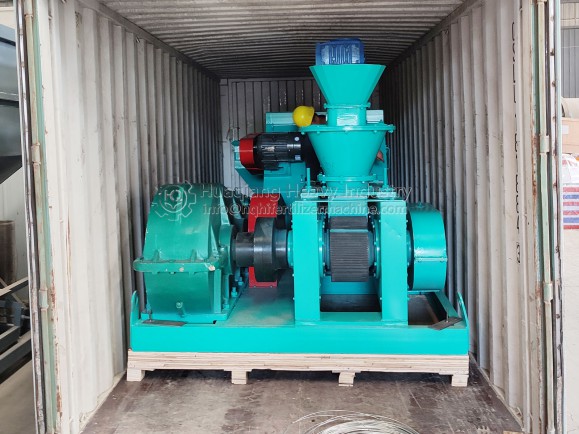
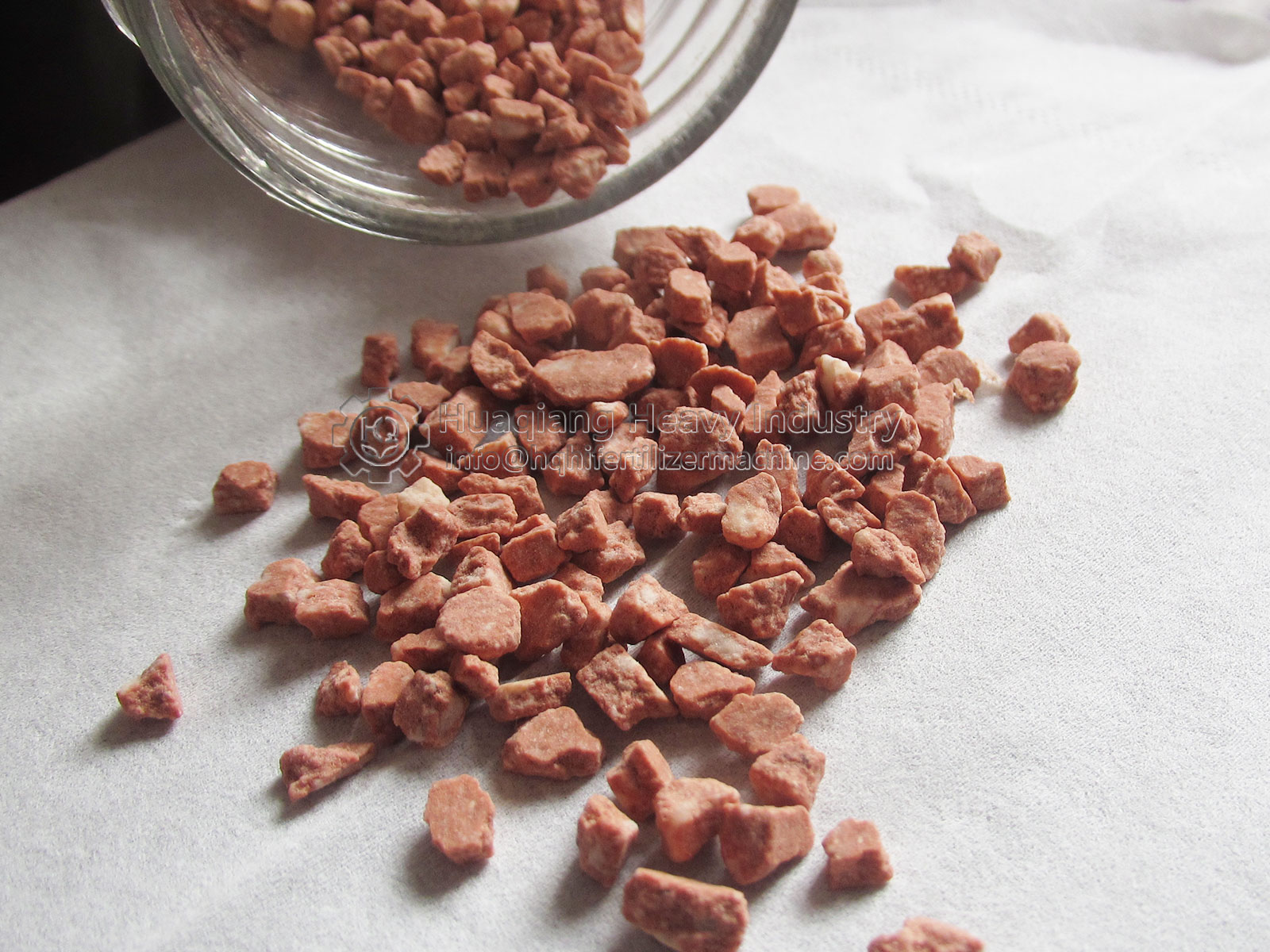
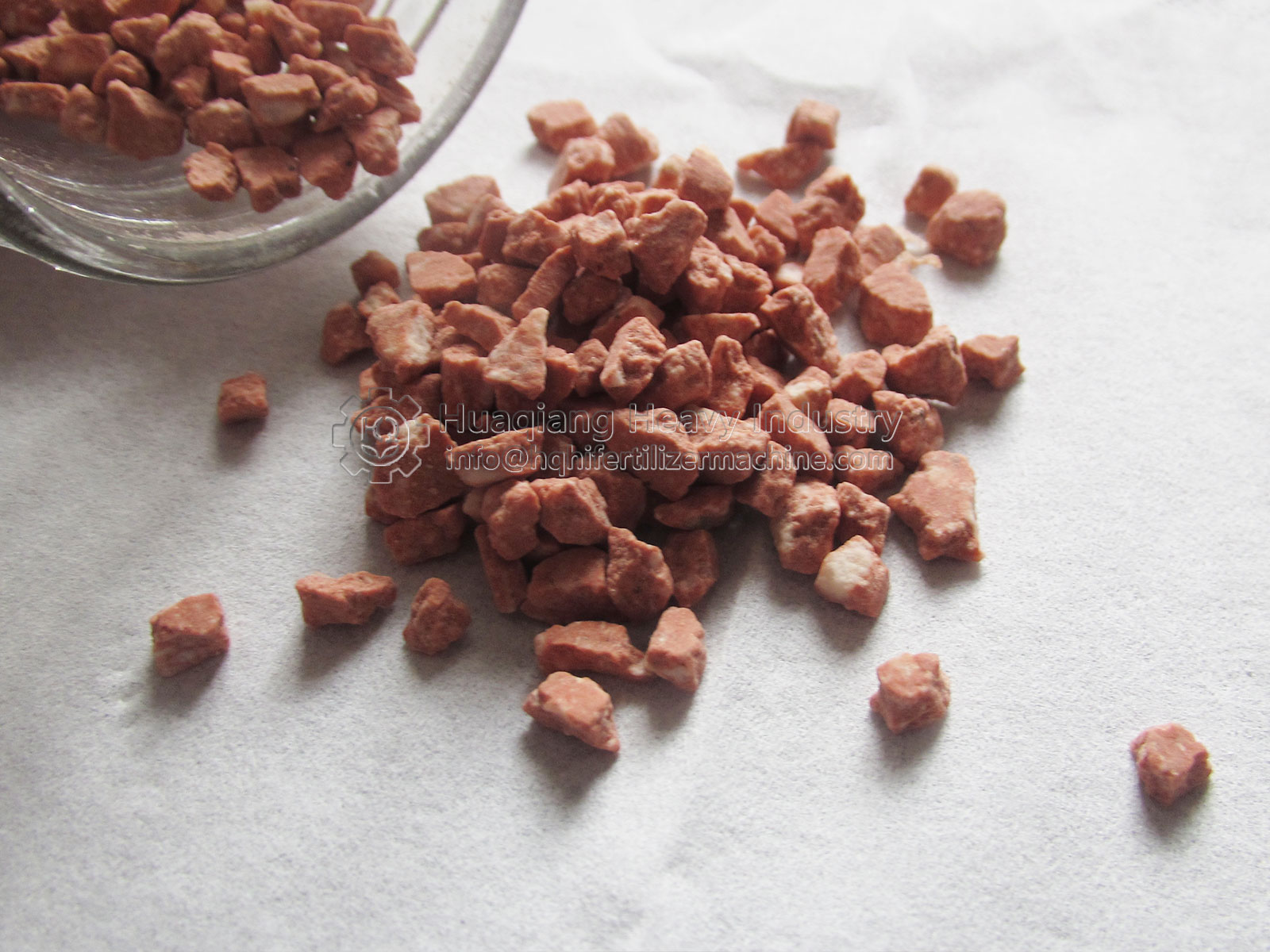
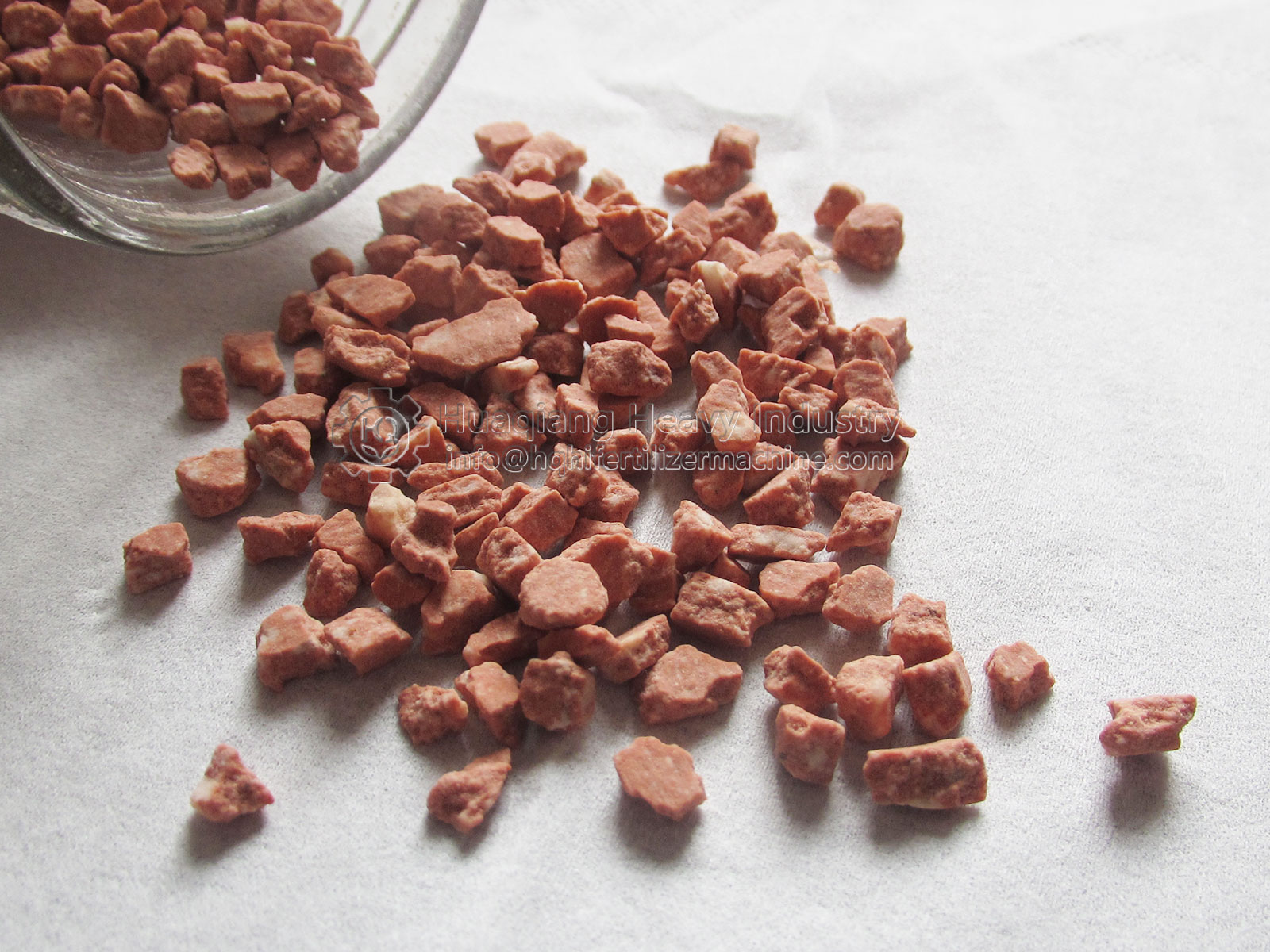
The hydraulic roller granulator is a machine that utilizes a hydraulic drive system to press dry powder directly into granules through the counter-rotation of two rollers. It features real-time pressure output from a hydraulic station and cylinder; pressure values are clearly displayed on the control panel and can be precisely adjusted with the turn of a knob. This hydraulic pressurization method offers practical benefits: every granule is formed under consistent pressure, eliminating issues like inconsistent granule density caused by spring fatigue. Furthermore, switching materials does not require stopping the machine to adjust springs—parameters can simply be modified at the control console. The equipment is robust and operates via a dry process at ambient temperature—requiring no water or heat—thereby eliminating the need for downstream drying equipment. For fertilizer and chemical plants seeking to simplify workflows, ensure stable granulation, and prioritize ease of operation, the hydraulic roller granulator represents a mature and efficient choice within the dry granulation process.
Working Principle of Hydraulic Roller Press Granulator
The granulation process of the hydraulic roller granulator is based on the principle of mechanical densification of powder under high pressure. Powdered material is forcibly fed by a screw feeder into the gap between two counter-rotating rollers; driven by roller surface friction and the nip angle, the material is drawn into the narrowing gap. Simultaneously, the hydraulic system exerts continuous thrust on the roller bearing housings via hydraulic cylinders, maintaining the preset high pressure between the rollers. As the powder passes through the narrowest point of the gap, it undergoes maximum extrusion; inter-particle voids are minimized, and particles bond tightly through mechanical interlocking and intermolecular forces. The compacted material then fills the molding pockets distributed across the roller surfaces, forming regularly shaped compacts. As the rollers rotate, the compacts pass the centerline, release from the pockets, and fall into the crushing and sizing unit below. This unit breaks down and shapes the compacted sheets into individual granules, which are then screened to produce the final product.
Operation Methods for Hydraulic Roller Press Granulator
Before startup, check the following in sequence: ensure the hydraulic station oil level is within the specified range, inspect hydraulic line connections for leaks, and verify that the accumulator pressure is normal. Confirm that there is no foreign matter adhering to the roller surfaces, the feed screw rotates freely, and the screening mesh is intact. After completing inspections, start the hydraulic station's oil pump to build system pressure, adjusting it to a low standby level.
Startup sequence: First, start the main motor to rotate the pressure rollers and run them without load for two minutes to ensure there is no abnormal vibration or noise. Next, start the feed screw with a low initial feed rate; once the material is steadily entering the gap between the rollers, gradually increase the hydraulic pressure to the process setpoint while simultaneously increasing the feed rate.
During stable operation, maintain constant feed speed, roller rotation speed, and hydraulic pressure. Operators should conduct inspections every half hour: check the discharged granules for uniform appearance and density, looking for any looseness or cracks; verify that the hydraulic station oil temperature is normal (generally not exceeding 55°C); and observe the roller surfaces for material buildup—minor buildup can be removed with a specialized scraper.
Shutdown procedure: First, stop the feed; once the material between the rollers has largely cleared, slowly release the hydraulic pressure to zero. Then, stop the main motor, and finally, stop the hydraulic station oil pump. For long-term shutdowns, clean residual material from the roller surfaces, apply anti-rust oil, and return all hydraulic valve assemblies to their initial states.
Solutions for Equipment Issues
Insufficient granule strength or low density is usually linked to inadequate hydraulic pressure or improper material moisture content. First, verify that the hydraulic pressure meets the process setpoint; if the pressure gauge reads normally but granules remain loose, consider whether the material moisture content is too low, resulting in a lack of necessary bonding force between powder particles.
Significant pressure fluctuations in the hydraulic system are commonly caused by insufficient accumulator gas pressure or air entrapment in the hydraulic oil. Regularly check the accumulator's gas charge pressure and replenish with nitrogen to the specified level if low. Air entrapment often results from low oil levels or poor sealing in the suction line; check the oil level and tighten pipe connections.
Increasing material buildup on roller surfaces is usually caused by high material moisture content or increased surface roughness due to wear. Reducing material moisture content or increasing the roller surface linear speed can help mitigate adhesion. If significant wear grooves appear on the roller surfaces, the roller shells must be replaced promptly. If the hydraulic station's oil temperature remains consistently high—exceeding 60°C without stabilizing—it is necessary to check the cooling system for proper operation and determine if the hydraulic oil has degraded (resulting in reduced viscosity) due to a lack of timely replacement. The cooler filter screen should be cleaned regularly, and the hydraulic oil replaced every 2,000 operating hours or once a year.
Investment Costs for Hydraulic Roller Press Granulator
Regarding equipment procurement, hydraulic models—equipped with a hydraulic station, hydraulic cylinders, and a control system—have a higher main unit price than roller granulators of the same specifications. However, compared to a complete wet granulation line, the total investment for a dry granulation line is actually lower because it eliminates the need for auxiliary equipment such as dryers, coolers, and boilers.
Minimal investment in supporting facilities. There is no need for steam boilers, drying and cooling systems, or the construction of sedimentation tanks and water treatment facilities. The entire line has a compact footprint; including auxiliary equipment and operating aisles, it can be installed in a small factory building. Civil engineering requirements are minimal, calling only for standard hardened flooring without special load-bearing specifications.
Clear operating cost structure. Electricity consumption is the primary operating expense; the combined power of the main unit and the hydraulic station constitutes the main electrical load, with power consumption per ton of product varying based on the material and particle size. Wear parts consist primarily of the press roller shells; their service life depends on the abrasiveness of the material, with shell longevity reaching 2,000 to 4,000 hours for moderately abrasive materials. Hydraulic oil and filter elements require periodic replacement, but the average annual maintenance cost remains low.
| Size | DGZ-1 | DGZ-2 | DGZ-3 | |
| Capacity | 1-1.5t/h | 2-3t/h | 3-4.5t/h | |
| Granulator rate | ≧85%
|
≧85%
|
≧85%
|
|
| Power | 15kw | 30kw | 37kw | |
| Material moisture | 2%-5%
|
|||
| Granulation temperature | Normal temperature | |||
| Particle | Diameter | 4-10(mm) | ||
| Strength | 6-20N(Compression crushing)
|
|||
| Shape | Oblate sphere | |||