
.jpg)
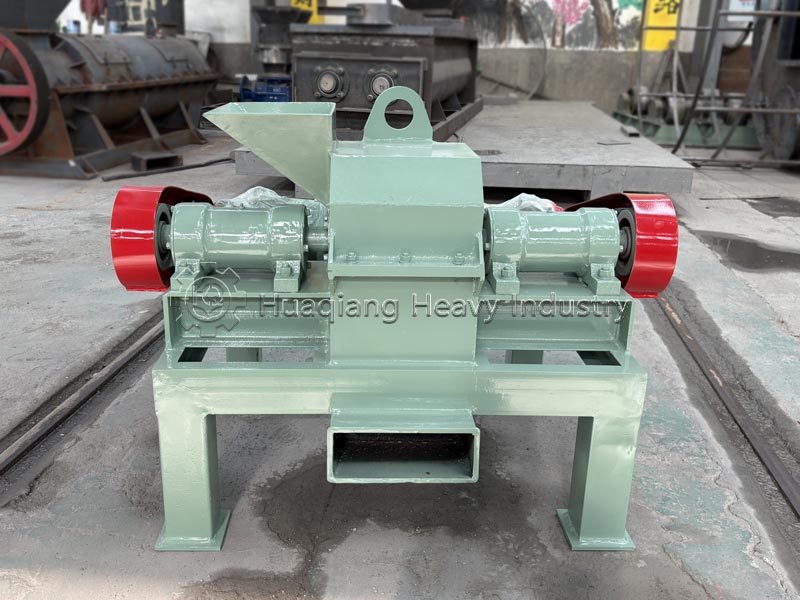
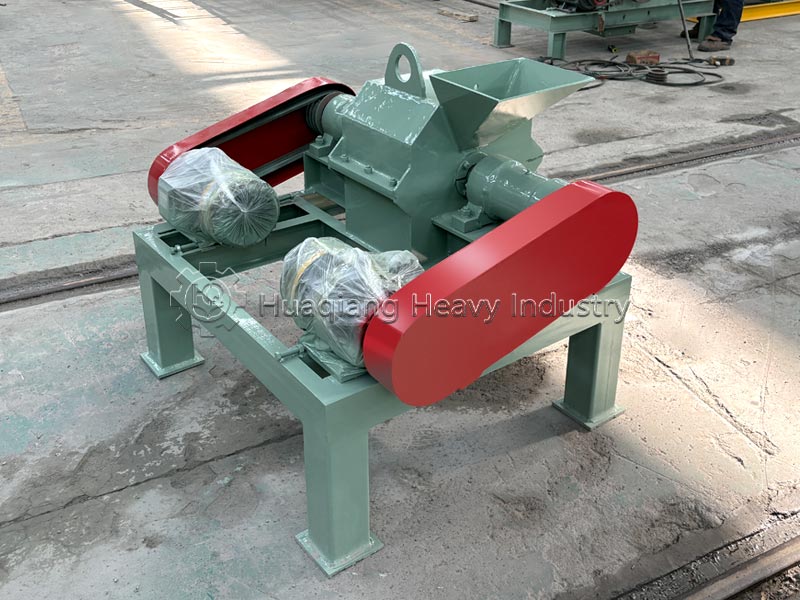
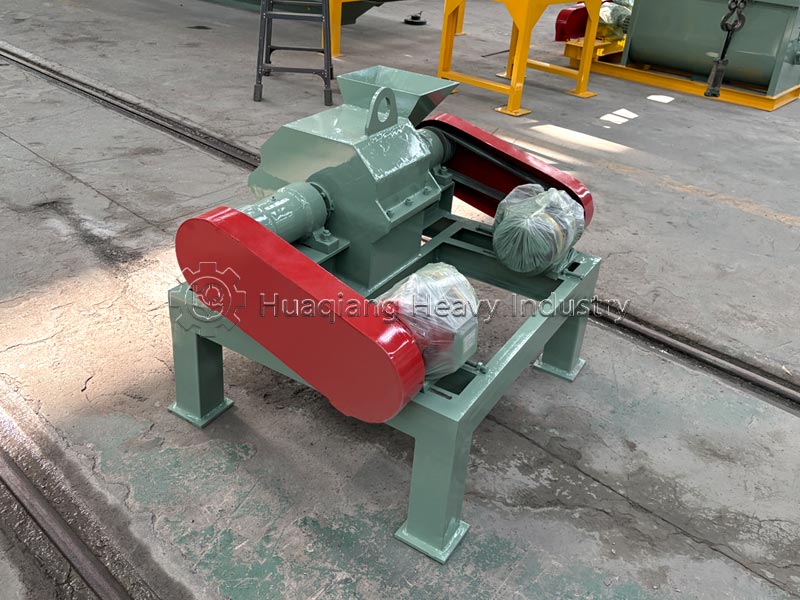
A cage crusher is a device that uses a double-layered cage rotor to crush materials. In organic fertilizer and compound fertilizer production, it is mainly used for fine crushing and returning finished granules and for crushing semi-wet materials. It adopts a double-cage structure, where materials are repeatedly impacted and sheared between the inner and outer cages, crushing them to the required fineness. The equipment is highly adaptable to materials with high moisture content, is not prone to clogging, and provides uniform and adjustable crushing fineness. It is a commonly used piece of equipment in the crushing and return stages of organic fertilizer production lines.
Working Principle
After entering the crushing chamber through the feed inlet, the material falls between the high-speed rotating inner and outer double-layered cage rotors. The inner and outer cages rotate in different directions or at different speeds, and the densely packed crushing rods on the cages repeatedly impact, shear, and grind the material. The material is continuously crushed in the narrow gap between the double-layered cages. Particles that meet the fineness requirements are discharged from the gaps between the cages under the action of centrifugal force and gravity, falling into the collection device below. Coarse material that does not meet the standards continues to circulate and be crushed between the cages until the particle size is qualified.
Equipment Composition
Casing and Feed Hopper: Welded steel plate casing with a top-mounted feed hopper; compact and enclosed structure to minimize dust escape.
Inner and Outer Cage Rotors: Core component of the equipment, consisting of an inner and outer cage. Multiple wear-resistant crushing rods are mounted on the cages and can be replaced individually.
Main Shaft and Transmission System: Each cage is driven by an independent motor, or a differential mechanism enables relative rotation between the two cages; the speed is adjustable.
Bearing Seats and Frame: Heavy-duty bearing seats at both ends of the main shaft; a welded steel frame supports the entire machine and absorbs vibration.
Discharge Port: A discharge port is located at the bottom; the crushed material is discharged by gravity. Connectable to conveyor equipment
Performance Features
Strong adaptability to wet materials: The double-layer cage structure with large gaps prevents clogging of semi-wet materials; can normally crush materials with a moisture content below 30%.
Adjustable crushing fineness: By adjusting the speed difference between the inner and outer cages and the cage gap, the output fineness is flexibly controllable.
Excellent crushing effect: The relative rotation of the two cages generates high shear force, resulting in more uniform and fine crushing of materials.
Prevents clogging: The crushing rods self-clean during high-speed rotation, preventing wet materials from adhering and accumulating on the cages.
Convenient maintenance and replacement: The crushing rods are installed independently; each worn rod can be replaced individually without replacing the entire cage.
| Model | Speed(r/min) | Power(kw) | Capacity(t/h) | Size (L× W ×H)(mm) | Weight(kg) |
| WLF650 | 2000 | 26 | 4-6 | 1800×1300×1160 | 2300 |
| WLF800 | 2000 | 37 | 6-10 | 2200×1500×1360 | 2550 |